Wondering if your 8-year-old dishwasher is worth fixing or if it’s time to start shopping for a replacement? Understanding appliance lifespans and making smart repair-versus-replacement decisions can save Abbotsford homeowners thousands of dollars while avoiding those dreaded middle-of-the-night appliance failures that always seem to happen at the worst possible moment.
Let’s be real – your appliances are basically the unsung heroes of your household, working around the clock to keep your life running smoothly. That faithful refrigerator has been humming away in your kitchen for over a decade, while your washing machine has tackled countless loads of muddy soccer uniforms and work clothes. But just like that trusty Honda Civic that finally started making weird noises, every appliance has its expiration date.
Living in Abbotsford means dealing with unique challenges that can either extend or shorten your appliance lifespan. Our Fraser Valley climate, with its humidity swings and seasonal temperature changes, creates conditions that national appliance guides simply don’t account for. Understanding realistic expectations for your major appliances isn’t just about planning future purchases – it’s about making informed maintenance decisions today that can add years to your equipment’s life and hundreds of dollars to your pocket.
Key Outtakes:
- Most major appliances last 8-16 years with proper maintenance, though Abbotsford’s humid climate may reduce lifespans by 1-2 years compared to drier regions
- Follow the 50% rule: repair if costs are less than half of replacement value, but factor in age and energy efficiency when making decisions
- Regular maintenance can extend appliance life by up to 50% and significantly reduce energy costs for Fraser Valley homeowners
- Local repair costs typically range $200-500 while new appliances start around $1,000 plus installation and disposal fees
- Energy-efficient replacements can save Abbotsford homeowners $100-200 annually on BC Hydro bills, offsetting replacement costs over time
Understanding Realistic Appliance Lifespans in the Fraser Valley
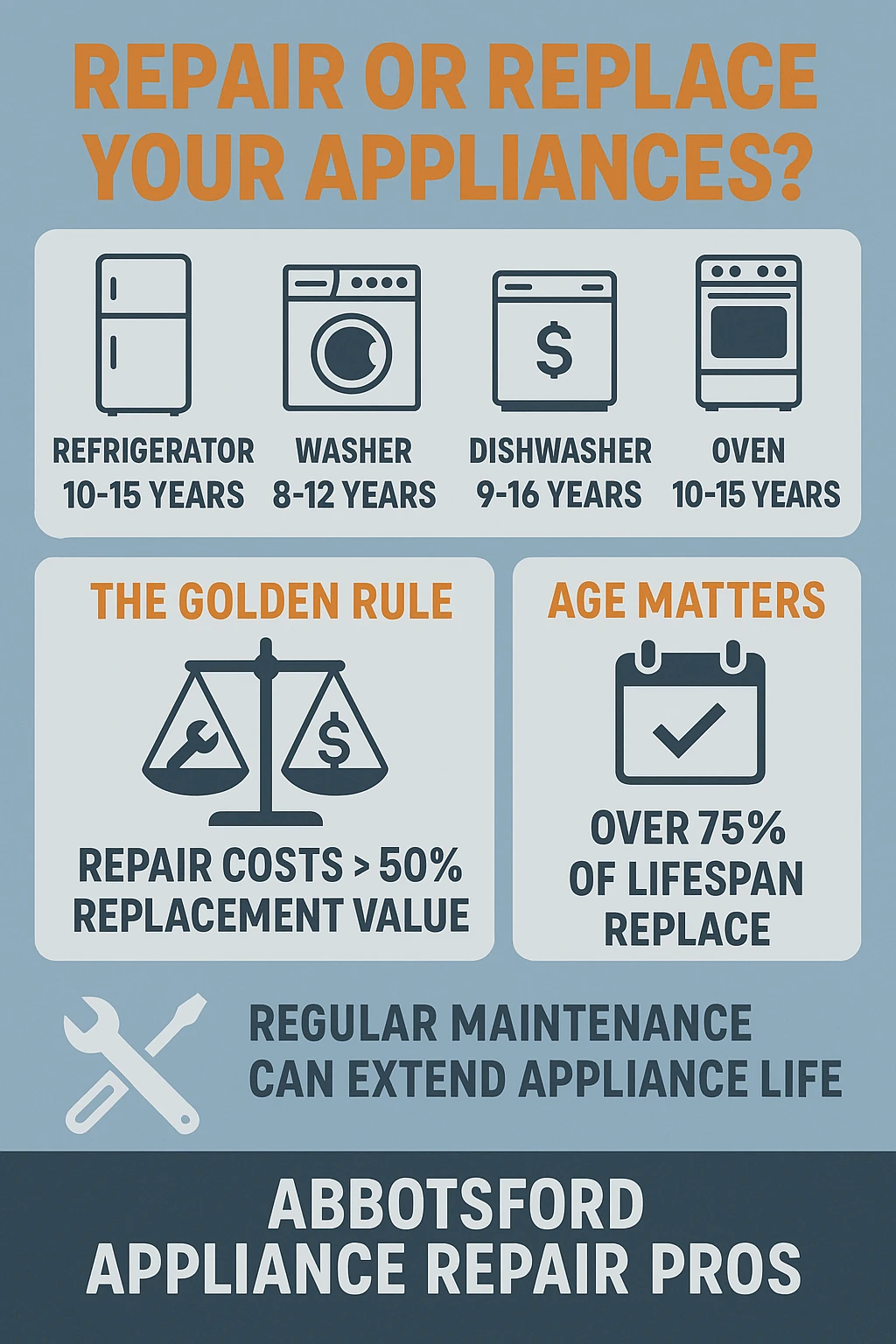
The foundation of smart appliance management starts with realistic expectations about how long your major household equipment should actually last. While manufacturer warranties typically cover just 12-18 months, the real lifespan story unfolds over years or even decades. Understanding these timelines helps you spot early warning signs and plan replacement budgets before emergency failures force hasty decisions that can blow your household budget.
Kitchen appliances generally fall into predictable lifespan categories based on their complexity and usage patterns. Refrigerators, being relatively simple mechanically despite their constant operation, typically last 10-19 years depending on configuration. Single-door models often outlast their fancier side-by-side or French-door counterparts because fewer moving parts mean fewer potential failure points. Your basic top-freezer model might chug along for 17+ years, while that sleek counter-depth unit with the built-in water dispenser might start showing problems around year 12.
Dishwashers present a different durability profile, averaging 7-13 years in most households. The wide range reflects significant differences in build quality and usage patterns. A family of three running four loads per week will typically get more service life than a household of six doing daily loads. For Fraser Valley residents, models with simpler controls and fewer electronic components tend to outlast feature-rich units that rely heavily on digital displays and sensor systems.
The 50% Rule and Strategic Decision Making
Building on these lifespan expectations, making smart repair versus replacement decisions requires more than just comparing upfront costs – it demands understanding the true economics of appliance ownership over time. The widely accepted 50% rule provides a solid starting framework: if repair costs exceed half the price of a comparable replacement unit, replacement usually makes financial sense. However, this rule needs modification for Fraser Valley conditions and today’s energy costs.
Applying the 50% rule effectively means knowing current replacement costs for your specific appliance category. A mid-range dishwasher replacement runs approximately $800-1200 installed in the Abbotsford area, so repairs costing more than $400-600 should trigger serious replacement consideration. But the math becomes more complex when you factor in energy efficiency improvements between your current model and newer alternatives available today. Age plays a crucial modifier to the basic cost calculation – appliances beyond 75% of their expected lifespan rarely justify expensive repairs, even if those repairs fall below the 50% threshold.
Energy efficiency considerations can completely flip traditional repair-versus-replacement calculations. Older appliances, particularly those manufactured before 2010, often consume 30-50% more electricity than current Energy Star models. For high-usage appliances like refrigerators and dryers, these savings can amount to $100-200 annually on your BC Hydro bill. When repair costs approach $300-400, the cumulative energy savings over a new appliance’s lifetime often justify replacement even when the 50% rule suggests repair. The hidden costs of replacement also deserve consideration – new appliance installation typically runs $150-500 depending on complexity, while disposal of your old unit adds another $75-150.
Abbotsford-Specific Environmental Challenges
Moving beyond general guidelines, the Fraser Valley’s unique environmental conditions create appliance challenges that homeowners in drier climates simply don’t face. Understanding these regional factors helps explain why your appliances might show wear patterns different from national averages and guides maintenance strategies that can significantly extend equipment life in our specific climate. Whether you’re in Clearbrook dealing with agricultural dust or in Mount Lehman managing humidity fluctuations, these local conditions matter more than most homeowners realize.
Humidity represents the biggest environmental challenge for Fraser Valley appliances. Our coastal proximity combined with valley geography creates moisture levels that promote mold growth in washing machines, particularly front-loading models. This same humidity accelerates corrosion in metal components and can cause premature failure of electronic control boards. Appliances with poor ventilation, like built-in dishwashers or laundry units in closets, face particular vulnerability to humidity-related problems that can shorten their lifespan by several years.
The region’s agricultural character introduces another longevity factor often overlooked by homeowners. Seasonal dust from farming operations, pollen from extensive flowering crops, and general particulate matter from field work create filtration challenges unknown in urban environments. Refrigerator coils clog faster, dryer lint traps fill more quickly, and range hood filters require more frequent cleaning. These conditions don’t just affect performance – they can significantly reduce appliance lifespan if maintenance schedules don’t account for our dustier environment.
Water quality variations across the Fraser Valley create appliance performance disparities between neighborhoods. Areas with hard water, particularly parts of eastern Abbotsford and rural regions, see accelerated mineral buildup in dishwashers, washing machines, and any appliance using water. Scale deposits reduce efficiency and can cause premature pump failures, control valve problems, and heating element burnout. Understanding your local water conditions and implementing appropriate filtration or maintenance schedules becomes crucial for maximizing appliance investment in these areas.
Maintenance Strategies That Actually Work
Understanding your local challenges naturally leads to implementing maintenance strategies that can dramatically extend appliance life in our specific environment. Regular maintenance isn’t just about following manufacturer recommendations – it’s about adapting those guidelines to Fraser Valley conditions and creating routines that address our unique humidity, dust, and water quality challenges. The difference between a homeowner who gets 15 years from their washing machine and one who replaces it after 8 often comes down to consistent, targeted maintenance practices.
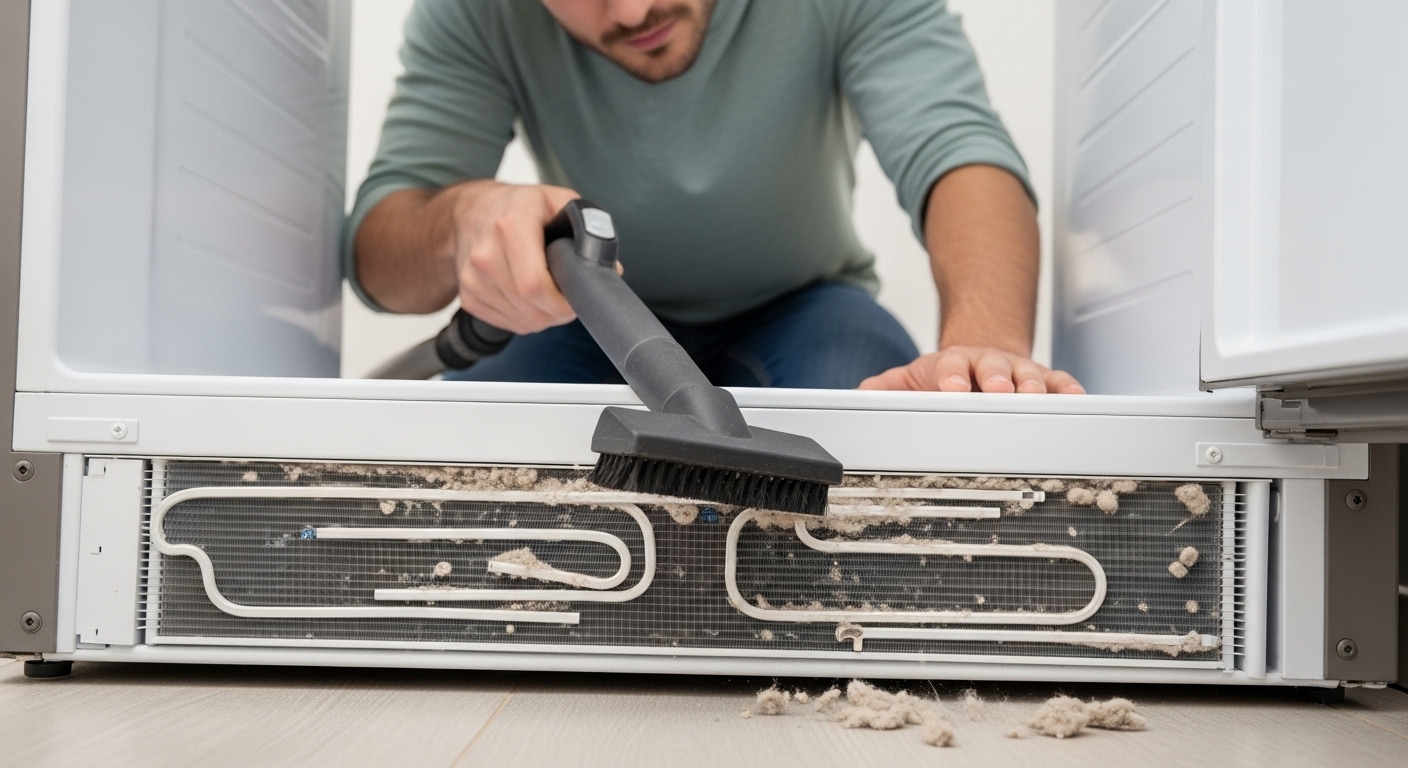
For refrigerators and freezers, focusing on condenser coil cleaning becomes even more critical in our dusty agricultural environment. While manufacturers recommend annual cleaning, Fraser Valley homes often benefit from quarterly attention, especially during harvest seasons when airborne particles increase significantly. A clean condenser coil can improve efficiency by 15-20% and extend compressor life by several years. Similarly, door seals require more frequent inspection and cleaning due to our humidity fluctuations – a failing door seal forces the compressor to work overtime and can reduce appliance lifespan by 2-3 years.
Washing machines and dishwashers need special attention to combat our region’s hard water and humidity challenges. Monthly cleaning cycles using vinegar or commercial cleaners prevent mineral buildup that can damage pumps and heating elements. For front-loading washers, leaving the door slightly open after use helps prevent mold growth that’s particularly problematic in our humid climate. These simple practices can extend washing machine life from the typical 10 years to 12-14 years with minimal effort and cost.
Dryer maintenance takes on added importance when you consider our region’s longer drying seasons due to higher humidity. Lint trap cleaning after every load isn’t just a fire safety issue – it’s crucial for maintaining efficiency and extending heating element life. Annual vent cleaning becomes even more critical when humid conditions make lint more likely to stick to vent walls. Proper dryer maintenance can easily add 3-4 years to appliance life while reducing energy costs by 20-30% during our challenging drying months.
Frequently Asked Questions
How do I know when an appliance repair is worth the cost versus buying new?
The 50% rule provides a good starting point – if repair costs excee