Winter Appliance Breakdowns: Cold Weather Damage Prevention

Winter Appliance Breakdowns: Cold Weather Damage Prevention

Worried about your appliances giving out when the Fraser Valley winter hits hard? Don’t stress – we’re diving into the most common cold weather appliance problems and sharing proven prevention strategies that’ll keep your home running smoothly all season long. Winter in Abbotsford can be brutal on your home’s hardest-working appliances. Between the temperature swings, increased usage, and moisture issues that come with our Pacific Northwest climate, your fridge, washer, dryer, and other essential appliances are working overtime just to keep up. The good news is that most winter appliance disasters are totally preventable with the right prep work and a little seasonal TLC. Think of winter appliance prep like getting your car winter-ready – you wouldn’t skip snow tires and expect to cruise through a blizzard, right? Your appliances need that same kind of thoughtful preparation to handle everything from power outages to frozen pipes and everything in between.

Key Outtakes:

  • Temperature fluctuations can cause serious damage to refrigerators and freezers in unheated spaces like garages
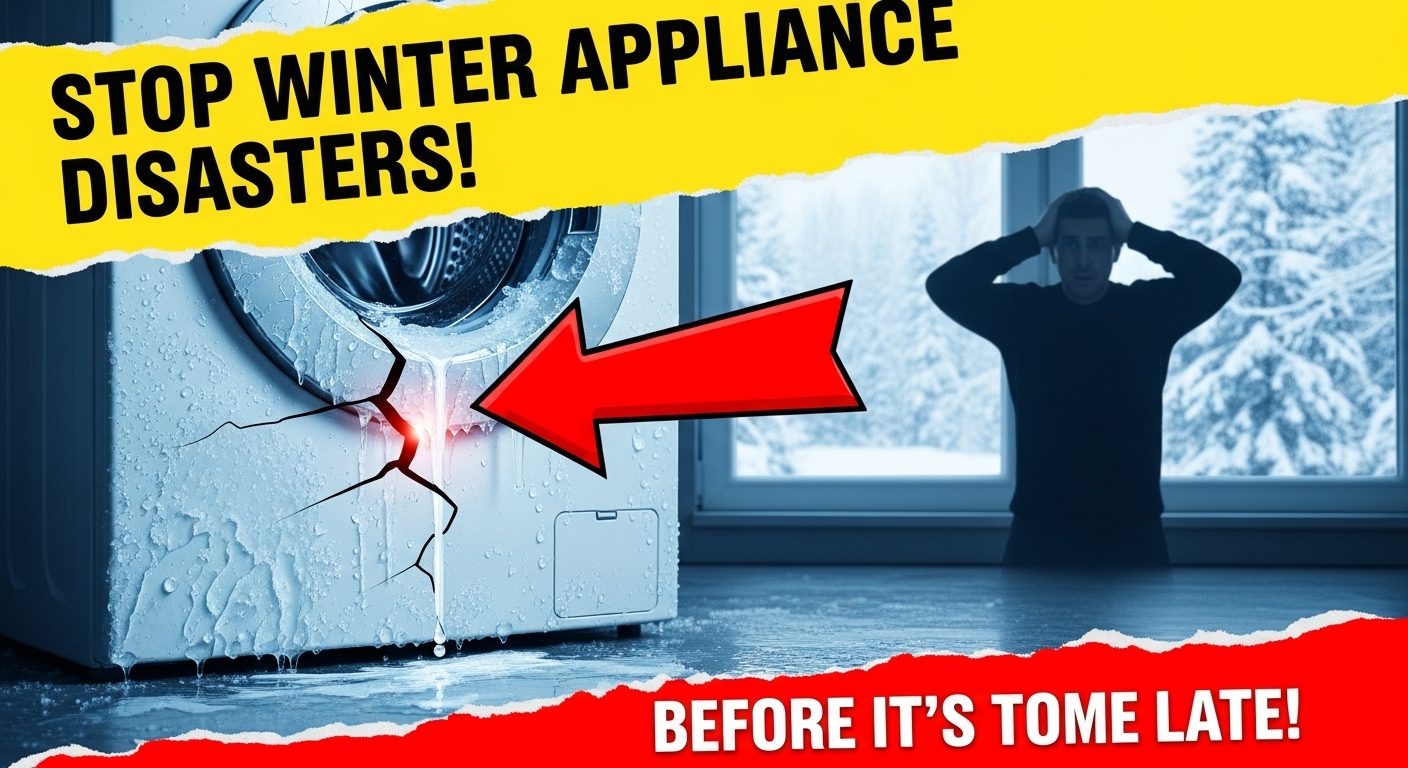
  • Washing machines and dishwashers are at high risk for frozen pipe damage during cold snaps
  • Increased holiday cooking puts extra strain on ovens, stoves, and range hoods that need pre-winter maintenance
  • Dryer vents become clogged more easily in winter, creating fire hazards and efficiency problems
  • Simple preventive measures can save hundreds or thousands in emergency repair costs

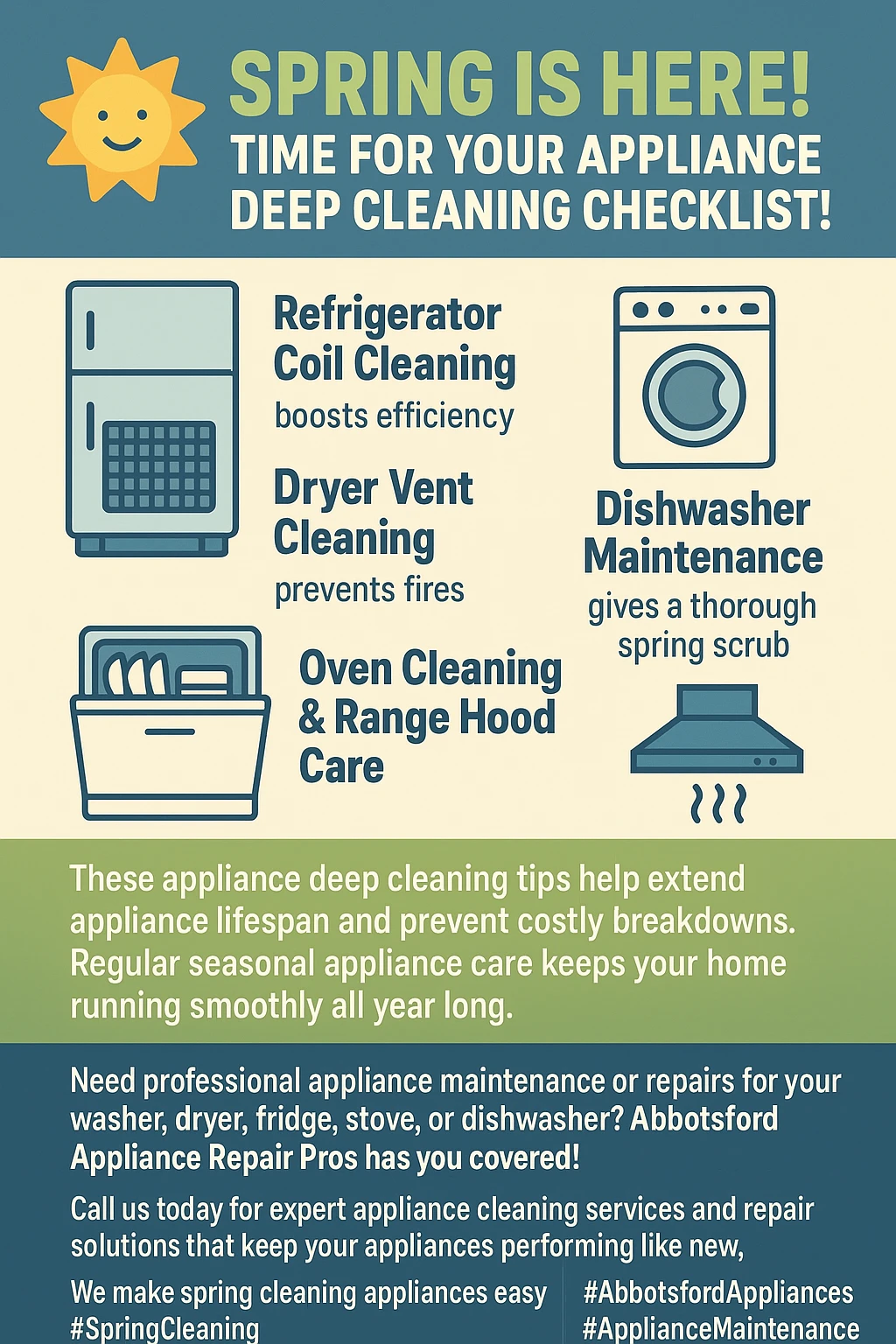
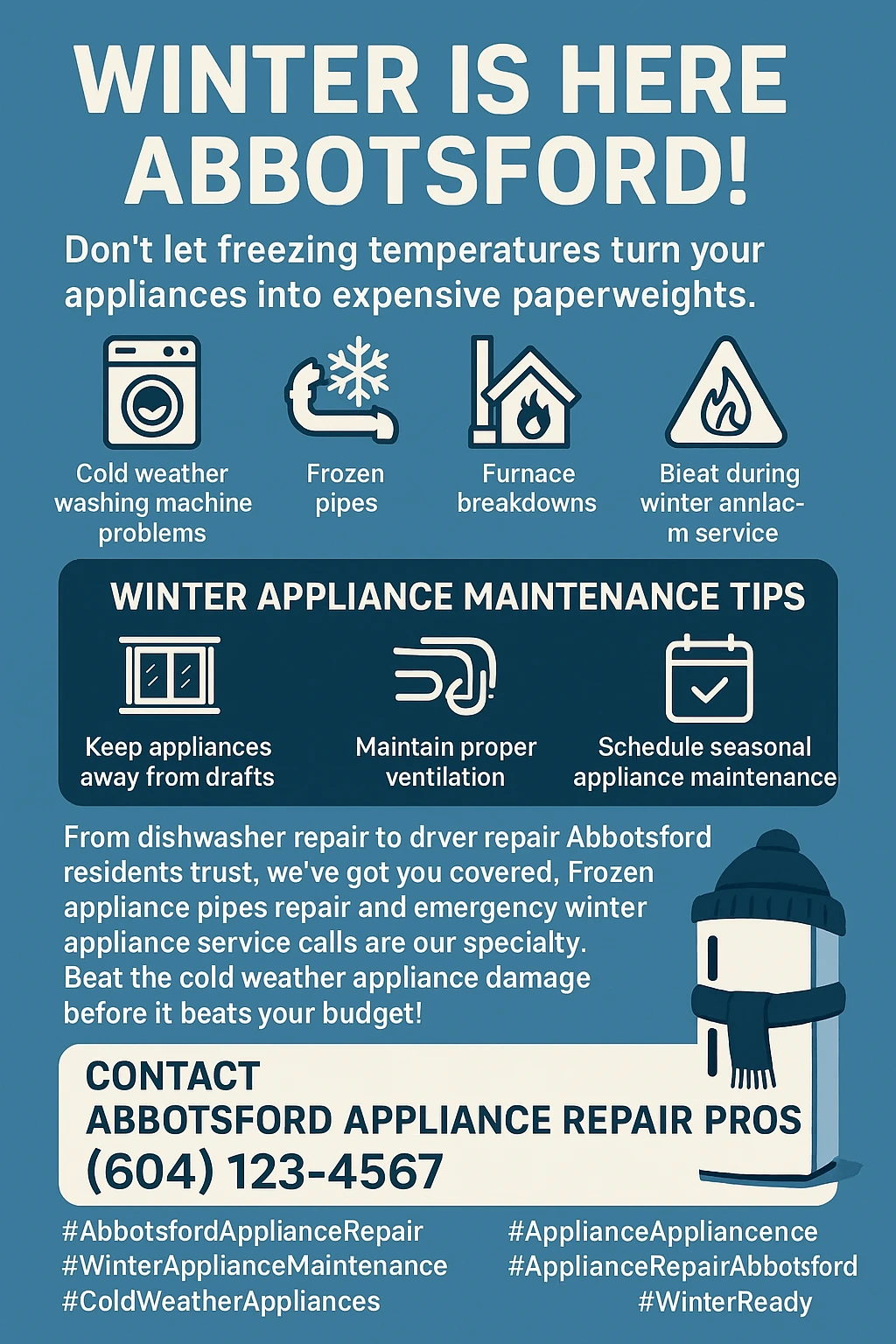
Winter appliance problems and prevention infographic

Understanding Winter’s Impact on Home Appliances

Fraser Valley winters might not bring the deep freeze of the prairies, but they pack their own unique punch when it comes to appliance stress. Our region’s signature combo of mild days followed by sudden cold snaps creates the perfect storm for appliance failures. When temperatures drop rapidly, metal components contract, seals get brittle, and any moisture lurking in your systems can turn into ice-cold trouble. The biggest culprit? Temperature fluctuations that mess with your appliances’ internal systems. Your refrigerator’s compressor has to work overtime when ambient temperatures drop, while your washing machine’s water lines become vulnerable to freezing in those unheated utility rooms that are so common in older Abbotsford homes. Meanwhile, increased heating demands mean your electrical systems are already maxed out, putting additional strain on every appliance in your house. What makes things worse is that most of us are cranking up appliance usage right when they’re most vulnerable. Holiday cooking marathons, extra laundry loads from wet winter gear, and running dishwashers constantly to keep up with entertaining – it’s like asking your car to tow a trailer right after skipping its tune-up.

Winter kitchen appliances in Abbotsford home

Critical Appliance Vulnerabilities in Cold Weather

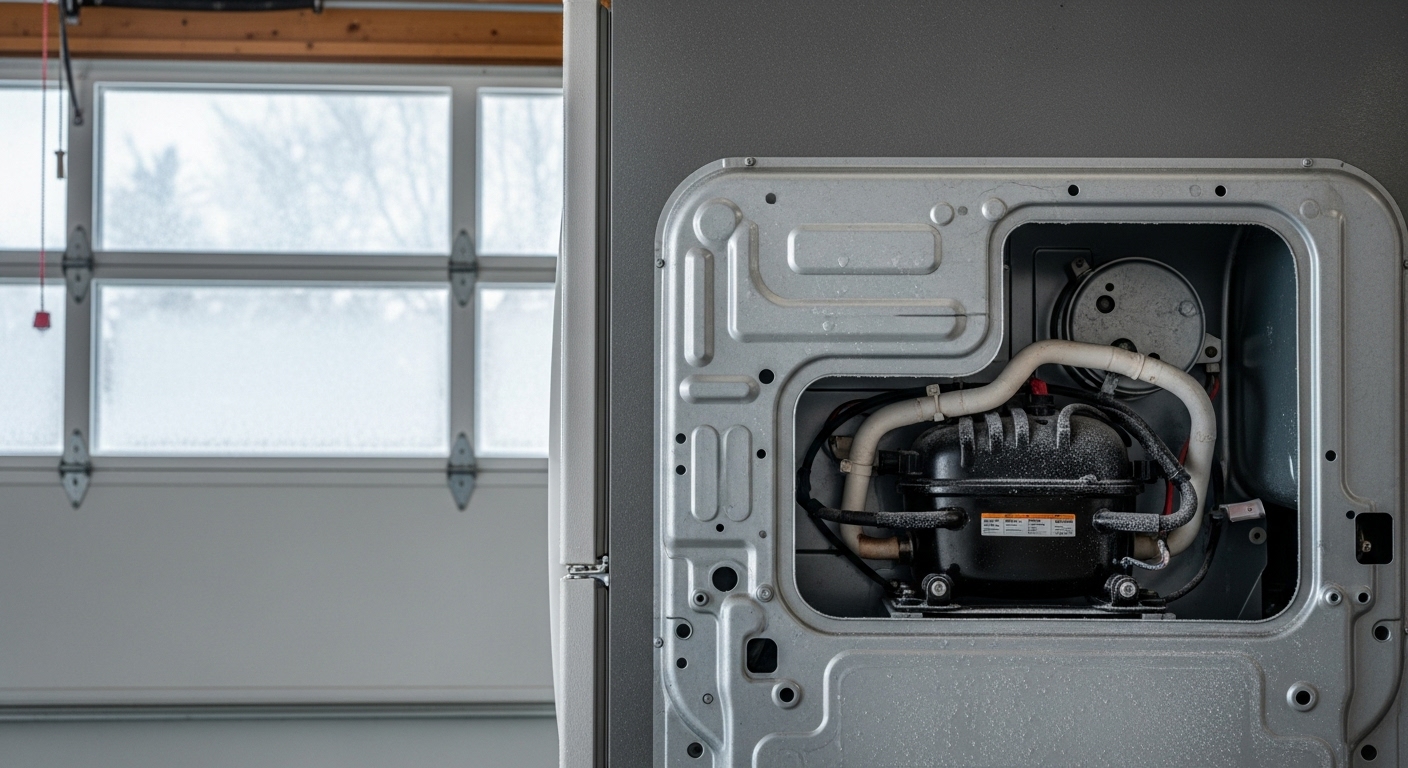
Garage refrigerator winter protection Let’s get real about which appliances are most likely to bail on you when the temperature drops. Understanding these weak spots helps you focus your prevention efforts where they’ll make the biggest difference. Refrigerators and freezers top the vulnerability list, especially if you’ve got one of those garage setups that’s so popular in neighborhoods like Clearbrook and Matsqui. When ambient temperatures drop below 60°F, most refrigerators start struggling to maintain proper internal temperatures. The compressor oil gets thick, door seals contract and lose their grip, and temperature sensors can start giving false readings that throw off the whole cooling cycle. Washing machines face their own winter nightmare scenario – frozen water supply lines. Those supply lines running through crawl spaces or along exterior walls are basically ticking time bombs once temperatures hit freezing. And it’s not just about burst pipes (though that’s definitely the worst-case scenario). Even temporary freezing can damage internal components like pumps and valves. Your dryer isn’t off the hook either – winter moisture and lint create the perfect recipe for blockages that reduce efficiency and create fire hazards.
Kitchen Appliance Winter Stress

Your kitchen becomes ground zero for winter appliance stress. Dishwashers struggle with incoming water that’s significantly colder than summer temps, which means longer cycle times and less effective cleaning. Your oven and range get pushed to their limits during holiday cooking sessions, and if you haven’t cleaned those vents and checked the gas connections lately, you’re setting yourself up for some seriously inconvenient breakdowns right when you need these appliances most. Range hoods work overtime during winter cooking marathons but often get neglected in maintenance routines. Grease buildup combined with cold outdoor air creates condensation issues that can damage motors and electrical components.

Essential Preventive Maintenance Steps

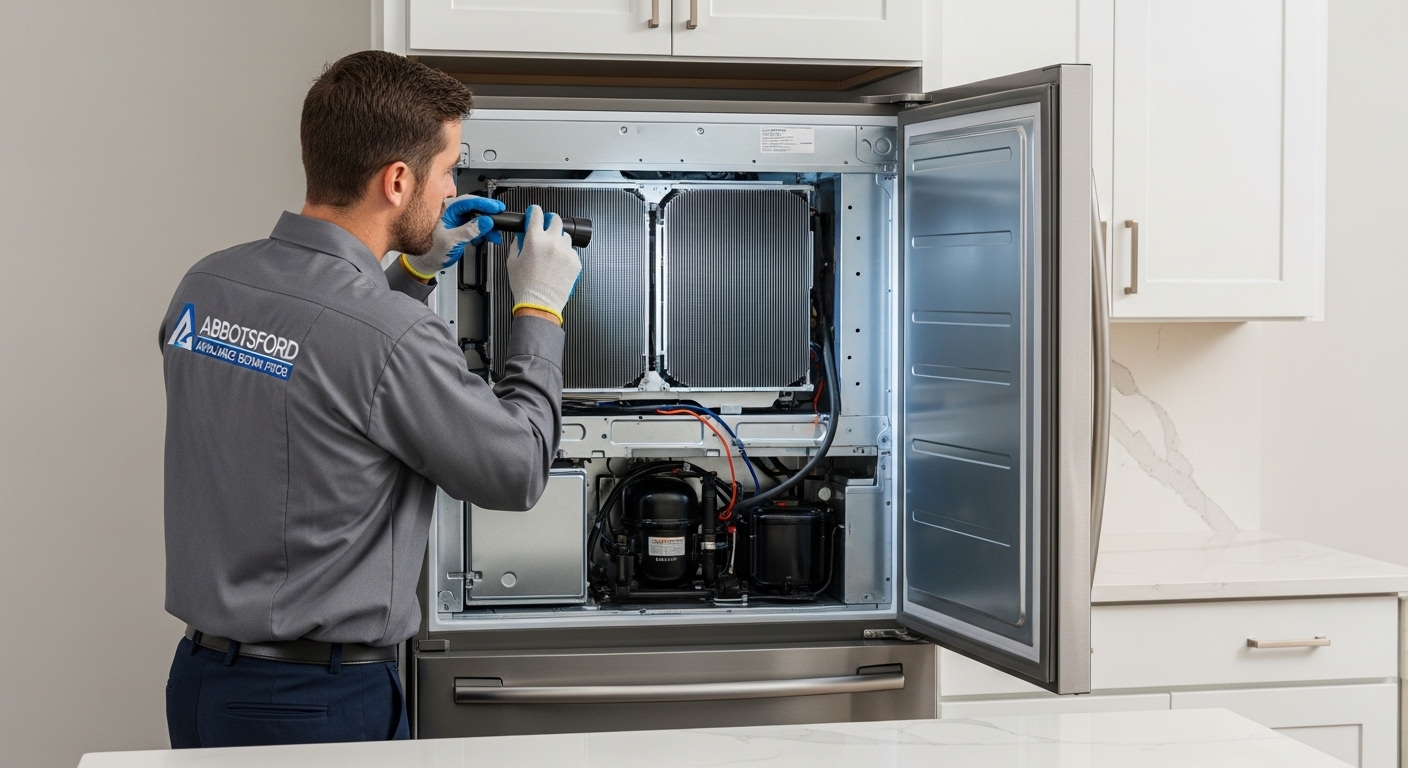
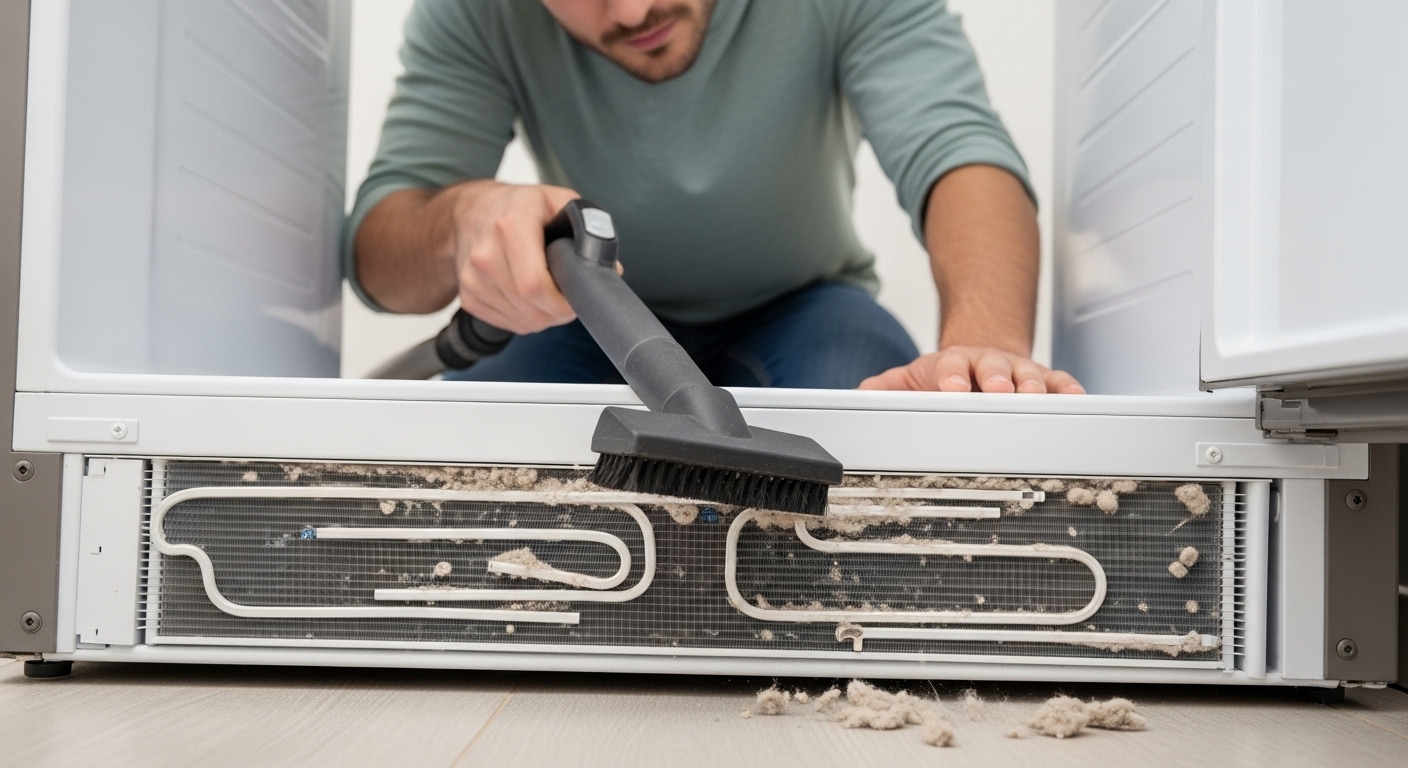
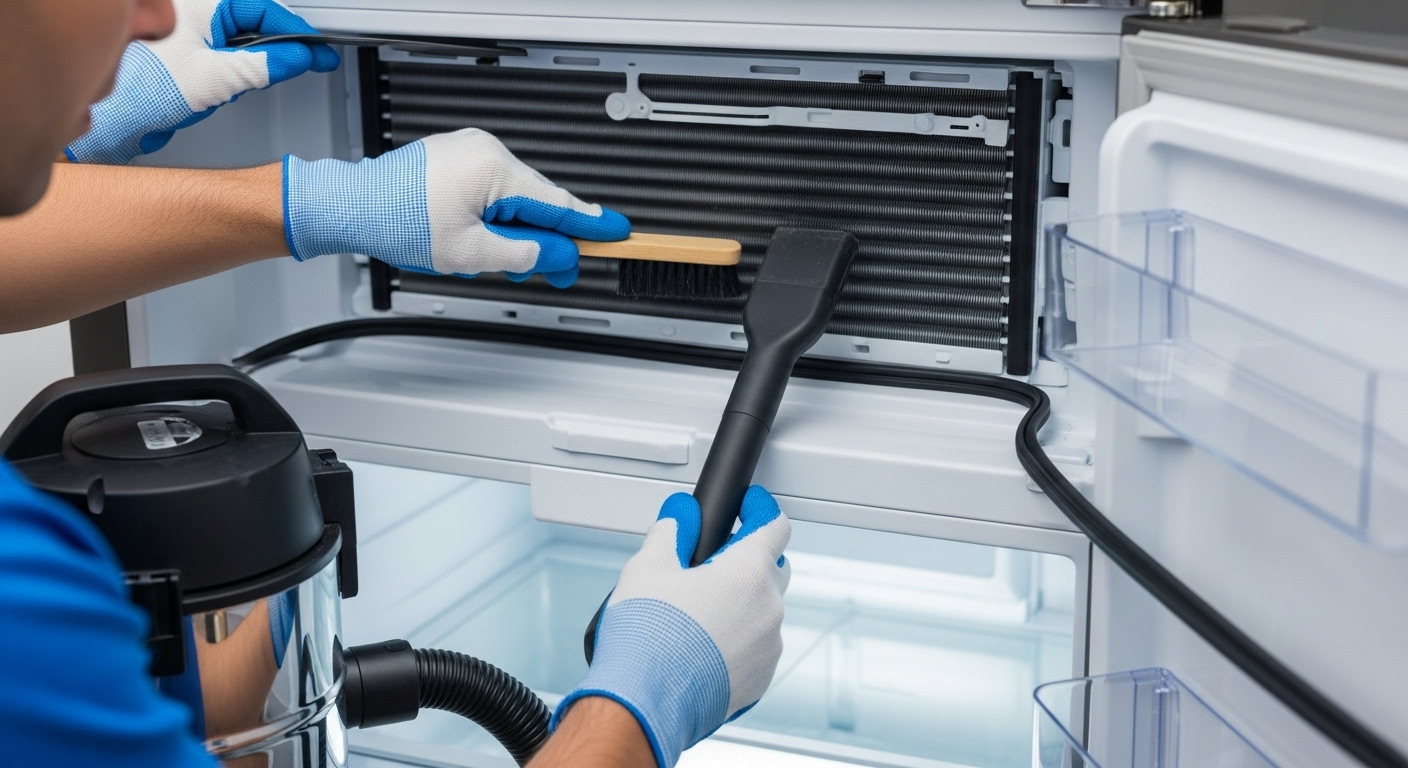
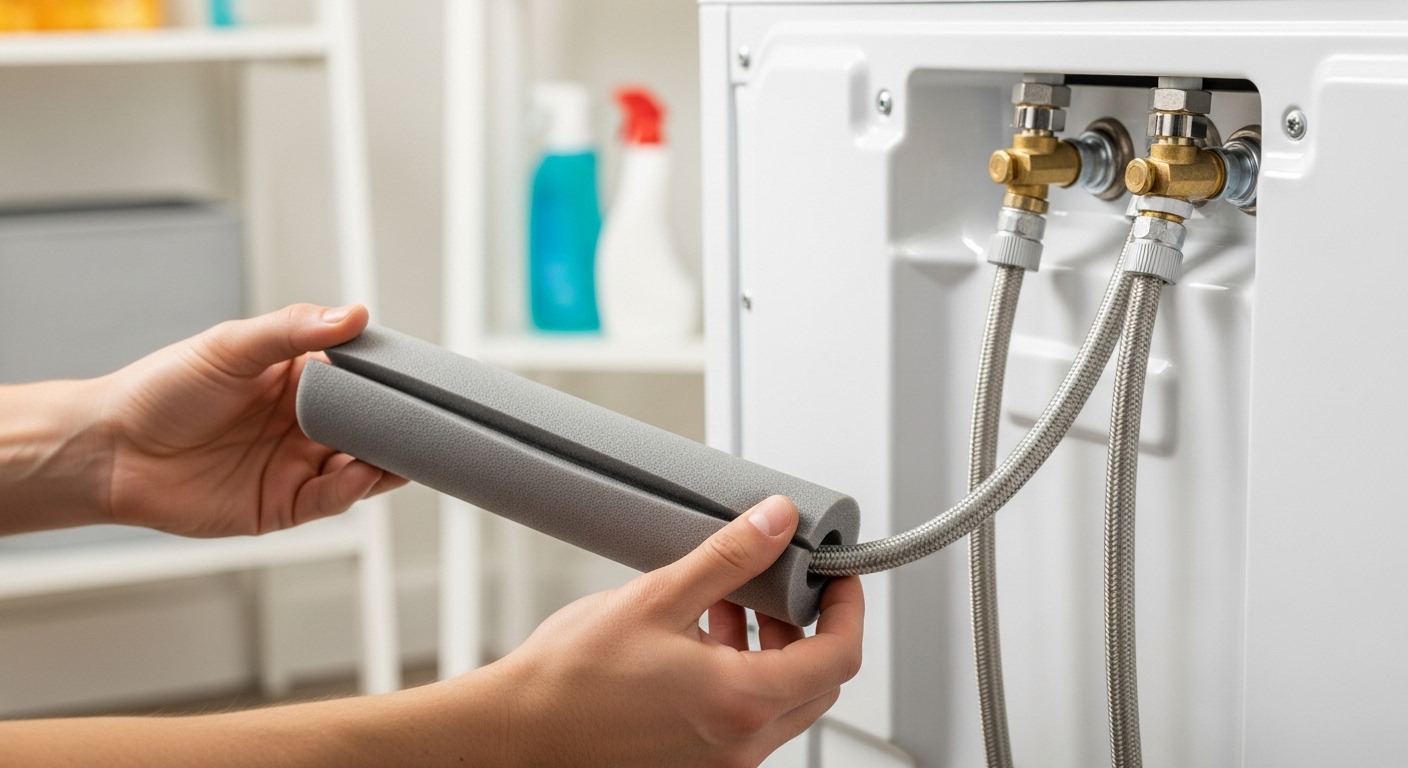
Now that we’ve covered the scary stuff, let’s talk solutions. Winter appliance prep doesn’t require a engineering degree – just some strategic attention to the details that matter most when temperatures drop. Start with your refrigerator and freezer maintenance at least a month before winter really kicks in. Clean those condenser coils thoroughly – they’re usually located on the back or underneath, and they collect an amazing amount of dust and pet hair. Dirty coils make your compressor work harder, which is the last thing you want when it’s already fighting cold ambient temperatures. Check door seals by doing the dollar bill test – close a dollar bill in the door and try to pull it out. If it slides out easily, your seals need attention. For appliances in unheated spaces, insulation becomes your best friend. Wrap water supply lines with foam pipe insulation, and consider adding a small space heater to utility rooms during extreme cold snaps. Just make sure it’s a safe, properly ventilated model designed for that purpose. Temperature monitoring is crucial too – pick up some wireless thermometers so you can keep an eye on conditions in those vulnerable spaces without having to trudge out to the garage every morning.

Preventive appliance maintenance for winter

Protecting Water-Connected Appliances

Your washing machine and dishwasher need special attention since they’re completely dependent on water supply lines that can freeze. Start by locating all the shut-off valves for these appliances and make sure everyone in your household knows where they are and how to use them. In a freezing emergency, quick action can mean the difference between a minor inconvenience and a major disaster. Consider upgrading to braided stainless steel supply lines if you’re still using rubber hoses – they’re more freeze-resistant and less likely to burst if temperatures do drop below freezing. For washing machines in unheated spaces, you might want to invest in a freeze protection device that automatically shuts off water flow when temperatures drop too low.

Seasonal Usage Adjustments

[IMAGE PLACEHOLDER FOR IMAGE3] Winter isn’t just about protecting your appliances from cold – it’s also about adjusting how you use them to account for seasonal changes. Smart usage patterns can prevent problems and extend appliance life, especially during those heavy-use holiday periods. Your dryer becomes especially important during winter when outdoor drying isn’t practical, but it also faces unique challenges. Clean the lint filter after every single load – winter moisture makes lint clumpier and more likely to cause blockages. Check your exterior vent regularly for ice buildup or snow blocking, which can cause dangerous backdrafts. If you’re in an area like Sumas Prairie where winter winds are fierce, consider a professional vent inspection to ensure proper airflow. Kitchen appliances need different strategies during winter cooking season. Space out your oven usage when possible to prevent overheating, and never use your oven as a space heater – it’s inefficient and potentially dangerous. When running multiple appliances simultaneously (hello, holiday meal prep), pay attention to your electrical load. If lights dim when the dishwasher starts, you might be pushing your electrical system beyond its comfort zone.

Energy Efficiency During Peak Usage

Winter appliance usage patterns can send your energy bills through the roof if you’re not strategic. Run dishwashers and washing machines during off-peak hours when possible, and always use full loads to maximize efficiency. Your refrigerator works more efficiently when it’s reasonably full but not packed tight – aim for about 75% capacity. Consider adjusting temperature settings slightly during winter months. Your refrigerator can often run a degree or two warmer when ambient temperatures are cool, and your water heater might not need to work as hard if incoming water temperatures are more moderate.

Emergency Preparedness and Quick Response

Even with perfect prevention, winter can still throw curveballs that catch you off guard. Having a solid emergency response plan means the difference between a minor hiccup and a major catastrophe. Power outages are probably the most common winter appliance emergency. Keep your refrigerator and freezer doors closed during outages – a well-insulated refrigerator can maintain safe temperatures for up to 4 hours, while a full freezer can stay frozen for 24-48 hours. Invest in a battery-powered thermometer so you can monitor internal temperatures without opening doors and losing cold air. For frozen pipe emergencies, speed is everything. If you suspect frozen water lines to your washing machine or dishwasher, turn off the water supply immediately and call for professional help. Never try to thaw frozen pipes with open flames or high heat – gentle warming with a hair dryer is safer and more effective. Keep the emergency contact numbers for utility companies and trusted appliance repair services somewhere easily accessible.

Creating an Emergency Kit

Put together a basic appliance emergency kit that includes flashlights, basic tools, emergency contact numbers, and appliance model numbers. Keep a list of your appliances’ warranty information and know which repairs are covered. Having this information organized ahead of time saves precious minutes during an actual emergency.

Frequently Asked Questions

What temperature is too cold for appliances in unheated spaces?

Most appliances start having problems when temperatures drop below 50°F, with serious issues beginning around 32°F. Refrigerators and freezers are especially vulnerable below 60°F because their compressors struggle to work efficiently in cold ambient temperatures. If your garage or utility room regularly drops below these temperatures, you’ll need to add insulation or heating.

How do I know if my appliance has freeze damage?

Common signs include unusual noises, water leaks, error codes, or appliances that won’t start after a cold snap. For washing machines and dishwashers, check for water around the base or underneath – this often indicates burst hoses or cracked internal components. Don’t attempt to operate an appliance if you suspect freeze damage until it’s been professionally inspected.

Can I prevent frozen pipes without adding heat to my utility room?

Yes, proper insulation is often more effective than adding heat. Wrap all exposed water lines with foam pipe insulation and seal air leaks around windows, doors, and where pipes enter walls. Allow cabinet doors to stay open so warm air can circulate around pipes, and consider leaving faucets at a slight drip during extreme cold snaps to keep water moving.

Wrapping Up

Winter appliance protection really comes down to being proactive rather than reactive – a little preparation now prevents major headaches later. From insulating water lines in Clayburn to checking door seals in Mill Lake, these simple steps work whether you’re in a newer home or dealing with an older property that needs extra attention. Remember that most winter appliance failures happen gradually, so staying alert to changes in performance gives you time to address issues before they become emergencies. When winter appliance problems do strike, don’t tackle complex repairs yourself – that’s when you need the expertise of Abbotsford Appliance Repair Pros. Our team understands the unique challenges that Fraser Valley winters present to home appliances, and we’re equipped to handle everything from frozen pipe damage to compressor failures caused by temperature fluctuations. Contact us for professional winter appliance preparation services or emergency repairs that get your home back to running smoothly.

Holiday Appliance Prep: Abbotsford’s Ultimate Guide

Holiday Appliance Prep: Abbotsford’s Ultimate Guide

Ready to turn your kitchen into a holiday cooking powerhouse without the stress of appliance breakdowns? Follow our comprehensive holiday appliance prep guide designed specifically for Abbotsford homeowners to ensure your festive celebrations go off without a hitch.

Picture this: It’s Christmas morning, your perfectly brined turkey is ready for the oven, relatives are arriving in three hours, and suddenly your oven decides to take an unscheduled vacation. If this scenario makes your stomach drop, you’re not alone – it’s basically every home cook’s worst nightmare wrapped up in a holiday bow. The truth is, our kitchen workhorses face their ultimate endurance test during the holiday season, when we ask them to perform miracles while running marathons.

Between hosting multiple gatherings, cooking larger portions than usual, and running appliances constantly for days on end, these hardworking machines often reach their breaking point precisely when we need them most. For Abbotsford families, understanding how to properly prepare your appliances for the holiday rush can mean the difference between creating magical memories and dealing with kitchen disasters that become family legends for all the wrong reasons.

Key Outtakes:

  • Holiday appliance breakdowns affect 67% of families, with ovens failing at a 54% rate during peak cooking seasons
  • Preventive maintenance performed 2-3 weeks before major holidays can prevent 80% of common appliance failures
  • Fraser Valley’s winter humidity and temperature fluctuations create unique strain on appliance components during holiday seasons
  • Professional appliance cleaning and tune-ups increase efficiency by up to 25% during heavy usage periods
  • Emergency repair services in Abbotsford offer same-day response for critical failures during holiday weekends

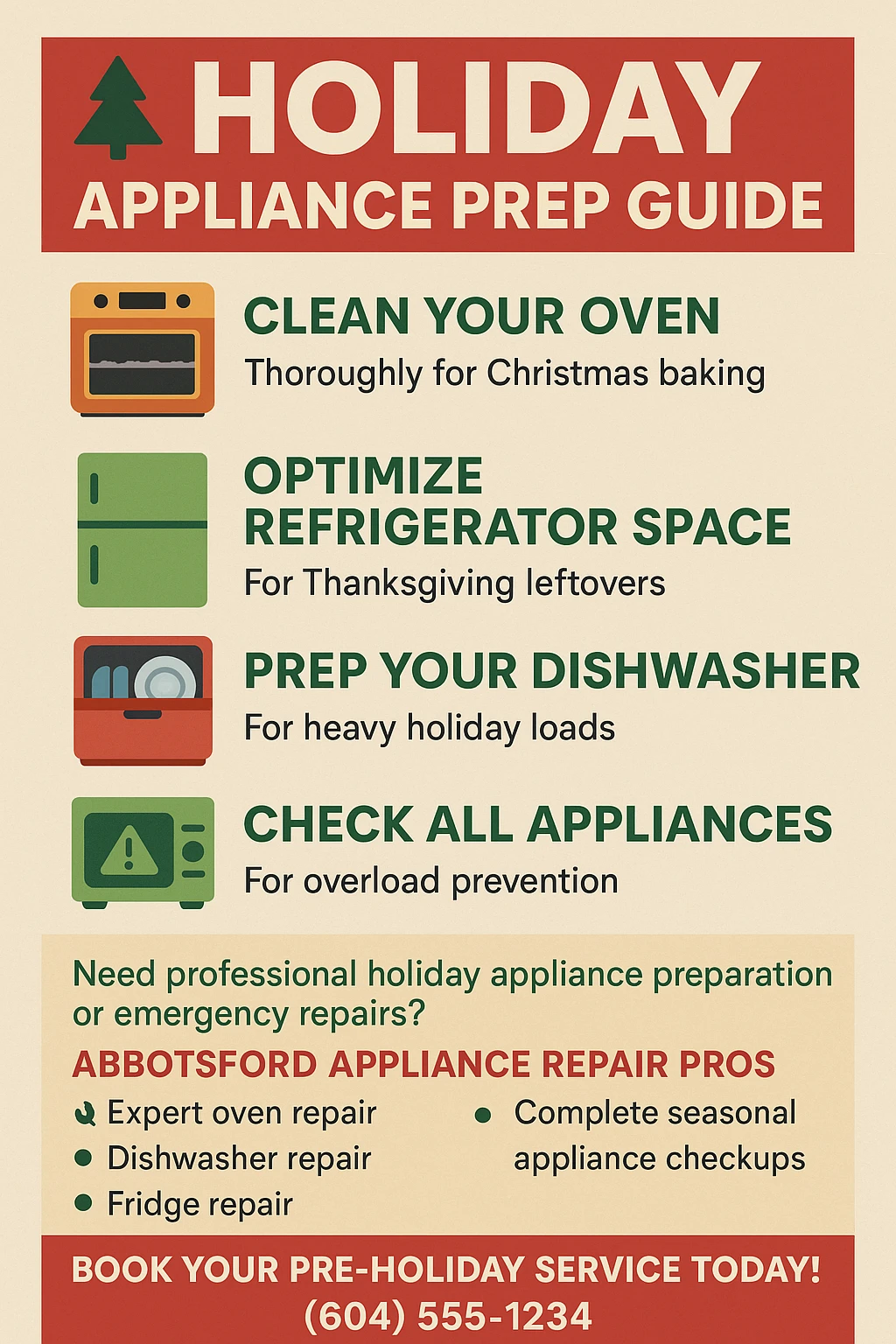
Holiday Appliance Preparation Abbotsford Infographic

Understanding Holiday Appliance Stress Patterns

The statistics around holiday appliance failures paint a sobering picture of just how common these kitchen disasters really are. Research shows that 67% of North American families experience kitchen appliance breakdowns during holiday meal preparation, making it more likely than not that you’ll face this challenge at some point. What’s particularly eye-opening is how different appliances fail at varying rates during peak cooking seasons, with some being significantly more vulnerable than others.

Festive Abbotsford Kitchen Holiday Cooking

Ovens lead the pack with the highest failure rate at 54% during holiday meal preparation, which makes perfect sense when you consider we’re asking them to maintain precise temperatures for hours longer than usual. Microwaves follow closely at 50%, refrigerators at 48%, dishwashers at 45%, and stoves at 43%. These numbers become even more concerning when you realize that major appliances cause more than 150,000 residential fires annually, with holiday seasons seeing a dramatic spike in incidents.

What makes the Fraser Valley region particularly challenging for appliance longevity is our unique winter climate conditions. The area’s fluctuating humidity levels and temperature variations create additional strain on appliance door seals, electrical components, and internal mechanisms. When you combine these environmental factors with the increased usage during holiday seasons, appliances experience stress from multiple directions simultaneously, leading to higher failure rates just when families can least afford downtime.

Essential Pre-Holiday Appliance Maintenance

Building on our understanding of how appliances struggle during holiday periods, the key to preventing disasters lies in strategic preparation that addresses the specific vulnerabilities we’ve identified. Think of this process as training your appliances for their Olympic performance – you wouldn’t expect an athlete to run a marathon without proper conditioning, and the same principle applies to your kitchen equipment.

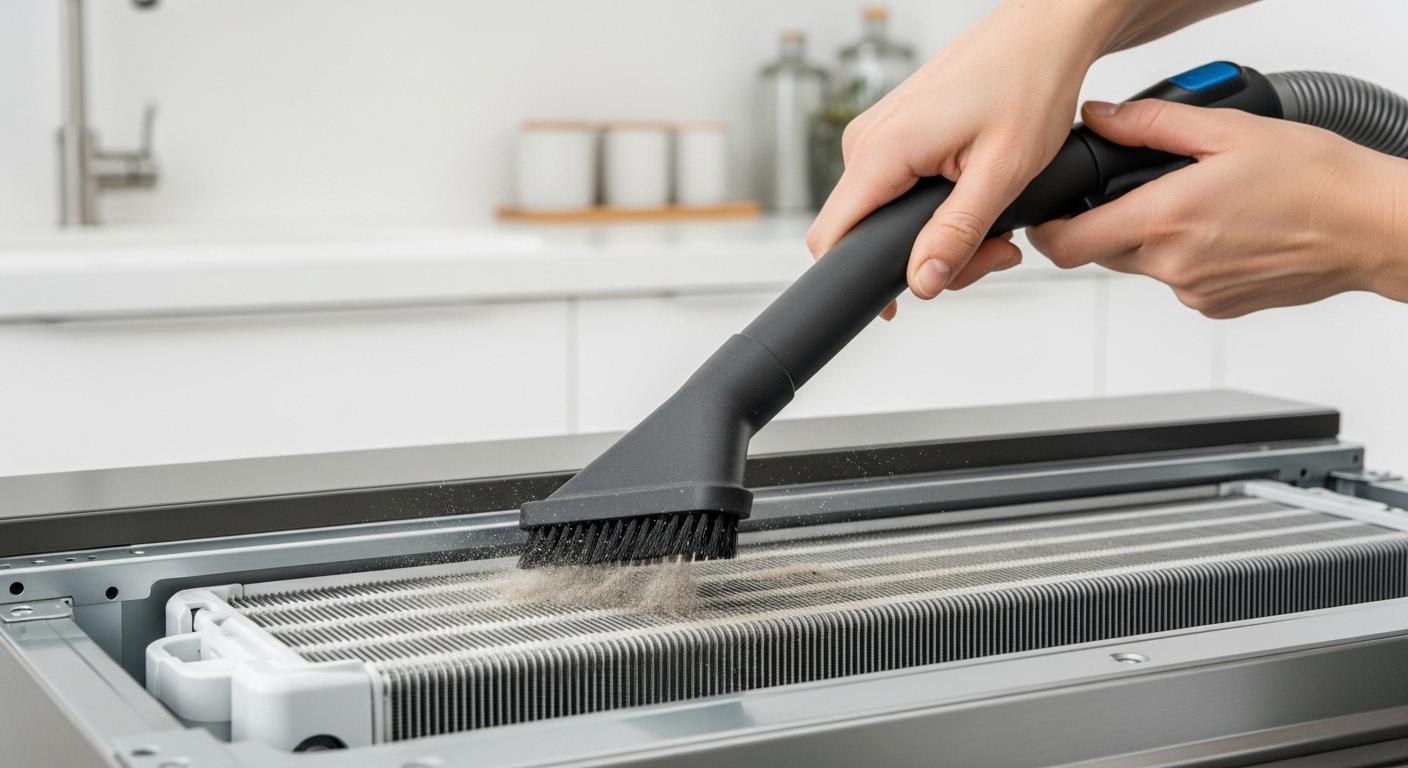
Your refrigerator deserves the most attention since it’ll be working overtime to store extra ingredients, prepared dishes, and leftovers throughout the entire holiday season. Start by cleaning the condenser coils located either behind or beneath your unit – these coils are like the lungs of your refrigerator, and when they’re clogged with dust and pet hair, your appliance has to work significantly harder to maintain proper temperatures. A simple vacuum cleaning can improve efficiency by up to 25% and prevent the motor from overheating during peak usage periods.

Refrigerator Maintenance Condenser Coil Cleaning

Next, inspect all door seals carefully by running your hand around the edges while the door is closed – you shouldn’t feel any air leakage. Worn seals force your refrigerator to cycle more frequently, putting extra strain on the compressor during already demanding holiday periods. Replace the water filter if your model includes one, and set both refrigerator and freezer temperatures to optimal levels: 37-40°F for the fridge and 0°F for the freezer. Consider organizing your interior space now to maximize airflow, as proper circulation becomes even more critical when your refrigerator is packed to capacity.

Your oven requires equally thorough preparation, especially since it faces the highest failure rate among holiday appliances. Schedule a professional cleaning at least two weeks before your first major holiday meal, as self-cleaning cycles can stress aging heating elements. Test your oven’s temperature accuracy using an independent thermometer – many ovens run 25-50 degrees off their displayed temperature, which can spell disaster for timing-sensitive holiday dishes. Inspect heating elements for any signs of warping, cracking, or uneven coloring, and ensure your oven door closes properly with no gaps that allow heat to escape.

Dishwasher and Small Appliance Preparation

While major appliances often steal the spotlight in holiday preparation discussions, your dishwasher and small appliances play equally crucial roles in maintaining your sanity during the festive chaos. Your dishwasher will likely run multiple cycles daily during holiday entertaining, making proper preparation essential for avoiding the nightmare scenario of hand-washing mountains of dishes while trying to coordinate meal timing.

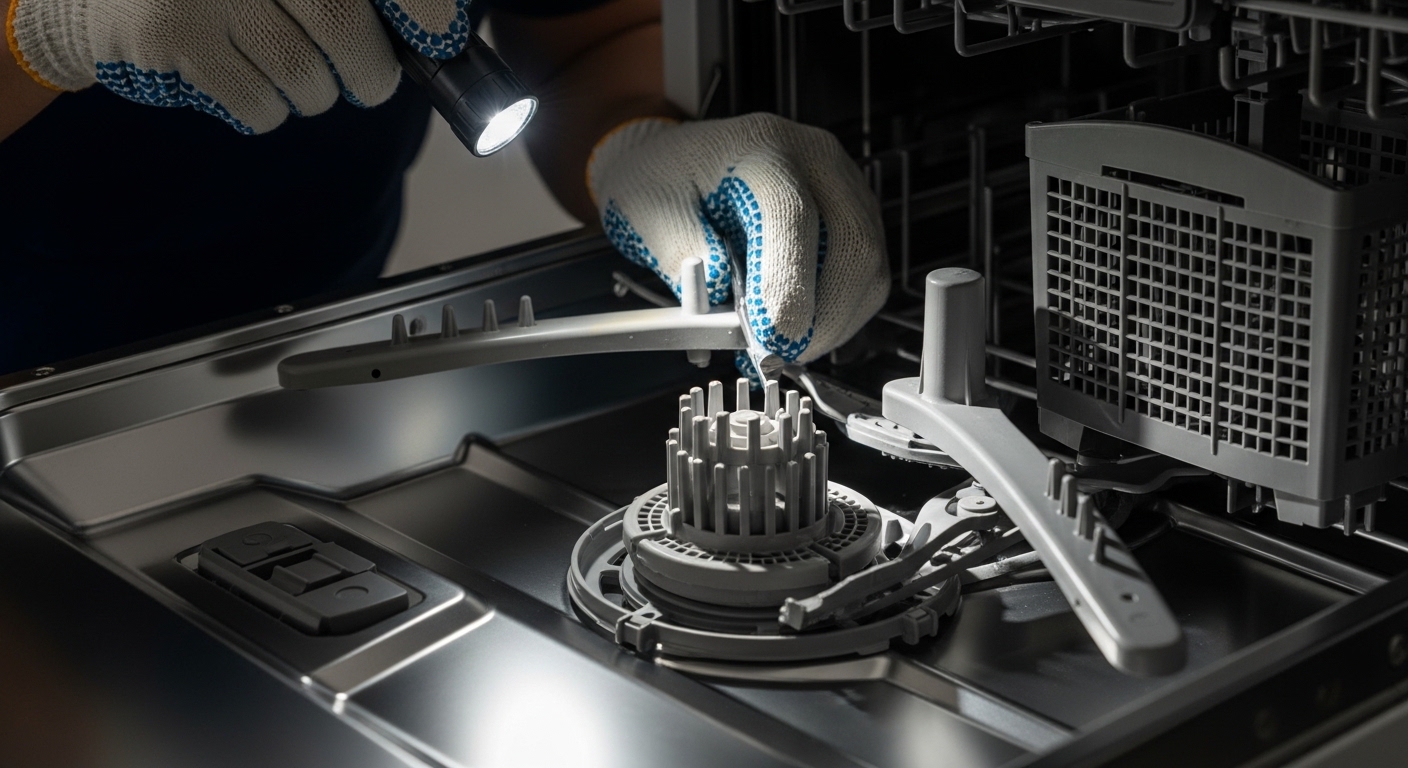
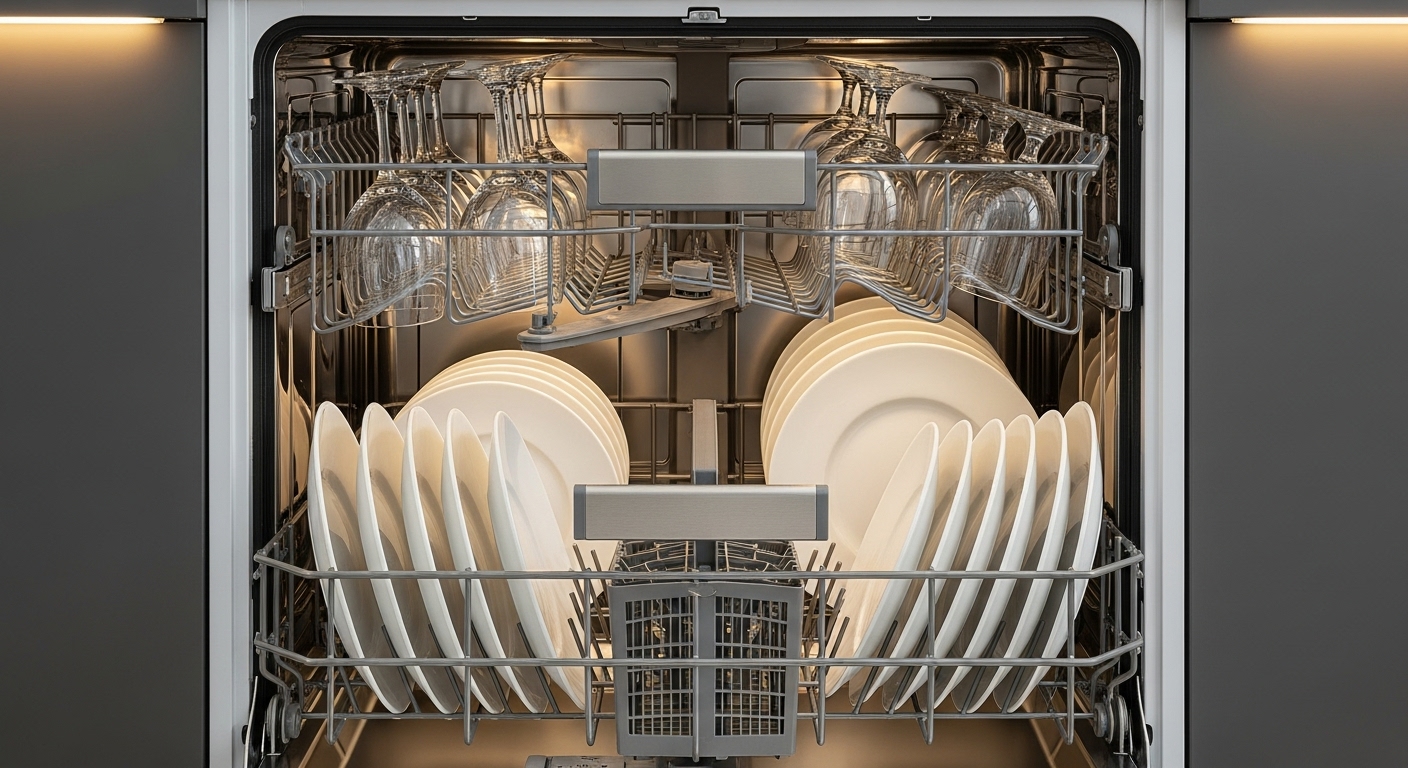
Begin dishwasher preparation by removing and cleaning the bottom filter, which most homeowners forget exists until poor cleaning performance becomes noticeable. This filter catches food particles and grease that would otherwise recirculate during wash cycles, and a clogged filter can reduce cleaning effectiveness by up to 40%. Inspect spray arms for clogs in their holes – use a toothpick to clear any debris, as blocked spray arms create uneven water distribution that leaves dishes dirty despite completed cycles.

Clean Dishwasher with Festive Plates and Glassware

Run an empty cleaning cycle using dishwasher-specific cleaning tablets or a mixture of white vinegar and baking soda to remove built-up grease and mineral deposits from internal components. Check door seals for cracks or food buildup that could prevent proper sealing, and ensure your water heater is set to 120°F – water that’s too cool won’t activate detergent properly, while water that’s too hot can damage delicate items and waste energy.

Small appliances like mixers, food processors, and slow cookers often sit unused for months before being called into heavy holiday duty, making preparation checks essential for reliable performance. Test all small appliances now rather than discovering problems when you’re mid-recipe with guests arriving shortly. Clean attachments thoroughly, check cord integrity for any cracks or fraying, and ensure all safety features function properly. For appliances with motors like stand mixers, run them briefly to ensure smooth operation – unusual noises or vibrations could indicate internal issues that need professional attention before the holiday rush begins.

Preventive Measures for Peak Usage Periods

Understanding how to properly manage your appliances during actual holiday cooking is just as important as the preparation work you’ve completed. Even perfectly maintained appliances can fail if pushed beyond their design limitations, so implementing smart usage strategies helps ensure your equipment survives the holiday marathon intact.

Oven management becomes critical when you’re juggling multiple dishes with different temperature requirements throughout extended cooking sessions. Avoid rapid temperature changes that stress heating elements – if you need to switch from 350°F to 450°F, allow gradual increases rather than cranking the temperature immediately. Plan your cooking schedule to minimize door openings, as each opening can drop internal temperature by 25-50 degrees, forcing your oven to work harder to recover.

Consider investing in an oven thermometer that remains inside during cooking, allowing you to monitor actual temperatures without opening the door. Rotate dish positions periodically for even cooking, but do so quickly and efficiently. If your oven has convection settings, use them strategically – convection cooking can reduce cooking times and temperatures, giving your appliance a break during marathon cooking sessions.

Refrigerator management during holidays requires strategic thinking about organization and temperature maintenance. Avoid overloading shelves, which restricts air circulation and forces your compressor to work harder maintaining consistent temperatures. Store hot foods in shallow containers and allow them to cool before refrigerating – adding large amounts of hot food forces your refrigerator to work overtime removing excess heat.

Keep door openings brief and purposeful by planning what you need before opening the door. Consider designating specific times for major food organization rather than constantly rearranging items throughout the day. If you’re hosting large gatherings, supplement your refrigerator with coolers filled with ice for beverages and items that don’t require precise temperature control, reducing the load on your primary appliance.

Emergency Preparedness and Professional Support

Even with perfect preparation and careful usage, appliance failures can still occur during holiday periods, making emergency preparedness an essential component of your holiday appliance strategy. Having a solid plan in place helps you respond quickly and effectively, potentially salvaging your celebration even when disaster strikes.

Create an emergency contact list before the holiday season begins, including local appliance repair services that offer holiday and weekend coverage. Research their response times, service areas, and typical costs for emergency calls so you’re not scrambling for information during a crisis. Keep important appliance information easily accessible – model numbers, purchase dates, and warranty information for all major appliances should be stored in one location where family members can find them quickly.

Develop backup cooking strategies that don’t rely on your primary appliances. Slow cookers, electric griddles, and countertop convection ovens can substitute for oven cooking if your main unit fails. Know which dishes from your holiday menu can be prepared using alternative methods, and keep backup ingredients on hand for simpler substitutions if complex recipes become impossible to execute.

For refrigeration emergencies, identify nearby sources of ice and cooler space – many grocery stores and gas stations stock extra ice during holiday periods specifically for these situations. Prioritize which foods need immediate cooling and which can tolerate brief temperature fluctuations. Having insulated bags or small coolers readily available allows quick action to preserve critical items while professional repairs are arranged.

Frequently Asked Questions

When should I start preparing my appliances for the holiday season?

Begin appliance preparation 2-3 weeks before your first major holiday meal to allow time for any necessary repairs or replacements. This timeline ensures you’re not stuck with a broken appliance during peak usage periods when repair services may be busy or closed. Early preparation also allows you to spread maintenance tasks over several weekends rather than rushing through everything at once.

What are the most common holiday appliance failures in Abbotsford homes?

Oven heating element failures top the list at 54% of holiday appliance problems, followed by refrigerator temperature control issues and dishwasher drainage problems. Fraser Valley homes also experience higher rates of appliance door seal failures due to winter humidity fluctuations. These regional factors make preventive maintenance even more critical for local homeowners.

How can I tell if my appliance needs professional maintenance before the holidays?

Warning signs include unusual noises, inconsistent temperatures, longer cycle times, increased energy bills, or any visible damage to components like door seals or heating elements. If your appliance is more than 7-8 years old and hasn’t received professional maintenance recently, it’s worth having a technician inspect it before heavy holiday usage begins.

What should I do if an appliance breaks down on a holiday when repair shops are closed?

First, ensure safety by unplugging electrical appliances or shutting off gas supplies if you detect leaks. Document the problem with photos if safe to do so, then implement backup cooking or cooling strategies while you wait for professional help. Many Abbotsford repair services offer emergency holiday coverage, though response times may be longer and costs higher than regular service calls.

Wrapping Up

Preparing your appliances for the holiday season isn’t just about preventing breakdowns – it’s about ensuring your family celebrations remain focused on what matters most: spending quality time together. By following these comprehensive preparation steps and implementing smart usage strategies, you’re setting yourself up for holiday success while protecting your valuable appliance investments.

When professional maintenance or emergency repairs become necessary, Abbotsford Appliance Repair Pros stands ready to help with comprehensive appliance services throughout the Fraser Valley. Our experienced technicians understand the unique challenges that local climate conditions place on household appliances, and we offer both preventive maintenance and emergency repair services to keep your holiday celebrations on track.

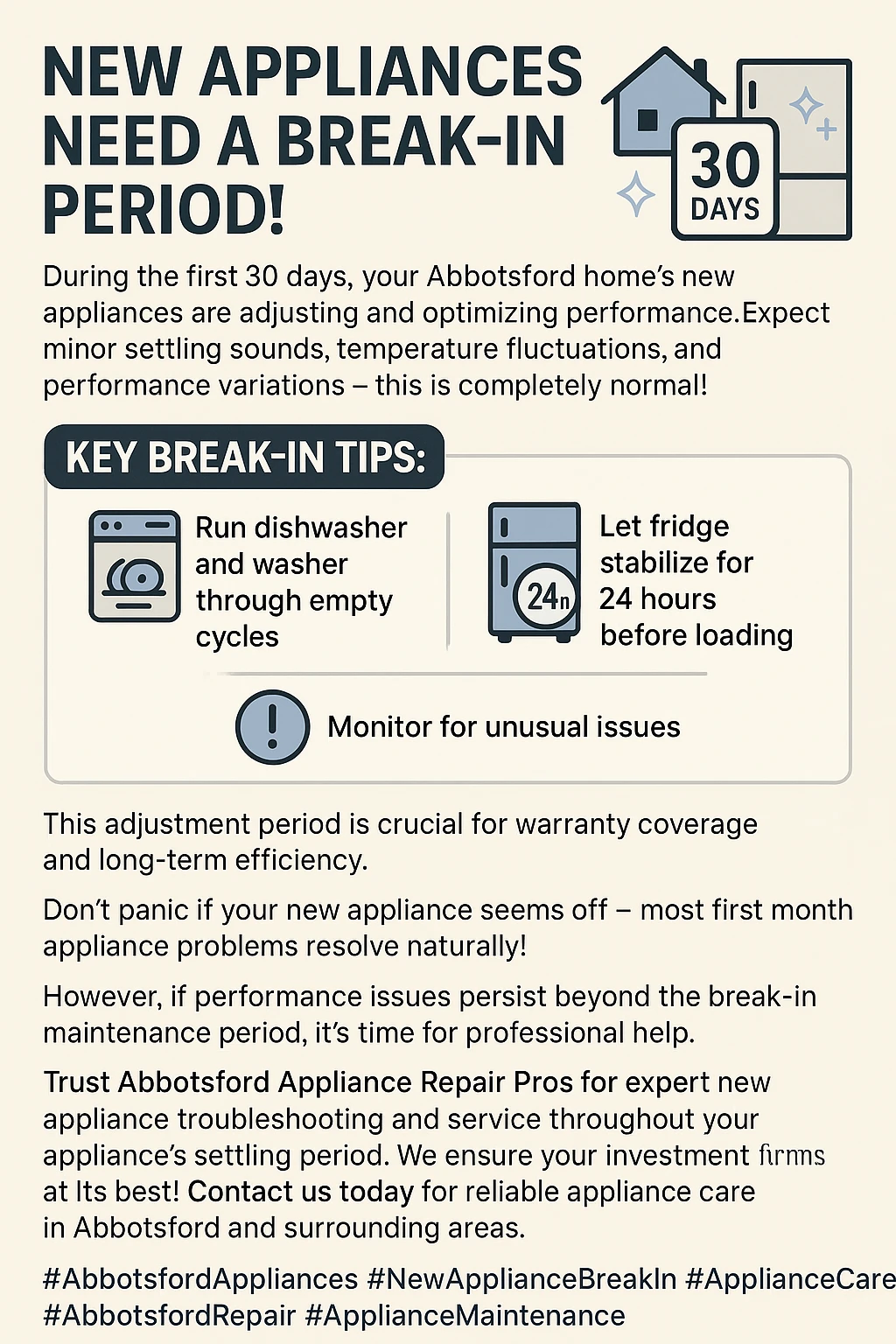
New Home Appliance Break-In Period: What Abbotsford Homeowners Need to Know About the First 30 Days

Wondering why your brand new refrigerator is making strange sounds or your dishwasher isn’t cleaning as expected during its first month? These early performance quirks aren’t defects—they’re part of a critical adjustment period that determines your appliance’s entire lifespan and efficiency.

Picture this: you’ve just invested thousands of dollars in a gleaming new kitchen suite, but instead of the flawless performance you expected, your refrigerator takes forever to cool down, your dishwasher leaves spots on glasses, and mysterious clicking sounds emanate from your washing machine at night. Before you panic and call for warranty service, understand that what you’re experiencing is likely the new appliance break-in period—a scientifically validated adjustment phase that’s as crucial to your appliance’s longevity as it is misunderstood by most homeowners. During these first 30 days, your appliances are simultaneously settling mechanically, calibrating electronically, and burning off manufacturing residues, all while adapting to Abbotsford’s unique coastal climate conditions.

For Abbotsford homeowners specifically, this break-in period becomes even more critical due to our region’s challenging environment. The Fraser Valley’s persistent humidity levels often exceed 70%, salt-laden coastal air penetrates surprisingly far inland, and dramatic temperature swings between seasons create stresses that manufacturers in drier climates rarely account for in their standard guidelines. What might be a straightforward 21-day adjustment period in Arizona could easily extend to 35-40 days in our coastal environment, and the stakes are higher—improper break-in procedures in Abbotsford’s climate can reduce appliance lifespan by 3-5 years and increase first-year failure rates by up to 80%.

This isn’t about following arbitrary rules or honoring manufacturer marketing schemes. Research consistently demonstrates that appliances receiving proper break-in care develop fewer mechanical problems, maintain higher energy efficiency ratings throughout their operational lives, and require significantly fewer repairs during their warranty periods. The 30-day investment in careful operation and monitoring pays dividends for the entire 10-15 year lifespan of your major appliances, making this period one of the most cost-effective investments any homeowner can make.

Key Outtakes:

  • The break-in period involves three simultaneous processes: material settling, electronic calibration, and manufacturing residue elimination that directly impact long-term performance
  • Abbotsford’s coastal climate—with high humidity, salt air, and temperature fluctuations—requires extended break-in periods compared to drier regions
  • Proper break-in procedures can extend appliance lifespan by 3-5 years and prevent up to 80% of first-year mechanical failures
  • Progressive load integration during the first month is more important than immediate full-capacity operation for optimal long-term performance
  • Documentation during break-in period provides crucial warranty protection and helps distinguish normal adjustment from genuine defects

Infographic summarizing key takeaways for new appliance break-in period.

Understanding the Science Behind New Appliance Break-In Requirements

Cutaway view showing the internal mechanics of a new appliance.

The transition from factory floor to your Abbotsford kitchen involves more than simply plugging in your new appliance and expecting peak performance. During manufacturing, transportation, and delivery, every component within your appliance experiences mechanical stress, vibration, and environmental changes that leave internal systems in a state requiring gradual adjustment to reach optimal functionality. The break-in period represents the scientifically validated timeframe during which these adjustments occur naturally through progressive use, rather than through immediate full-capacity operation that can cause permanent damage to components still settling into their intended positions.

Material settling represents the most fundamental aspect of why new appliances need adjustment time. Metal components used in appliance housings, internal frameworks, and mechanical assemblies develop internal stresses during manufacturing and shipping that must be gradually relieved through normal operational cycles. This relief process occurs most effectively when appliances are subjected to gentle, progressive loading rather than immediate maximum-capacity demands. Rubber seals, gaskets, and flexible components similarly require time under gentle operating conditions to conform to their intended positions and establish proper sealing characteristics that prevent leaks and maintain operational efficiency.

Modern appliances function as sophisticated computers equipped with multiple sensor systems, control boards, and learning algorithms that require extended operational periods to calibrate properly. Temperature sensors throughout refrigerator compartments need multiple cooling cycles to establish accurate baseline readings before they can reliably maintain precise temperatures. Washing machines and dishwashers contain electronic systems that must learn the characteristics of your home’s water supply, electrical patterns, and usage demands before they can optimize their cycles for maximum cleaning effectiveness and energy efficiency. This calibration process typically continues throughout the entire 30-day period, with research indicating that appliances actually improve in performance during days 14-21 as mechanical and electronic systems reach optimal adjustment levels.

Manufacturing processes necessarily involve protective coatings, lubricating oils, and chemical compounds that prevent component damage during assembly and shipping phases. These materials must be safely eliminated before appliances are exposed to food preparation or storage applications. The controlled burning and elimination process that occurs during initial empty cycles removes these residues in a managed way that prevents contamination while allowing internal systems to establish proper operational characteristics. For ovens specifically, this process is visible as smoke and distinctive odors during first heating cycles, while refrigerators and other appliances undergo similar but less obvious residue elimination during their initial operational periods.

Abbotsford’s Climate Challenges During the Break-In Period

View of the Abbotsford coastal climate which can affect home appliances.

Understanding how Abbotsford’s unique coastal environment affects the appliance break-in process requires recognizing that manufacturers typically design their products and establish break-in protocols based on moderate climate conditions found in regions like the American Southwest, where humidity rarely exceeds 40% and temperature variations remain relatively stable. The Fraser Valley’s characteristic humidity levels, which regularly exceed 60% and often climb above 70% during our extended rainy seasons, fundamentally alter how appliances settle and calibrate during their critical first month.

Elevated humidity during the break-in period affects metal components differently than manufacturers anticipate, causing expansion and contraction patterns that can extend the normal settling timeframe by several weeks. Electrical connections designed to establish proper contact resistance under moderate humidity conditions may require additional time to stabilize when surrounded by persistently moist air. The continuous presence of moisture in the environment surrounding newly installed appliances can accelerate microscopic corrosion formation on electrical contacts and mechanical interfaces, potentially creating intermittent operational issues if appliances aren’t given adequate time to establish stable operating patterns before being subjected to full operational demands.

The Fraser Valley’s characteristic temperature fluctuations between daily highs and lows, and particularly between seasons, create thermal stress cycles that are significantly more challenging during the break-in period than during normal operation. Newly installed refrigerators in Abbotsford might experience ambient temperature variations of 15-20 degrees Fahrenheit between morning and afternoon during transitional seasons, forcing repeated expansion and contraction cycles through materials that haven’t yet fully settled. These thermal cycles can interfere with the normal settling process, potentially causing calibration delays or mechanical stress that wouldn’t occur in more stable climate conditions.

While not all Abbotsford neighborhoods experience direct oceanic salt air exposure, the salt-laden moisture that characterizes our coastal environment penetrates surprisingly far inland, affecting appliances even in areas that seem removed from marine influences. During the break-in period, when protective coatings and internal components are still establishing optimal configurations, salt air exposure can initiate corrosion processes that would normally remain dormant once appliances have fully settled. This accelerated corrosion often occurs invisibly during the initial month, with performance impacts not appearing until months later when accumulated corrosion finally compromises mechanical or electrical function. Coastal humidity effects on appliance components become particularly problematic when combined with inadequate break-in procedures.

The Critical First 72 Hours: Installation and Setup

A modern kitchen with new appliances undergoing an adjustment period.

The initial three days following appliance delivery represent the most crucial phase of the entire break-in process, as decisions and actions taken during this window directly determine whether your appliance will develop problems during its first month and beyond. This period involves the transition from shipping and storage state to operational readiness, a process that requires methodical attention to manufacturer specifications and environmental factors unique to your Abbotsford home.

Proper unpacking and inspection procedures must be systematic and thorough, as shipping damage that goes unnoticed can be significantly exacerbated once the appliance begins operation. Every accessible surface should be examined for dents, cracks, scratches, or other damage that might have occurred during transport from the manufacturer through regional distribution centers to your home. Beyond visual inspection, verifying that all accessories, installation hardware, and documentation listed in the delivery manifest are actually present prevents delays and ensures that installation can proceed

Appliance Delivery Day Disasters: How Abbotsford Homeowners Can Avoid Damage During Installation and Setup

Appliance Delivery Day Disasters: How Abbotsford Homeowners Can Avoid Damage During Installation and Setup

Worried about your brand new appliance arriving damaged or your flooring getting scratched during delivery? Follow our expert guide to transform what could be a costly disaster into a smooth, successful installation that protects both your investment and your home.Picture this: you’ve just purchased that dream refrigerator you’ve been saving up for, scheduled delivery for the perfect weekend, and cleared your schedule to be home for the big day. The delivery truck pulls up, two guys hop out, and within minutes your excitement turns to horror as you watch them drag your new appliance across your beautiful floors, leaving a six-foot scratch that looks like it was carved by a chainsaw. [IMAGE PLACEHOLDER FOR IMAGE1] Sound familiar? Unfortunately, this scenario plays out in Abbotsford homes every single day, and it’s completely preventable with the right preparation and knowledge.The appliance delivery industry has undergone massive changes in recent years, with most major retailers now outsourcing delivery to third-party companies that may not share the same commitment to protecting your home and investment. What should be a straightforward process has become fraught with potential disasters, from damaged floors and dented walls to improperly installed appliances that void warranties before you even plug them in. The stakes are higher than most homeowners realize – a simple delivery mishap can cost thousands in repairs, replacement appliances, and home restoration.But here’s the good news: armed with the right information and a solid preparation strategy, you can avoid these disasters entirely. This comprehensive guide will walk you through everything you need to know to ensure your appliance delivery goes smoothly, from pre-delivery planning that prevents 90% of common problems to post-delivery inspection techniques that protect your legal rights and warranty coverage.

Key Outtakes:

  • Pre-delivery preparation, including comprehensive measurements and photographic documentation, prevents most delivery disasters before they occur
  • Your right to refuse damaged appliances ends the moment you sign the delivery receipt, making thorough inspection absolutely critical
  • Professional installation costs $200-500 but prevents warranty-voiding mistakes that can cost thousands in repairs
  • Abbotsford’s coastal climate and housing characteristics create unique challenges requiring specialized delivery approaches
  • Proper documentation and immediate damage reporting within 24-48 hours protects your legal rights and insurance claims

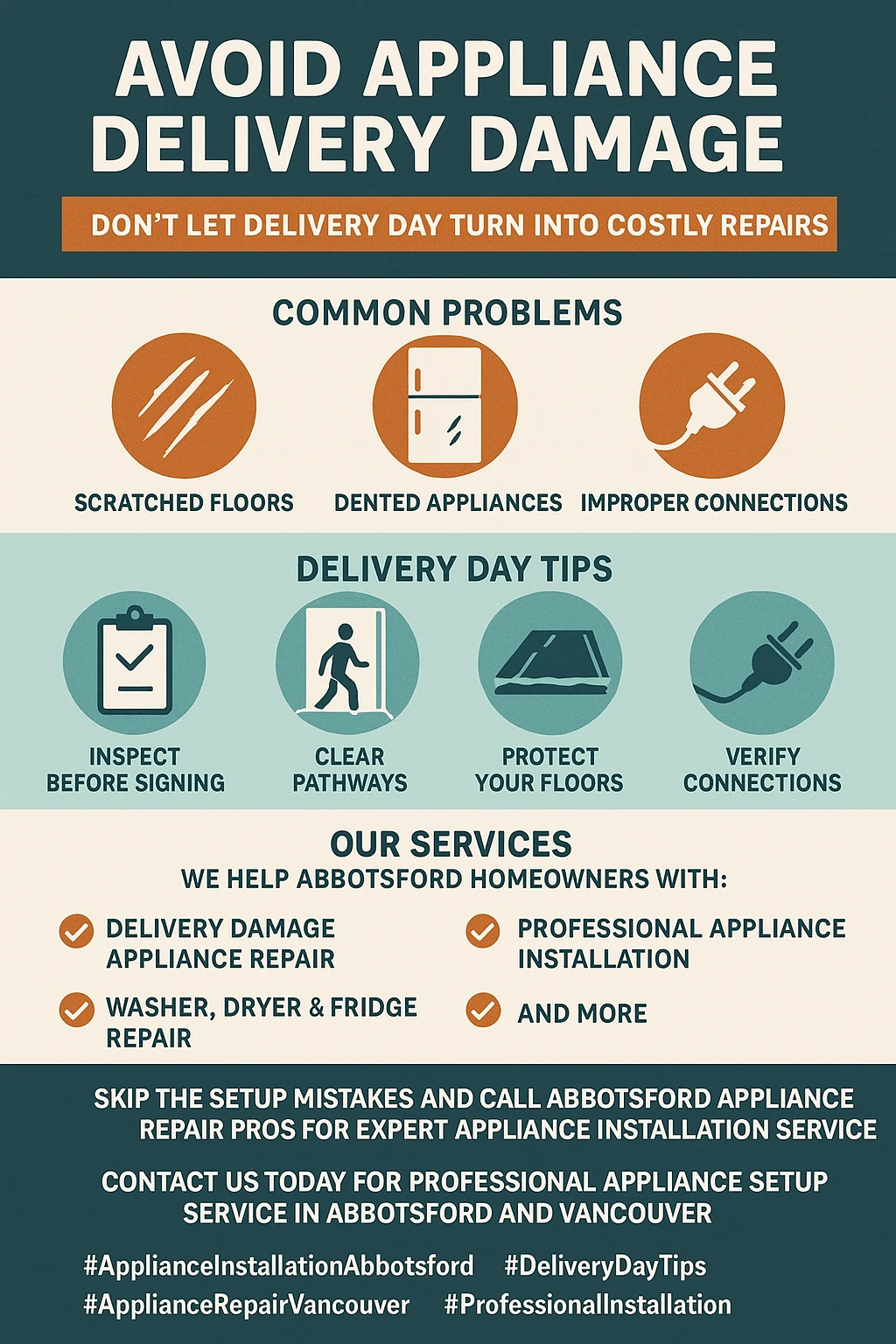
Infographic on how to prevent appliance delivery damage

Understanding Appliance Delivery Risks in Today’s Market

Scratched hardwood floor from an appliance delivery
The landscape of appliance delivery has fundamentally changed over the past decade, creating new risks that many Abbotsford homeowners don’t fully understand. Gone are the days when your local appliance store handled everything in-house with trained professionals who took pride in their work. Today’s reality involves a complex web of third-party delivery services, subcontracted installers, and accountability gaps that can leave you holding the bag when things go wrong.The financial implications of delivery disasters extend far beyond the initial sticker shock of seeing your new appliance damaged. When delivery teams scratch your floors, dent your walls, or improperly install your appliances, you’re looking at repair costs that often exceed the price of the appliance itself. Professional floor refinishing can cost $3-8 per square foot, meaning that six-foot scratch could easily run $500-1000 to repair properly. Wall repairs, cabinet refinishing, and structural damage can push costs even higher, especially in Abbotsford’s market where skilled tradespeople command premium rates.What makes these situations particularly frustrating is how preventable they are with proper planning and oversight. The horror stories we hear – appliances dropped down staircases, refrigerator doors torn off hinges during tight turns, washing machines that flood kitchens because of improper installation – almost always stem from rushed delivery schedules, inadequate preparation, or choosing the cheapest delivery option without understanding what you’re really getting. Professional delivery services that take time to assess your home, protect your surfaces, and install appliances correctly cost more upfront, but they save money and heartache in the long run.The warranty implications add another layer of complexity that catches many homeowners off guard. Modern appliance warranties specifically exclude damage caused during delivery and installation, meaning manufacturers won’t cover problems that result from improper handling or setup. If your brand new dishwasher develops a leak because the delivery team didn’t properly connect the water lines, you’re responsible for both the appliance repair and any water damage to your home. These warranty exclusions make it absolutely critical to get delivery and installation right the first time.

Pre-Delivery Planning: Your First Line of Defense

Homeowner measuring doorway before appliance delivery
The foundation of successful appliance delivery starts weeks before the truck arrives at your door, with meticulous planning that addresses every aspect of the process. Think of pre-delivery planning like preparing for major surgery – the more thoroughly you prepare, the better your outcomes and the fewer complications you’ll encounter. This preparation phase represents your greatest opportunity to prevent problems, as once delivery day arrives, your ability to control outcomes becomes much more limited.The measurement phase of pre-delivery planning extends far beyond simply checking whether your new refrigerator will fit in the designated space. You need to map the entire journey your appliance will take, from the delivery truck through your front door, around corners, up stairs, and into its final position. [IMAGE PLACEHOLDER FOR IMAGE2] Professional delivery teams call this “pathway assessment,” and it’s something every homeowner should conduct personally before scheduling delivery. Start by measuring your front door opening, paying attention to both the frame width and any obstacles like storm doors or decorative elements that might reduce clearance.Continue measuring every doorway, hallway, and staircase your appliance must navigate, noting the dimensions at multiple points along each pathway. Hallways often narrow at corners or where flooring transitions occur, and staircases may have different clearances at the top and bottom. Don’t forget about ceiling heights, especially in basements or areas with low-hanging fixtures, ductwork, or beams. Professional delivery services report that inadequate measurement is the leading cause of delivery refusals, with customers left scrambling to find alternative solutions.Documentation through photography serves multiple critical purposes in your pre-delivery preparation. First, it establishes a baseline record of your home’s condition that protects you if damage occurs during delivery. Take comprehensive photos of all surfaces along the delivery pathway – floors, walls, door frames, and any furniture or fixtures that might be affected. Pay special attention to areas where damage is most likely to occur, such as tight corners where appliances might scrape walls or door frames that could get dinged during maneuvering.Beyond damage protection, photographic documentation helps communicate your home’s layout and challenges to the delivery team before they arrive. Many delivery services now request photos of challenging installations, allowing them to bring appropriate equipment and plan their approach accordingly. This proactive communication prevents surprises that could lead to delivery refusal or inadequate preparation that increases the risk of damage. Include photos of your old appliance in its current location, the surrounding area, and any obstacles or tight spaces the delivery team will encounter.Utility preparation represents another critical element of pre-delivery planning that many homeowners overlook until delivery day. Different appliances require different utility connections, and discovering incompatibility when the delivery team arrives can result in incomplete installation, additional charges, or postponed delivery. Electric dryers require 240-volt service with dedicated circuits, while gas dryers need properly functioning gas lines with accessible shut-off valves. Refrigerators with ice makers or water dispensers require water supply lines within six feet of the final position, with proper shut-off valves and adequate water pressure.Before scheduling delivery, have a qualified electrician or plumber assess your home’s utility infrastructure to ensure compatibility with your new appliances. This assessment should verify that electrical circuits can handle the power requirements, that gas lines are properly sized and positioned, that water supply lines have adequate pressure and flow, and that drainage connections are available where needed. Address any deficiencies before delivery day to avoid complications that could delay installation or result in additional charges from the delivery team.

Delivery Day Inspection: Protecting Your Investment

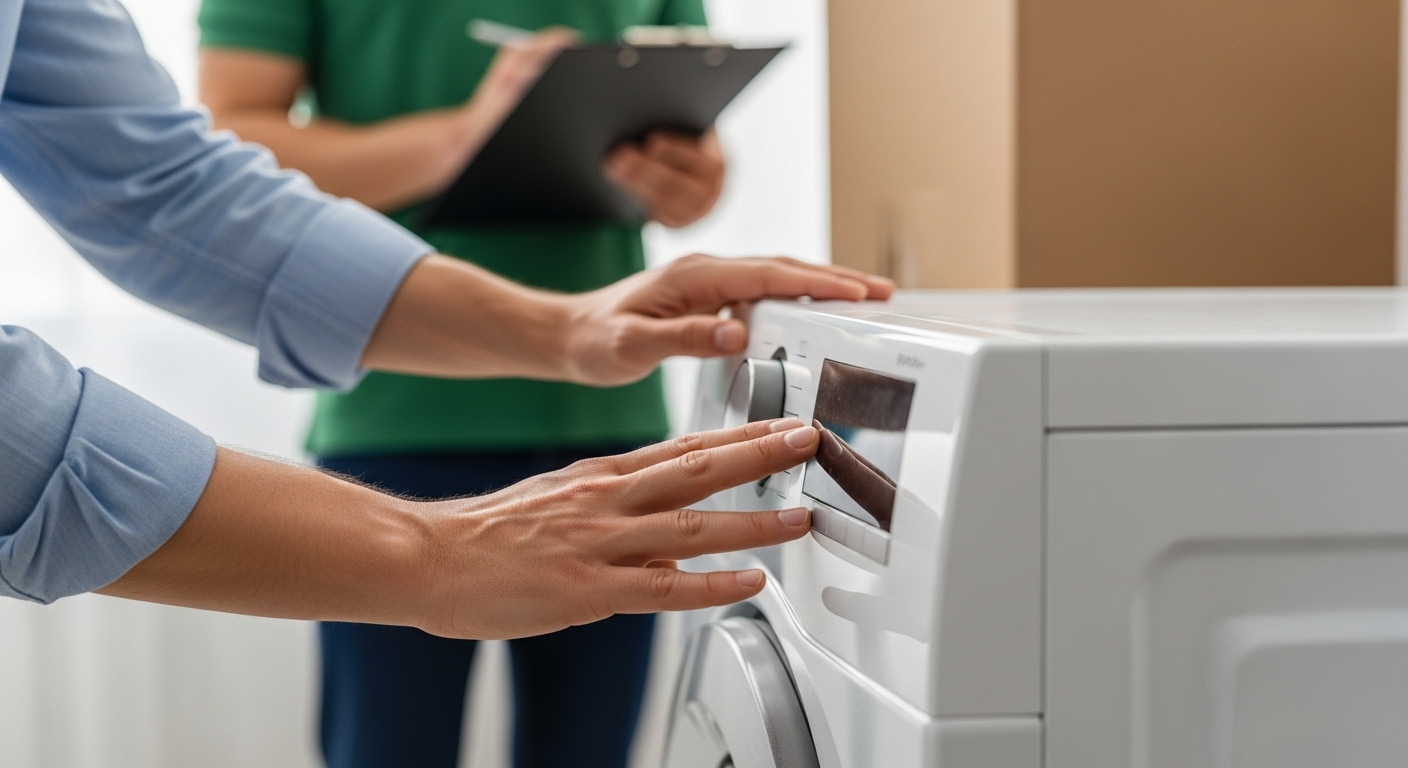
Customer carefully inspecting a new refrigerator for damage before signing delivery form
The moment of truth arrives when the delivery truck pulls into your driveway, marking the beginning of the most critical phase of your appliance purchase. Everything you’ve planned and prepared for comes down to the next few hours, during which your vigilance and attention to detail will determine whether you end up with a successful installation or a costly disaster. The inspection process that occurs before you sign the delivery receipt represents your only opportunity to identify and document problems while you still have leverage to demand solutions. [IMAGE PLACEHOLDER FOR IMAGE3] Understanding your rights during the delivery inspection phase empowers you to take control of the situation and refuse to accept damaged or improperly installed appliances. The legal principle here is simple but absolute: once you sign that delivery receipt, you’re accepting the appliance in its current condition. Any damage you discover afterward becomes much more difficult and expensive

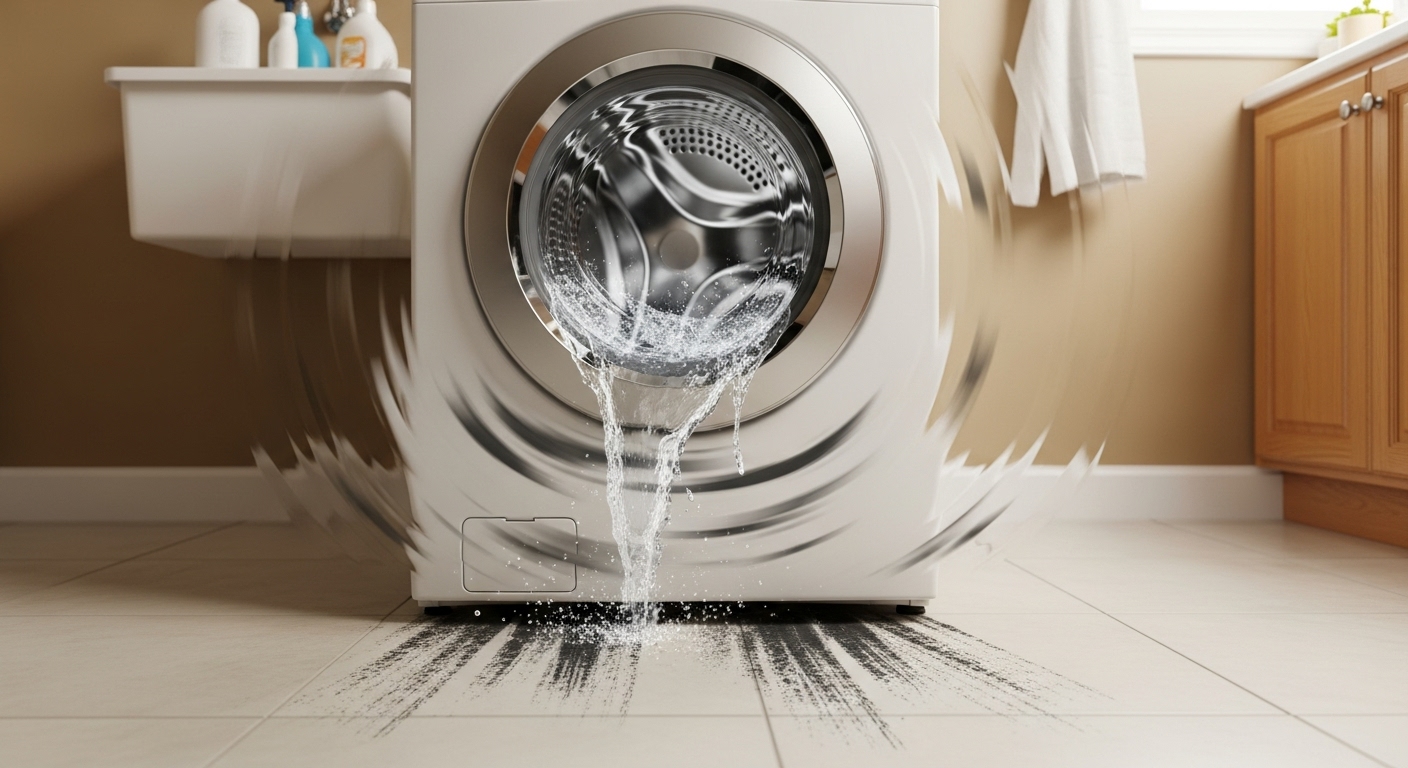
Appliance Vibration Solutions: Why Your Abbotsford Home Appliances Are Shaking, Rattling, and Moving – Plus Professional Fixes That Work

Appliance Vibration Solutions: Why Your Abbotsford Home Appliances Are Shaking, Rattling, and Moving – Plus Professional Fixes That Work

Tired of your washing machine doing the cha-cha across your laundry room floor during every spin cycle? If your dishwasher sounds like it’s hosting a percussion concert and your dryer is bouncing around like an overstuffed basketball, you’re dealing with appliance vibration issues that go way beyond just annoying noise pollution.

Picture this: I’m folding laundry in my Abbotsford home last Tuesday when suddenly my washer starts doing this wild shimmy-shake dance that would make a TikTok influencer jealous. The thing literally walked three feet across my basement floor, leaving scuff marks on my concrete and making my upstairs neighbors think I was rearranging furniture with a jackhammer. Sound familiar? That’s when I realized appliance vibration isn’t just a quirky household personality trait—it’s actually a red flag screaming for attention.

Here’s the thing about vibrating appliances that most homeowners don’t realize: what seems like a minor annoyance today can snowball into major structural damage, sky-high repair bills, and appliances that die premature deaths. We’re talking about progressive floor damage, foundation stress, and internal component wear that could have been prevented with the right interventions. Plus, if you’re living in one of Abbotsford’s older homes with hardwood floors or a newer build with engineered wood, that constant vibration is literally eating away at your home’s foundation and flooring systems.

The good news? Most appliance vibration problems have straightforward solutions when you know what you’re dealing with. From simple load balancing techniques you can master in five minutes to professional leveling services that eliminate vibration permanently, there’s a fix for every situation and budget. Whether you’re dealing with a rogue washing machine, a bouncing dryer, or a dishwasher that sounds like it’s crushing ice cubes, we’ve got the diagnostic tips and professional solutions that actually work.

Key Outtakes:

  • Unbalanced loads, poor leveling, and worn shock absorbers account for approximately 80% of residential appliance vibration problems, yet most can be resolved with proper diagnosis and adjustment.
  • Untreated appliance vibration causes progressive floor damage and structural issues that cost significantly more to repair than preventative stabilization solutions.
  • Professional appliance leveling services combined with anti-vibration dampeners are more effective at eliminating vibration than either solution alone.
  • Installation problems—including leftover shipping bolts, improper floor preparation, and incorrect leveling foot adjustments—are a leading cause of preventable vibration issues in newly purchased appliances.
  • Abbotsford’s climate and varied home foundations require location-specific vibration solutions that go beyond generic over-the-counter products.

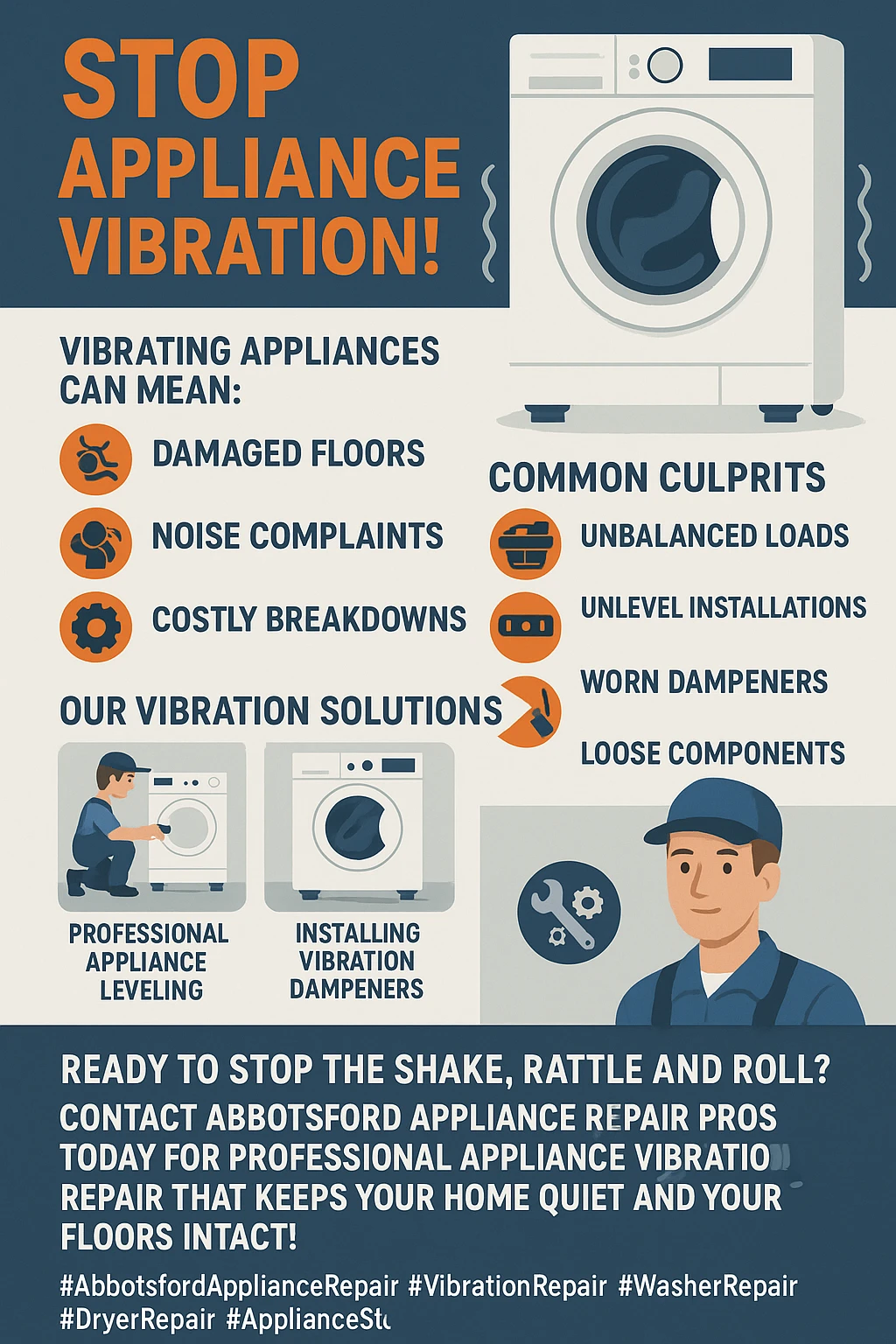
Infographic showing key takeaways about appliance vibration solutions

Understanding Appliance Vibration – Why It Happens

A white washing machine shown vibrating and moving across a laundry room floor during its spin cycle.

Before we dive into solutions, let’s get crystal clear on what we’re dealing with. Normal appliance operation includes some minor vibration during spin cycles as clothes move around to remove water, but there’s a massive difference between normal operational hums and appliances that are literally bouncing around your laundry room like they’re auditioning for a gymnastics team.

If your washing machine is “walking” across the floor, making sounds like a freight train, or creating vibrations you can feel through the floorboards, you’re looking at a mechanical problem that needs attention. Small amounts of shaking during spin cycles is expected as clothes move rapidly to remove water, but anything beyond that gentle rumble indicates something’s gone wrong with your appliance’s internal balance systems.

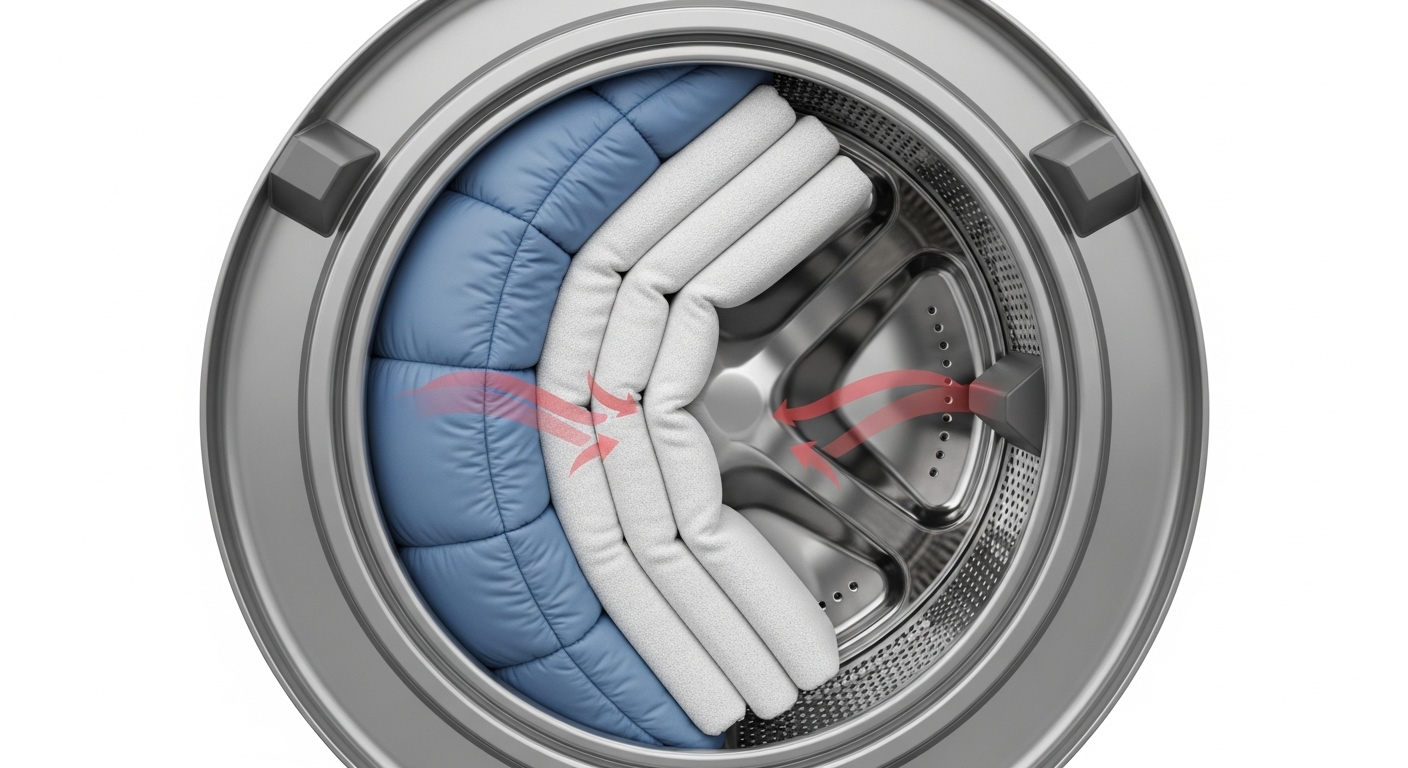
The most common culprit behind appliance vibration? Unbalanced loads. When clothes get bunched up on one side of the drum during the spin cycle, your washing machine essentially becomes a giant off-balance top spinning at high speed. Picture trying to spin a basketball with all the air concentrated in one spot—that’s exactly what happens inside your washer when towels clump together or a heavy comforter shifts to one side. Over time, these repeated unbalanced loads don’t just create noise; they strain internal suspension components and can actually damage the drum bearings and shock absorber systems.

But here’s where it gets interesting for Abbotsford homeowners specifically. Our local housing mix—from century-old character homes with settling foundations to modern builds with engineered wood floors—means that appliance vibration behaves differently depending on your home’s structure. A washing machine sitting on a concrete basement floor will transmit vibration differently than one installed on an upper-level engineered wood floor. Even slight variations in floor levelness, which might not be noticeable to the naked eye, can throw your appliance’s internal gyroscope completely out of whack.

Then there’s the issue of worn internal components that develop over your appliance’s lifespan. Shock absorbers, which are basically your washing machine’s built-in suspension system, deteriorate over time just like the shocks on your car. When these fail, even perfectly balanced loads can cause excessive vibration because the appliance has lost its ability to self-stabilize during operation. Similarly, worn drum bearings create a domino effect where the drum starts wobbling, which creates uneven weight distribution, which leads to more vibration, which accelerates bearing wear—it’s a vicious cycle that only gets worse with time.

Common Appliance Vibration Problems by Type

Inside view of a washing machine drum with a single heavy item, illustrating an unbalanced load.

Now that we understand the mechanics behind vibration, let’s break down what you’re likely experiencing with each type of appliance. Different appliances have distinct vibration signatures, and knowing what to look for can help you pinpoint whether you’re dealing with a simple fix or something that needs professional attention.

Starting with washing machines—the usual suspects in the vibration department. The most obvious sign is the classic “washing machine walk,” where your appliance literally moves across the floor during the spin cycle. This usually happens when you’re washing bulky items like comforters or sleeping bags that can’t distribute evenly around the drum. But here’s a pro tip: if you’ve just purchased a new washing machine and it’s shaking violently from day one, check for shipping bolts that weren’t removed during installation. Shipping bolts must be completely removed before operation, as their presence restricts drum movement and causes forceful shaking. I’ve seen brand-new machines nearly shake themselves apart because the installation team forgot this crucial step.

There’s also a specific issue with certain Whirlpool-built appliances where the suspension rod system can fail when the damping grease deteriorates or foam dampers wear out. If your washer is making grinding sounds along with the vibration, this could be your culprit. Unlike simple load balancing issues, suspension rod problems require professional diagnosis and repair because they involve the appliance’s core stabilization system.

Dryers present their own unique vibration challenges. The most common cause is worn drum rollers or bearings that support the rotating drum. When these components wear down, you’ll hear loud thumping sounds accompanied by visible shaking, especially when the drum is loaded with heavy items like denim or towels. Unlike washing machine vibration, which often happens in bursts during the spin cycle, dryer vibration tends to be consistent throughout the drying cycle and gets worse as the components deteriorate.

Dishwashers are sneaky when it comes to vibration problems because the issues often masquerade as normal operational noise. The most common problem is spray arm obstruction, where the rotating spray arm gets blocked by improperly loaded dishes and starts banging against plates or utensils. Dishwasher spray arm banging occurs when the spray arm gets blocked by dishes, a common issue resolved by proper dish arrangement. But more serious vibration can come from drain pump obstruction, where trapped debris causes the pump to work harder and create excessive movement throughout the appliance.

Refrigerators are probably the most complex when it comes to vibration diagnosis because they operate continuously and have multiple moving parts. You might notice different types of sounds: squeaking from dry hinges or worn wheels, rattling from loose condenser fans or items stored on top of the unit

Appliance Load Shedding Survival Guide: How Abbotsford Homeowners Can Protect Their Electronics During Rolling Blackouts and Power Grid Shutdowns

Appliance Load Shedding Survival Guide: How Abbotsford Homeowners Can Protect Their Electronics During Rolling Blackouts and Power Grid Shutdowns

Wondering how to protect your valuable Abbotsford appliances from the electrical chaos that happens when power returns after rolling blackouts? The truth is, those crucial microseconds when electricity surges back through your home’s wiring pose a far greater threat to refrigerators, TVs, and smart devices than the actual outage itself – and most homeowners have no clue their expensive electronics are sitting ducks.[IMAGE PLACEHOLDER FOR IMAGE1]

Picture this: you’re chilling at home in Abbotsford, maybe streaming Netflix or prepping dinner, when suddenly the power cuts out. No big deal, right? Just another rolling blackout that’ll be over in an hour or two. But here’s what most Fraser Valley homeowners don’t realize – the real danger isn’t sitting in the dark. It’s what happens in those first few microseconds when BC Hydro flips the switch and electricity comes roaring back through your neighborhood’s power lines.

That innocent little power restoration can unleash voltage spikes that are basically electrical tsunamis, crashing through your home’s wiring and frying circuit boards faster than you can say “surge protector.” We’re talking about voltage levels that can double or triple normal operating parameters, turning your $3,000 smart refrigerator into an expensive paperweight or transforming your entertainment center into a collection of dark screens. The kicker? Most of this damage happens so fast that you won’t even see a flicker – just appliances that mysteriously stop working after the lights come back on.

With Abbotsford experiencing some of BC’s highest outage rates and BC Hydro dealing with increasingly unstable grid conditions, protecting your appliances isn’t just smart home maintenance – it’s financial survival. Between climate change driving more extreme weather, aging infrastructure, and the reality that rolling blackouts are becoming the new normal for managing grid stability, Fraser Valley homeowners need to get serious about surge protection before the next outage turns their appliance collection into an expensive repair project.

Key Outtakes:

  • Abbotsford experiences approximately 3 power outages annually with average durations of 12 hours – unusually high for urban BC communities
  • The greatest appliance damage occurs during power restoration, not during outages, when voltage surges can exceed 300+ volts in residential circuits
  • Metal oxide varistors in surge protectors degrade with each surge event and require replacement every 3-5 years in areas with frequent load shedding
  • Whole-house surge protection systems cost $300-750 installed but protect against appliance replacement costs of $1,500-3,000 per major appliance
  • Smart home devices and IoT appliances face unique vulnerabilities from power fluctuations that can cause data corruption and firmware damage

Infographic of key takeaways for protecting home appliances during power outages in Abbotsford.

Understanding the Real Threat: Why Power Restoration is More Dangerous Than Outages

A shield graphic protecting various home appliances from an electrical surge, representing power surge protection in Abbotsford homes.

Let’s get real about what actually happens when your neighborhood loses power during rolling blackouts or emergency grid shutdowns. Most Abbotsford homeowners think the biggest risk is food spoiling in the fridge or missing their favorite TV shows. But the electrical reality is way scarier than temporary inconvenience. When BC Hydro cuts power to manage grid stability or prevent cascading failures, they’re not just turning off individual homes – they’re disconnecting entire distribution circuits that serve hundreds of properties simultaneously.

Here’s where things get dangerous. When utility operators restore power to these massive circuits, they’re essentially forcing thousands of volts back into a system that’s been sitting dormant. This creates what electrical engineers call “inrush current” – basically an electrical tidal wave that crashes through neighborhood power lines and into every home on the circuit. Your standard residential power operates at 120 volts for regular outlets and 240 volts for big appliances like dryers and stoves. But during power restoration, voltage can spike to 300+ volts for microseconds, which is enough to permanently damage sensitive electronics that weren’t designed to handle those levels.

The physics behind this destruction involves understanding how modern appliances actually work. Unlike the simple electromechanical devices your grandparents owned, today’s appliances are basically computers with motors attached. Your refrigerator has sophisticated temperature sensors and digital control boards. Your dishwasher runs complex wash cycles controlled by microprocessors. Even your water heater probably has electronic temperature regulation and safety systems. All of these digital components expect clean, stable electricity – not the electrical chaos that happens during grid restoration.

What makes surge damage particularly sneaky is that it doesn’t always announce itself dramatically. Sometimes your appliances keep working after a surge event, but internal components have been weakened or partially damaged. This creates a slow-motion failure scenario where appliances gradually perform worse over weeks or months before finally giving up completely. Many homeowners never connect these later failures to that “harmless” power outage from months earlier, instead just assuming their appliances wore out from normal use.

BC Hydro’s own data reveals why Abbotsford faces unique challenges in this regard. The utility manages three times more trees per kilometer of power line than any other North American electric company, and more than half of all outages result from vegetation falling on distribution lines during storms. This means not only do outages happen more frequently, but restoration attempts often involve multiple switching operations as crews try to isolate damaged sections and reroute power. Each switching operation creates another opportunity for voltage spikes to damage home appliances throughout the affected service area.

Appliance-Specific Vulnerabilities: What Gets Hit Hardest

A diagram illustrating a large voltage spike that occurs when power is restored after an outage.

Now that we understand why power restoration creates surge risks, let’s talk about which appliances in your Abbotsford home are most vulnerable and why. The pattern isn’t what most homeowners expect – it’s not necessarily the most expensive appliances that get damaged first, but rather the ones with the most sophisticated electronic controls and the least robust surge protection.

Kitchen appliances represent ground zero for surge damage because they combine expensive electronics with everyday necessity. Modern refrigerators are particularly vulnerable because they pack sensitive temperature sensors, digital display panels, and variable-speed compressor controls into a single unit that typically costs $1,500-3,000 to replace. The electronic control boards that manage cooling cycles can fry instantly when exposed to voltage spikes, leaving you with a dead fridge and hundreds of dollars worth of spoiled food. Even worse, refrigerator surge damage often isn’t immediately obvious – the unit might continue running but fail to maintain proper temperatures, creating food safety hazards that homeowners don’t notice for days or weeks.

Dishwashers face similar vulnerabilities because modern units depend entirely on electronic cycle controllers to manage water temperature, wash duration, and drainage timing. A single surge event can destroy these control systems, leaving you with a dishwasher that fills with water but won’t complete wash cycles. Repair costs typically run $200-500, which approaches half the replacement cost of mid-range units. Ranges and cooktops with digital displays, electronic ignition systems, and induction heating technology are equally susceptible, with replacement costs ranging from $800-2,500 depending on features.

What many homeowners overlook is that surge damage extends beyond obvious electronics to include hardwired systems throughout the home. Electric water heaters contain sophisticated temperature regulation and safety systems that voltage spikes can compromise. HVAC systems integrate electronic thermostats, variable-speed blower motors, and digital control boards that manage complex heating and cooling sequences. Even garage door openers and security systems can suffer surge damage that affects functionality or creates safety hazards.

A collection of smart home appliances, like a smart fridge and thermostat, shown as vulnerable during a power surge.

Smart home devices and Internet-connected appliances face particularly complex vulnerability patterns. Unlike traditional appliances that either work or don’t after surge exposure, smart devices can suffer partial damage that corrupts firmware, erases configuration data, or disrupts network connectivity. A smart thermostat might continue displaying information but lose its programmed schedules. A connected refrigerator might maintain cooling but lose internet features that manage energy efficiency or send alerts about maintenance needs. This type of damage creates frustrating reliability issues that are difficult to troubleshoot and expensive to repair.

The financial implications add up quickly when you consider that most homes contain $15,000-25,000 worth of surge-sensitive appliances and electronics. A single major surge event during power restoration can damage multiple appliances simultaneously, creating repair or replacement costs that can easily reach $5,000-8,000. For many Abbotsford homeowners, this represents a significant unexpected expense that homeowners insurance may not fully cover, making prevention through proper surge protection both economically wise and practically essential.

Metal

Appliance Financing Options: Payment Plans, Credit Programs, and Budget-Friendly Solutions for Major Repairs in Abbotsford

Faced with a broken washing machine or failing refrigerator that’s disrupting your daily routine? Discover the comprehensive range of financing options, payment plans, and budget-friendly solutions available to Abbotsford homeowners for managing major appliance repairs without breaking the bank. When your essential appliances decide to call it quits at the worst possible moment, the immediate panic isn’t just about the inconvenience – it’s about the financial hit you’re about to take. Whether it’s your refrigerator giving up on a hot summer day or your washing machine flooding the laundry room, appliance breakdowns never seem to happen when you’ve got extra cash sitting around. The good news? The landscape of appliance repair financing has evolved dramatically in recent years, offering homeowners in Abbotsford and the Fraser Valley more options than ever to manage these unexpected expenses. Gone are the days when your only choice was to max out a credit card or drain your emergency fund. Today’s financing ecosystem includes everything from interest-free buy-now-pay-later services to specialized appliance financing programs, personal loans with competitive rates, and even subscription-based maintenance plans that can prevent many costly repairs altogether. Understanding these options – and knowing how to choose the right one for your situation – can transform a financial crisis into a manageable monthly payment. The key to making smart decisions about appliance repair financing lies in understanding not just what’s available, but how each option affects your long-term financial health. Some financing choices can actually help build your credit score, while others might seem convenient but cost significantly more in the long run. By exploring the full spectrum of payment solutions, from traditional bank loans to innovative rent-to-own programs, you’ll be equipped to handle your next appliance emergency with confidence rather than panic.

Key Outtakes

  • Typical appliance repairs in the Abbotsford region cost between $195 and $500, with diagnostic fees adding $75-$125 to your total bill, making financing a practical option for many households facing unexpected breakdowns
  • Buy-now-pay-later services like Affirm offer 0% interest financing for 3-12 months with soft credit checks that won’t hurt your credit score, making them ideal for repairs under $1,000
  • The 50% rule provides a clear decision framework: if repair costs exceed half the price of a new appliance, replacement typically makes more financial sense, especially for appliances over 10 years old
  • Simple preventative maintenance like cleaning refrigerator coils every six months and dryer lint traps after every load can prevent the majority of expensive repairs that require financing
  • Rent-to-own programs accept anyone regardless of credit history but can cost 2-3 times the actual appliance price, making them a last resort despite their accessibility

5 key takeaways for appliance repair financing in Abbotsford infographic

Understanding Your Appliance Repair Financing Landscape

The world of appliance financing has exploded with options in recent years, but not all solutions are created equal. When your dishwasher starts leaking all over your kitchen floor or your dryer decides to take an indefinite break, understanding your financing options can mean the difference between a manageable monthly payment and a financial headache that lasts for months. Modern financing solutions range from traditional personal loans through banks to innovative buy-now-pay-later services that have revolutionized how we think about spreading out payments. These newer options often provide more flexibility and accessibility than conventional financing, particularly for homeowners with less-than-perfect credit scores. The key is matching the right financing solution to your specific situation, credit profile, and the urgency of your repair needs.Abbotsford appliance repair financing options What makes appliance repair financing particularly tricky is the emergency nature of most repairs. Unlike planning for a kitchen renovation where you have months to research financing options, appliance breakdowns demand immediate solutions. This urgency can lead to poor financial decisions if you’re not familiar with your options beforehand. Understanding the landscape now, before you need it, puts you in control when crisis strikes. The financing ecosystem includes several distinct categories: buy-now-pay-later services that split purchases into manageable installments, personal loans from banks and online lenders, in-store financing programs offered by appliance retailers, specialized appliance financing companies, and alternative options like rent-to-own arrangements. Each category serves different needs and credit profiles, with varying costs and qualification requirements that significantly impact your total expense.

Buy-Now-Pay-Later Services: The New Kid on the Block

Building on the foundation of understanding different financing categories, buy-now-pay-later services have emerged as game-changers in appliance repair financing. These services, led by companies like Affirm and Klarna, operate fundamentally differently from traditional credit cards or loans, offering unique advantages for homeowners facing unexpected repair costs. Affirm partners with major appliance retailers and service companies to offer payment terms ranging from 3 to 36 months, with APR rates between 0% and 36% depending on your creditworthiness and chosen terms. The magic happens with their promotional 0% APR financing for qualifying purchases, meaning a $700 repair bill could cost you exactly $58.33 per month over 12 months with zero interest charges. Compare that to a credit card at 19.99% APR, where the same repair would cost you about $65 monthly and add roughly $78 in interest charges. Buy now pay later for appliance repair The application process for buy-now-pay-later services stands out for its simplicity and credit-friendly approach. Most providers use soft credit checks for prequalification, which means you can see if you qualify and for what terms without any impact on your credit score. This feature alone makes BNPL services incredibly attractive for homeowners who want to explore their options without consequences. Only when you actually accept a financing offer does a hard credit check occur, and even then, the impact is typically minimal. What sets buy-now-pay-later apart from traditional financing is the automatic loan completion structure. Unlike credit cards where you might carry a balance indefinitely, BNPL plans have fixed end dates and predictable payment amounts. When you make that final payment, you’re done – no ongoing balance, no minimum payments, no revolving credit temptation. This structure appeals particularly to homeowners who prefer the certainty of installment payments over the flexibility (and potential pitfalls) of revolving credit. However, buy-now-pay-later services aren’t without their considerations. Many providers offer deferred interest programs, which might seem like 0% financing but carry a significant catch: if you don’t pay the full promotional balance by the specified date, you’ll owe interest calculated from the original purchase date. This retroactive interest can be substantial, potentially adding hundreds of dollars to your repair bill if you miss the promotional payoff deadline. The accessibility of BNPL services extends to credit requirements as well. While traditional personal loans might require credit scores of 620 or higher, many buy-now-pay-later providers approve consumers with fair or even poor credit, often accepting applicants with scores as low as 500. This accessibility makes BNPL services particularly valuable for younger homeowners still building credit or those who’ve experienced credit challenges but need immediate repair financing.

Traditional Personal Loans and Home Improvement Financing

While buy-now-pay-later services excel for smaller repairs and immediate needs, traditional personal loans and home improvement financing offer advantages for larger repair projects or homeowners seeking more conventional financing approaches. These established financing methods provide different benefits and serve distinct situations in the appliance repair financing landscape. Wells Fargo’s home improvement personal loans exemplify the traditional approach, offering fixed rates starting as low as 6.74% APR and ranging up to 26.49% APR, with loan amounts from $3,000 to $100,000 and terms spanning 12 to 84 months. For perspective, a $15,000 loan covering multiple appliance repairs and replacements over 36 months at 13.99% APR results in monthly payments of $513. While this might seem steep compared to BNPL options, the mathematics work favorably for larger projects where total financing needs exceed typical BNPL limits. Using a personal loan for home appliance replacement The structural advantages of personal loans become apparent when considering flexibility and credit building potential. Unlike BNPL services tied to specific retailers or repair companies, personal loan funds can be used anywhere – whether you choose the manufacturer’s authorized repair service, a local independent technician, or decide to purchase replacement appliances from any retailer. This flexibility proves particularly valuable when repair estimates vary significantly between providers or when you discover mid-project that replacement makes more sense than repair. Personal loans also contribute positively to your credit profile through installment payment history reported to all three major credit bureaus. Successfully managing a personal loan demonstrates your ability to handle installment debt, potentially improving your credit score over the loan term. This credit-building aspect contrasts sharply with most buy-now-pay-later services, which typically don’t report positive payment history to credit bureaus unless accounts become delinquent.

Appliance Insurance Claims: What Abbotsford Homeowners Need to Know About Getting Coverage for Repairs and Replacements

Appliance Insurance Claims: What Abbotsford Homeowners Need to Know About Getting Coverage for Repairs and Replacements

Dealing with a broken appliance and wondering if your Abbotsford home insurance will actually cover the damage? You’re not alone – many homeowners discover too late that improper documentation or missed filing deadlines can turn a covered claim into an expensive out-of-pocket repair bill.

Picture this: your three-year-old dishwasher suddenly floods your kitchen during one of Abbotsford’s winter storms, causing water damage to your hardwood floors and cabinets. You think you’re covered, but six months later you’re still fighting with your insurance company over depreciation calculations and coverage limits. Unfortunately, this scenario plays out in Fraser Valley homes more often than you’d think, especially with our region’s unique climate creating appliance challenges that standard insurance policies don’t always address clearly.

The reality is that successful appliance insurance claims require much more than just calling your agent and hoping for the best. From understanding the difference between personal property and dwelling coverage to documenting Abbotsford’s specific climate-related damage patterns, homeowners need a strategic approach to maximize their coverage. What makes our region particularly tricky is our mix of older heritage homes, modern strata regulations, and coastal conditions that create unique damage scenarios insurance adjusters don’t see in other markets.

Whether you’re dealing with humidity-related appliance corrosion, electrical surge damage from BC Hydro fluctuations, or water damage from our aging infrastructure, understanding the claims process can mean the difference between full replacement coverage and a disappointing settlement that leaves you thousands of dollars short. The key is knowing what documentation to gather, when to file, and how to work effectively with adjusters who may not understand Abbotsford’s specific housing and climate challenges.

Key Outtakes:

  • Proper documentation within 24 hours of appliance damage significantly increases claim approval rates and settlement amounts
  • Abbotsford’s coastal climate creates unique appliance damage patterns requiring specialized documentation for humidity effects and electrical issues
  • Home insurance covers appliances through personal property coverage (portable items) or dwelling coverage (built-in systems), with different limits and deductibles
  • Understanding depreciation calculations and replacement cost coverage can help homeowners negotiate settlements that reflect Abbotsford’s premium appliance market pricing
  • Equipment breakdown coverage fills critical gaps in standard policies by protecting against mechanical failures that normal homeowners insurance excludes

Infographic summarizing key takeaways for Abbotsford appliance insurance claims

Understanding Home Insurance Coverage for Appliances in Abbotsford

Comparison of home insurance coverage for personal property vs dwelling appliances

Before you can successfully file an appliance insurance claim in Abbotsford, you need to understand exactly what your home insurance policy covers and how appliances are classified. This isn’t as straightforward as most homeowners assume, especially in our region where the unique housing mix of heritage homes, modern condos, and strata regulations creates coverage complications that don’t exist in other markets. The insurance industry hasn’t exactly kept pace with Abbotsford’s rapid housing evolution, leaving homeowners in a frustrating gray area when appliances fail.

Most Abbotsford home insurance policies classify appliances into two distinct categories that determine your coverage limits and deductibles. Personal property coverage typically applies to portable appliances like refrigerators, washing machines, dryers, and standalone freezers. These items are usually covered for 50-70% of your dwelling coverage amount, which means if you have a $500,000 home, your personal property coverage might cap out at $250,000-$350,000 total. However, this coverage is shared among all your belongings, so appliances compete with furniture, electronics, and clothing for the same coverage pool.

Dwelling coverage, on the other hand, applies to built-in appliances that are considered part of your home’s structure. This includes systems like HVAC units, water heaters, built-in dishwashers, and range hoods that are permanently installed. The good news is that dwelling coverage typically offers higher limits and sometimes lower deductibles than personal property coverage. The challenging part is that insurance companies don’t always agree on which appliances fall into which category, especially in Abbotsford’s older homes where appliances might be semi-built-in or modified to fit unique spaces.

Abbotsford homeowners also need to understand covered perils – the specific types of damage that trigger insurance coverage. The most common covered perils for appliance damage include electrical surges from power fluctuations during our frequent storms, fire damage that affects appliances beyond repair, sudden and accidental water damage from burst pipes or appliance malfunctions, and theft of portable appliances during break-ins. What’s crucial to understand is that normal wear and tear, gradual leaks, or maintenance issues are specifically excluded from coverage, regardless of how expensive the resulting damage might be.

One coverage option that’s becoming increasingly important for Abbotsford homeowners is equipment breakdown coverage. This optional coverage provides protection for mechanical, electrical, or pressurized system breakdowns that wouldn’t otherwise be covered under standard home insurance. For our region’s strata buildings, equipment breakdown coverage is often essential because shared utility systems can create individual unit liability that standard policies don’t address adequately.

The Coastal Climate Factor: How Abbotsford’s Environment Affects Claims

Corrosion on an HVAC unit due to Abbotsford's coastal climate

Moving from general coverage to specific regional challenges, Abbotsford’s coastal proximity creates environmental conditions that directly impact how appliances fail and how insurance companies evaluate damage claims. Living in the Fraser Valley comes with beautiful scenery and mild temperatures, but it also means dealing with humidity levels and salt air exposure that can wreak havoc on household appliances in ways that insurance adjusters from drier regions might not fully understand.

Salt air infiltration represents one of the most misunderstood aspects of Abbotsford appliance damage, particularly affecting exterior units like heat pumps, air conditioning systems, and any appliances with exterior venting. This isn’t the kind of damage that shows up immediately – it develops gradually over months or years, creating corrosion patterns that might look like normal wear and tear to adjusters unfamiliar with coastal conditions. When documenting this type of damage, you need to photograph not just the obvious rust or corrosion, but also any unusual buildup of salt residue, deterioration of electrical connections, and performance issues that directly correlate with your appliance’s exposure to coastal air.

Our region’s notorious humidity creates ongoing challenges for appliances designed to manage moisture, and these challenges often fall into insurance company blind spots. Front-loading washing machines, while incredibly popular and energy-efficient, become particularly susceptible to mold and mildew issues in our persistently damp climate. These problems lead to frequent door seal replacements, persistent odor issues, and sometimes complete drum replacement – repairs that can easily cost $800-1,500 but often get classified as “maintenance issues” rather than covered mechanical failures.

The frequent power fluctuations and outages we experience put additional stress on appliance electronics that most other Canadian cities simply don’t deal with to the same degree. Abbotsford’s mix of aging electrical infrastructure in established neighborhoods and rapid development putting strain on the grid creates power quality issues that wreak havoc on sensitive electronic components. Control board failures, digital display problems, and electronic component burnouts occur much more frequently here than in areas with stable, modern power grids.

These failures often fall outside standard warranty coverage if insurance companies decide they’re related to power quality rather than manufacturing defects, making proper documentation of power conditions absolutely essential. Understanding surge protection and how to document electrical damage becomes crucial for Abbotsford homeowners dealing with frequent power issues that can destroy expensive appliances without warning.

Step-by-Step Claims Process for Maximum Approval

Abbotsford homeowner reviewing appliance insurance claim forms

Now that we understand the coverage landscape and regional challenges, let’s dive into the actual process of filing appliance insurance claims that get approved rather than denied. The success of your claim often depends entirely on how well you handle the first 24-48 hours after discovering damage, and there are specific steps that dramatically increase your chances of a favorable settlement.

The moment you discover appliance damage, your first priority should be immediate notification to your insurance company, ideally within 24 hours. This notification starts the official claims timeline and demonstrates diligence in reporting, which insurance companies consider when evaluating claim validity. When you call, have specific details ready: when you first noticed the problem, what you think caused the damage, and a preliminary assessment of what’s affected. Don’t guess about causes – stick to facts about what you observed.

Simultaneously with insurance notification, start documenting everything with high-quality photos and videos. For water damage claims, this is especially critical. Photograph the source of the leak, the extent of the water’s spread, and any damaged flooring, cabinets, or personal belongings. Use a ruler or measuring tape to show the depth of standing water and the height of watermarks on walls. For electrical damage, take photos of any visible signs of surge damage like scorch marks on outlets or appliance plugs. Keep a detailed log of every conversation you have with your insurance company, including the date, time, name of the representative you spoke with, and a summary of what was discussed. This log becomes invaluable if there are any discrepancies in your claim later on.

Apartment Living Appliance Challenges: Space-Saving Repair Solutions and Maintenance Hacks for Abbotsford Renters

Apartment Living Appliance Challenges: Space-Saving Repair Solutions and Maintenance Hacks for Abbotsford Renters

Struggling with compact appliances breaking down in your cramped Abbotsford rental? Discover proven space-saving repair techniques and maintenance protocols that keep your small-space appliances running smoothly while protecting your security deposit and maintaining positive landlord relationships.

Living in an Abbotsford apartment means dealing with the unique challenges of maintaining appliances in tight quarters while navigating the complex relationship between tenant responsibilities and landlord obligations. Unlike homeowners who can choose their own appliances and repair schedules, renters must work within space constraints, lease agreements, and often outdated building infrastructure that wasn’t designed for modern compact appliances. The Lower Mainland’s climate adds another layer of complexity, with high humidity levels affecting everything from dryer performance to refrigerator efficiency.

Whether you’re dealing with a stackable washer-dryer combo that’s constantly throwing error codes, a compact dishwasher that leaves dishes dirty, or a mini-fridge that suddenly stopped cooling, understanding the specific maintenance needs of small-space appliances can save hundreds in emergency repair costs. Smart apartment dwellers in Abbotsford have learned that proactive maintenance, strategic troubleshooting, and knowing when to call professionals versus attempting DIY fixes makes the difference between smooth sailing and constant appliance headaches. This comprehensive guide addresses the real-world challenges facing apartment renters, from space optimization strategies to navigating BC tenancy laws around appliance responsibilities.

The stakes are higher for renters than homeowners when appliances fail – emergency repairs can strain budgets, disputes over repair responsibility can damage landlord relationships, and improper maintenance can result in security deposit losses. However, with the right knowledge and protocols, apartment living doesn’t have to mean constantly struggling with unreliable appliances or expensive service calls.

Key Takeaways:

  • Space-saving compact appliances can reduce functionality by 15-30%, requiring strategic maintenance routines and troubleshooting approaches different from standard-size units
  • Renters have specific responsibilities under BC rental law that often overlap with landlord obligations, making clear communication and documentation essential for avoiding disputes
  • Preventative maintenance can reduce emergency repairs by up to 40%, translating to lower costs and fewer disruptions for both tenants and property owners
  • Local appliance repair services in Abbotsford offer specialized knowledge of regional electrical codes and housing requirements that generic online troubleshooting cannot address
  • The “50% rule” for repair versus replacement decisions is critical for renters to understand, as repair costs exceeding half the price of new appliances warrant replacement consideration

Infographic summarizing key takeaways for apartment appliance repair in Abbotsford

Understanding Appliance Challenges in Small Spaces

The transition from standard home appliances to compact apartment models creates unique maintenance challenges that catch many renters off guard. Compact appliances in apartments typically measure 24 inches or less in width compared to standard 30-inch models, creating a domino effect of performance limitations and accelerated wear patterns. This size reduction isn’t just about fitting through doorways – it fundamentally changes how these appliances operate, fail, and require maintenance. Understanding these differences is crucial for developing effective maintenance protocols that extend appliance lifespan.

Technician repairing a compact appliance in a tight apartment space

Space constraints extend beyond the appliances themselves to impact installation and repair accessibility. Many Abbotsford apartments feature older building designs where hallways, doorways, and utility closets weren’t originally planned for modern appliances. This creates clearance challenges not just during installation, but also during routine maintenance and professional repairs. Service technicians often struggle to access compact units wedged into tight spaces, potentially increasing service costs and limiting repair options. Smart renters develop a “measure twice, install once” protocol that accounts for both the appliance dimensions and the spatial requirements for ongoing maintenance access.

The increased wear and tear from limited capacity represents one of the most significant challenges facing apartment dwellers. Compact washers and dryers require smaller load capacities, which means more frequent cycles to handle the same amount of laundry as standard units. This increased usage accelerates component degradation, with lint traps, water pumps, and heating elements experiencing significantly more stress cycles than their full-sized counterparts. Research on compact laundry units shows that failure rates increase by approximately 23% compared to standard models due to this intensive usage pattern.

Electrical and plumbing infrastructure limitations in older Abbotsford buildings compound these challenges. Many apartments built before 2000 have electrical systems that weren’t designed to handle multiple high-draw compact appliances operating simultaneously. Circuit overloads become common when tenants run dishwashers, microwaves, and other appliances concurrently, leading to frequent breaker trips and potential fire hazards. Additionally, plumbing proximity issues require strategic appliance placement, as water pressure and drainage capacity may not adequately support compact units located far from main supply lines.

Climate considerations specific to Abbotsford’s Lower Mainland location create additional maintenance requirements that generic appliance guides don’t address. The region’s high humidity levels, particularly during fall and winter months, affect everything from dryer venting efficiency to refrigerator condenser performance. Compact appliances, with their reduced internal air circulation and tighter component spacing, are particularly susceptible to humidity-related performance degradation. Developing maintenance schedules that account for these regional climate factors becomes essential for preventing premature appliance failures and maintaining optimal performance throughout the year.

Space-Saving Solutions for Apartment Appliances

Moving beyond standard appliance layouts, apartment dwellers must embrace creative installation strategies that maximize both functionality and available space. The key lies in understanding that compact doesn’t necessarily mean compromised – when properly selected and maintained, space-saving appliances can deliver excellent performance within the constraints of apartment living. The challenge involves matching appliance capabilities with realistic usage expectations while ensuring adequate clearance for maintenance and repair access.

An efficient stackable laundry washer and dryer unit inside an apartment closet

Stackable and combination washer-dryer units represent the most popular space-saving solution, reducing footprint by 40-50% compared to side-by-side installations. However, this space savings comes with specific maintenance requirements that differ significantly from separate units. Combination units experience higher failure rates due to shared components and more complex internal systems, requiring monthly rather than quarterly maintenance protocols. The all-in-one design means that when failures occur, both washing and drying capabilities are affected simultaneously, making preventative maintenance even more critical for avoiding extended periods without laundry access.

Proper installation of stackable units requires careful attention to vibration control and structural support, particularly in older Abbotsford apartments with wooden floor joists. Inadequate mounting can create noise issues that disturb neighbors and potentially violate lease noise clauses. The vertical configuration also complicates lint removal and filter access, requiring tenants to develop systematic maintenance routines that address both upper and lower unit components. Professional installation becomes particularly valuable for ensuring proper venting and electrical connections that meet local building codes.

Compact kitchen appliances offer significant functionality when selected strategically for apartment layouts. Eighteen to twenty-four inch dishwashers, refrigerators, and ranges can meet most household needs without sacrificing essential cooking and food storage capabilities. The key lies in understanding capacity limitations and adjusting usage patterns accordingly. Counter-depth refrigerators maximize storage while maintaining walkway clearance, while drawer-style dishwashers can fit under counters that couldn’t accommodate standard units.

Compact kitchen appliances, including a small fridge and oven, in a modern Abbotsford apartment

Multi-functional appliances provide additional space optimization opportunities, though they require more complex maintenance protocols. Microwave-convection oven combinations, induction cooktop-storage units, and washer-dryer combos consolidate multiple functions into single appliances. While this maximizes space efficiency, it also means that single-component failures can disable multiple functions. Tenants using multi-functional appliances must develop comprehensive maintenance routines that address all operational systems, not just the most frequently used features.

Under-counter and built-in installation options provide excellent space reclamation but require careful coordination with landlords and building management. These installations often involve permanent modifications to cabinetry or plumbing that must be approved in advance and may affect security deposit terms. Proper clearance requirements for built-in appliances include minimum spacing for air circulation and heat dissipation to prevent overheating and premature component failure. Local Abbotsford building codes often have specific requirements for built-in appliance ventilation, making professional consultation essential before undertaking such modifications.

Proactive Maintenance Protocols for Renters

Implementing a routine maintenance schedule is the single most effective strategy for preventing appliance breakdowns and extending their lifespan. For renters, this proactive approach not only ensures consistent appliance performance but also demonstrates responsible tenancy, which can strengthen landlord relationships and protect security deposits. A well-documented maintenance log provides tangible evidence of care should any disputes arise over appliance failures. These protocols don’t need to be complex; simple, consistent checks can prevent over 70% of common compact appliance issues.

Monthly Maintenance Checklist:

  • Refrigerator Coils: Vacuum condenser coils (usually located at the back or bottom) to remove dust and pet hair buildup, which can improve cooling efficiency by up to 25%. Ensure there’s at least one inch of clearance for airflow.
  • Dishwasher Filter: Clean the filter at the bottom of the dishwasher to remove food particles that can cause clogs, unpleasant odors, and poor cleaning performance. Most compact models have a twist-off filter for easy access.
  • Washer/Dryer Lint Traps: Clean the dryer lint screen after every single load. For combo units, check for a secondary lint trap near the condenser unit and clean it monthly to prevent fire hazards and improve drying times.
  • Garbage Disposal: Run a handful of ice cubes and citrus peels through the disposal to sharpen the blades and deodorize the unit. Avoid pouring grease or fibrous materials down the drain.

Quarterly Maintenance Checklist:

  • Washing Machine: Run an empty cycle with a washing machine cleaner or a solution of vinegar and baking soda to remove soap scum and mildew buildup, particularly around the door gasket of front-loading models.
  • Range Hood Filter: Degrease the metal mesh filter of the range hood by soaking it in a solution of hot water and dish soap. Proper airflow is critical in small apartments to manage cooking odors and grease.
  • Refrigerator Gaskets: Wipe down the rubber door seals with warm, soapy water to remove grime that can prevent a proper seal, leading to energy waste and cooling issues.
  • Dishwasher Spray Arms: Use a pin or toothpick to clear any clogged holes in the dishwasher’s spray arms to ensure proper water distribution for effective cleaning.

By following these simple schedules, Abbotsford renters can significantly reduce the likelihood of emergency repair calls. These tasks take only a few minutes each month but pay substantial dividends in appliance reliability and longevity. Documenting these actions with dates and notes in a simple logbook or digital file can be invaluable during move-out inspections or if a landlord questions the cause of an appliance malfunction.

Navigating Landlord Responsibilities and BC Tenancy Laws

Understanding the division of responsibilities between tenants and landlords is crucial for a conflict-free rental experience, especially when it comes to appliance repairs. In British Columbia, the Residential Tenancy Act (RTA) outlines the legal obligations for both parties. Generally, the landlord is responsible for ensuring that appliances included in the tenancy agreement are in good working order at the start of the tenancy and for maintaining them throughout. This includes arranging and paying for repairs that result from normal wear and tear.

Tenant and landlord calmly discussing appliance repair responsibilities in an apartment setting

However, the tenant’s responsibility is to use the appliances reasonably and to keep them in a state of ordinary cleanliness. Crucially, tenants are responsible for the cost of repairs if the damage is caused by their negligence or willful action. This is where proactive maintenance and clear communication become essential. For example, if a dishwasher clogs because the tenant never cleaned the filter, the repair cost could fall on the tenant. Conversely, if a refrigerator’s compressor fails due to age, the repair is typically the landlord’s responsibility.

Steps to Take When an Appliance Breaks Down:

  1. Notify the Landlord Immediately: Report the issue in writing (email or text message is best for documentation) as soon as it occurs. Provide specific details, including the appliance model, the nature of the problem, and any error codes displayed.
  2. Document Everything: Take photos or videos of the malfunctioning appliance. Keep a record of all communication with your landlord, including dates, times, and a summary of conversations.
  3. Do Not Attempt Major DIY Repairs: Unless you have explicit permission from your landlord, attempting complex repairs yourself can void warranties and may make you liable for any further damage caused. Simple troubleshooting like checking a circuit breaker is acceptable, but disassembling an appliance is not.
  4. Allow Reasonable Access: Landlords must provide at least 24 hours’ written notice before entering your unit for repairs, unless it’s an emergency. Cooperate by providing reasonable access for service technicians.

If a landlord fails to make necessary repairs in a timely manner, tenants have recourse through the Residential Tenancy Branch (RTB). This may include applying for dispute resolution to request an order for the landlord to complete the repairs or for monetary compensation. However, tenants should never withhold rent as a way to force repairs, as this is a breach of the tenancy agreement and can lead to eviction. Following the proper channels protects both the tenant’s rights and the landlord-tenant relationship.

When to Call a Professional vs. DIY Fixes

For apartment renters, the decision to attempt a DIY repair versus calling a professional is weighted with different considerations than for homeowners. The primary goal is to resolve the issue efficiently without violating the lease agreement or causing further damage that could impact the security deposit. A clear understanding of what constitutes a “minor fix” versus a “major repair” is essential for navigating this process successfully.

Minor, low-risk DIY fixes are generally acceptable and can save time and hassle. These include tasks that don’t require specialized tools or interaction with electrical or plumbing systems. For example, resetting a garbage disposal, cleaning a clogged dishwasher filter, or replacing a burnt-out refrigerator light bulb are all safe and appropriate for a tenant to handle. These actions fall under the tenant’s responsibility for basic upkeep and cleanliness. Following the troubleshooting steps in an appliance’s user manual for simple error codes is also a good first step before contacting the landlord.

Situations That Always Require a Professional Technician:

  • Electrical Issues: Any problem involving sparks, burning smells, frayed wiring, or frequently tripping breakers requires immediate professional attention. Never attempt to repair electrical components yourself.
  • Water Leaks: A leaking dishwasher, washing machine, or refrigerator poses a significant risk of water damage to the unit and surrounding apartments. Shut off the water supply if possible and notify your landlord immediately to dispatch a professional.
  • Gas Appliances: If you smell gas or suspect a problem with a gas stove or dryer, evacuate the area, call your gas provider’s emergency line, and then inform your landlord. Do not attempt any repairs.
  • Sealed System Repairs: Issues with a refrigerator’s compressor or coolant system are complex and require certified technicians with specialized equipment.
  • Internal Component Failure: Problems like a broken washer drum, a malfunctioning dishwasher motor, or a failed oven heating element are not DIY-friendly and should be handled by a qualified repair service.

The “50% rule” is a useful guideline for both tenants and landlords when discussing repair options. If the cost of a professional repair exceeds 50% of the value of a new, comparable compact appliance, it may be more economical to replace the unit. While the final decision rests with the landlord, a tenant can present this argument if faced with a failing appliance that requires frequent, costly repairs. A local Abbotsford appliance repair company can provide a reliable quote that helps inform this decision, ensuring that both parties have accurate information based on regional parts and labor costs.

Frequently Asked Questions (FAQs)

1. Who is responsible for replacing a broken appliance in a rental unit in Abbotsford?

In British Columbia, the landlord is generally responsible for repairing or replacing appliances that were included with the rental unit, as long as the breakdown is due to normal wear and tear and not tenant negligence. If a repair is not feasible or cost-effective, the landlord must replace it with a comparable model.

2. Can my landlord make me pay for a service call?

A landlord can only charge you for a service call if the repair was necessary due to your negligence or misuse of the appliance (e.g., a dishwasher clog caused by improper loading or failure to clean the filter). For failures from normal use, the landlord bears the cost.

3. How long does my landlord have to fix a broken appliance?

The RTA requires landlords to make repairs in a “reasonable” amount of time. This is not strictly defined, but essential appliances like a refrigerator should be addressed within a few days, while less critical ones like a dishwasher might have a slightly longer timeframe. If delays are unreasonable, you can apply for dispute resolution with the RTB.

4. What should I do if my compact washer-dryer combo is not drying clothes properly?

First, clean the lint filter thoroughly, as this is the most common cause. For ventless combo units, a clogged condenser can also be the culprit. If these basic maintenance steps don’t solve the problem, report it to your landlord, as it may indicate a more serious issue with the heating element or airflow system.

5. Is it safe to use extension cords for my apartment appliances?

It is strongly discouraged. Major appliances like refrigerators, microwaves, and portable air conditioners should always be plugged directly into a wall outlet designed to handle their power draw. Using an extension cord can create a serious fire hazard and may violate your lease agreement or local fire codes.

Wrapping Up

Successfully managing appliances in an Abbotsford apartment hinges on a combination of proactive maintenance, smart space-saving strategies, and a clear understanding of your rights and responsibilities as a renter. By implementing routine cleaning and inspection schedules for your compact appliances, you can prevent the majority of common failures, ensuring they run efficiently and reliably. When issues do arise, prompt and well-documented communication with your landlord is key to a swift and amicable resolution, protecting both your rental experience and your security deposit.

Navigating the specific challenges of limited space, older building infrastructure, and BC’s tenancy laws doesn’t have to be overwhelming. Remember to distinguish between minor DIY fixes and problems that require professional intervention, and never hesitate to call for expert help when dealing with electrical, gas, or water-related issues. By leveraging the expertise of local Abbotsford appliance repair professionals, both tenants and landlords can make informed decisions that prioritize safety, cost-effectiveness, and the long-term health of the property’s essential appliances.

Appliance Energy Rating Scams: How Abbotsford Homeowners Are Being Fooled by Fake Efficiency Labels and What It Costs Them

Appliance Energy Rating Scams: How Abbotsford Homeowners Are Being Fooled by Fake Efficiency Labels and What It Costs Them

Sick of getting ripped off by sketchy door-to-door salespeople claiming your old appliances are basically energy vampires? You’re not alone – we’re diving deep into the wild world of appliance energy rating scams that are hitting Abbotsford homeowners hard, and trust me, the rabbit hole goes way deeper than you think.Picture this: you’re chilling at home on a Tuesday evening when someone knocks on your door claiming they’re from BC Hydro or some government energy program. They flash a badge, throw around some technical jargon about efficiency ratings, and suddenly your perfectly fine refrigerator is apparently an environmental disaster that’s secretly bankrupting you. Before you know it, you’ve signed something, and boom – you’re on the hook for thousands of dollars for equipment you didn’t need, efficiency ratings that don’t exist, and rebates that were never real. This isn’t just happening to one or two unlucky folks. We’re talking about a massive, coordinated scam network that’s specifically targeting homeowners in our area, preying on our desire to save money and do right by the environment. These fraudsters have figured out that most of us don’t actually know how Energy Star ratings work, can’t tell a real government rebate from a fake one, and really want to believe that someone’s finally offering us a break on our sky-high energy bills.The scariest part? Some of these scams are so sophisticated that even government investigators got fooled. Yeah, you read that right – the people whose job it is to catch fraud actually fell for fake energy rating applications and approved efficiency certifications for products that literally didn’t exist. If the professionals can get duped, what chance do regular homeowners have?

Key Outtakes:

  • Door-to-door energy efficiency scams are exploding across Abbotsford, with fraudsters falsely claiming government backing and exploiting legitimate rebate programs
  • Even major certification systems like Energy Star have proven vulnerable to fraud, with government auditors successfully obtaining ratings for completely fake products
  • Seniors and low-income homeowners are being disproportionately targeted through psychological manipulation tactics and false urgency claims
  • Fake energy-saving devices marketed online promise 50% bill reductions but actually increase electricity consumption while creating fire hazards
  • New digital verification technologies using QR codes and centralized databases offer hope for better fraud prevention in the future

Infographic summarizing key takeaways about appliance energy rating fraud in Abbotsford.

The Shocking Reality of Energy Rating Fraud in Our Backyard

Illustration of a door-to-door energy scammer talking to a homeowner in Abbotsford.
Let me blow your mind with something that happened literally right next door in Mission. Two residents got completely taken by scammers who showed up claiming they could hook them up with government rebates for heat pump installations. These weren’t some sketchy characters in hoodies – these were professional-looking salespeople with badges, business cards, and all the right buzzwords about energy efficiency and environmental responsibility.Here’s where it gets wild: the victims were told they qualified for substantial government rebates that would cover most of the installation costs. The company came out, ripped out their existing furnaces, installed heat pumps, and everything seemed legit. Then the bills started arriving. We’re talking over $20,000 in financing charges, and guess what? No rebates. None. Zero. The whole rebate story was complete fiction, but by then these homeowners had already lost their old heating systems and were trapped in predatory loan agreements they never understood they were signing.This Mission case isn’t some isolated incident – it’s part of a pattern that’s hitting communities across the Lower Mainland. The scammers are getting bolder and more sophisticated, and they’re specifically targeting areas like ours where people have home equity, care about the environment, and trust authority figures. They know exactly which psychological buttons to push to make rational, intelligent people make decisions they’ll regret for years.What makes this particularly insidious is how these fraudsters exploit our legitimate desire to reduce energy costs and environmental impact. They’re not just stealing money – they’re corrupting programs that were designed to help families afford energy-efficient upgrades. When people get burned by these scams, they become suspicious of all energy efficiency programs, including the legitimate ones that could actually save them money. It’s like these criminals are poisoning the well for everyone.The sophistication of these operations is honestly terrifying. We’re not dealing with random opportunists here – these are organized networks that research their targets, coordinate their messaging, and have backup plans for when things go wrong. They know about legitimate government programs, they understand how energy efficiency rebates work, and they’re skilled at creating fake documentation that looks completely professional. Some of these scam operations even have call centers, websites, and customer service lines that make them appear entirely legitimate until you try to get your money back.

How Energy Star Certifications Became a Complete Joke

Example of a fake Energy Star certified appliance label.
Okay, here’s where things get absolutely bonkers. You know that Energy Star label you’ve been trusting your entire adult life to help you pick efficient appliances? Well, it turns out the whole system was basically running on the honor system, and some government investigators decided to test just how broken it really was.These investigators – actual professional fraud investigators working for the Government Accountability Office – decided to create some fake companies and submit applications for Energy Star ratings on products that existed only in their imagination. We’re talking completely made-up appliances with impossible specifications, submitted by companies with fake websites and no real business operations. And the results were absolutely jaw-dropping.Out of twenty fake products they submitted, fifteen got approved for Energy Star certification. Let me say that again: fifteen imaginary products received official government energy efficiency ratings. One of the approved products was literally described as a gasoline-powered alarm clock the size of a small generator. Another was an “air purifier” that was actually just a space heater with a feather duster glued to it and strips of fly paper attached. The most ridiculous part was that one computer monitor got approved within thirty minutes of submission, and private organizations actually started trying to buy it because it had earned the Energy Star seal. The implications here are absolutely staggering. If trained government investigators could get Energy Star certifications for products that were literally jokes – products that couldn’t possibly work as described because they violated basic physics – then what’s stopping actual manufacturers from submitting inflated efficiency claims for real products? The answer is: basically nothing.The whole Energy Star program was built on manufacturer self-certification with minimal independent verification. Companies would submit test results claiming their products were super efficient, and the Environmental Protection Agency would basically take their word for it. There was no systematic testing, no random auditing, and apparently no basic fact-checking to verify that companies even existed or that their claimed products were physically possible.This revelation sent shockwaves through the industry and led to major reforms, but here’s the thing: the damage was already done. Millions of consumers had been making purchasing decisions based on a certification system that was fundamentally broken. And even worse, once scammers realized how easy it was to game the system, they started creating their own fake certifications and counterfeit labels that were nearly impossible for regular consumers to distinguish from the real thing.

The Door-to-Door Scam Playbook That’s Targeting Seniors

Image depicting seniors being targeted by home energy scams.
The door-to-door energy scam industry has basically turned psychological manipulation into a science, and nowhere is this more obvious than in how they target our seniors and older neighbors. These aren’t random crimes of opportunity – these are carefully planned operations that involve demographic research, neighborhood scouting, and psychological profiling that would make marketing companies jealous.Here’s how the playbook works: scammers identify neighborhoods with high concentrations of older residents, particularly those living alone in homes with substantial equity. They research public records to find out ages, property values, and mortgage information. Then they show up with official-looking badges, clipboards, and vehicles that make them appear to be government representatives or utility company employees.The psychological tactics they use are absolutely diabolical. They create false urgency by claiming that new government regulations require immediate furnace inspections or that rebate programs have limited availability and applications must be submitted today. They exploit authority bias by dressing professionally and claiming to represent trusted organizations like Natural Resources Canada or BC Hydro. And they target information asymmetry by using technical jargon that sounds authoritative but is often complete nonsense. The Advocacy Centre for the Elderly reports receiving thousands of

Speak To A Technician In Abbotsford