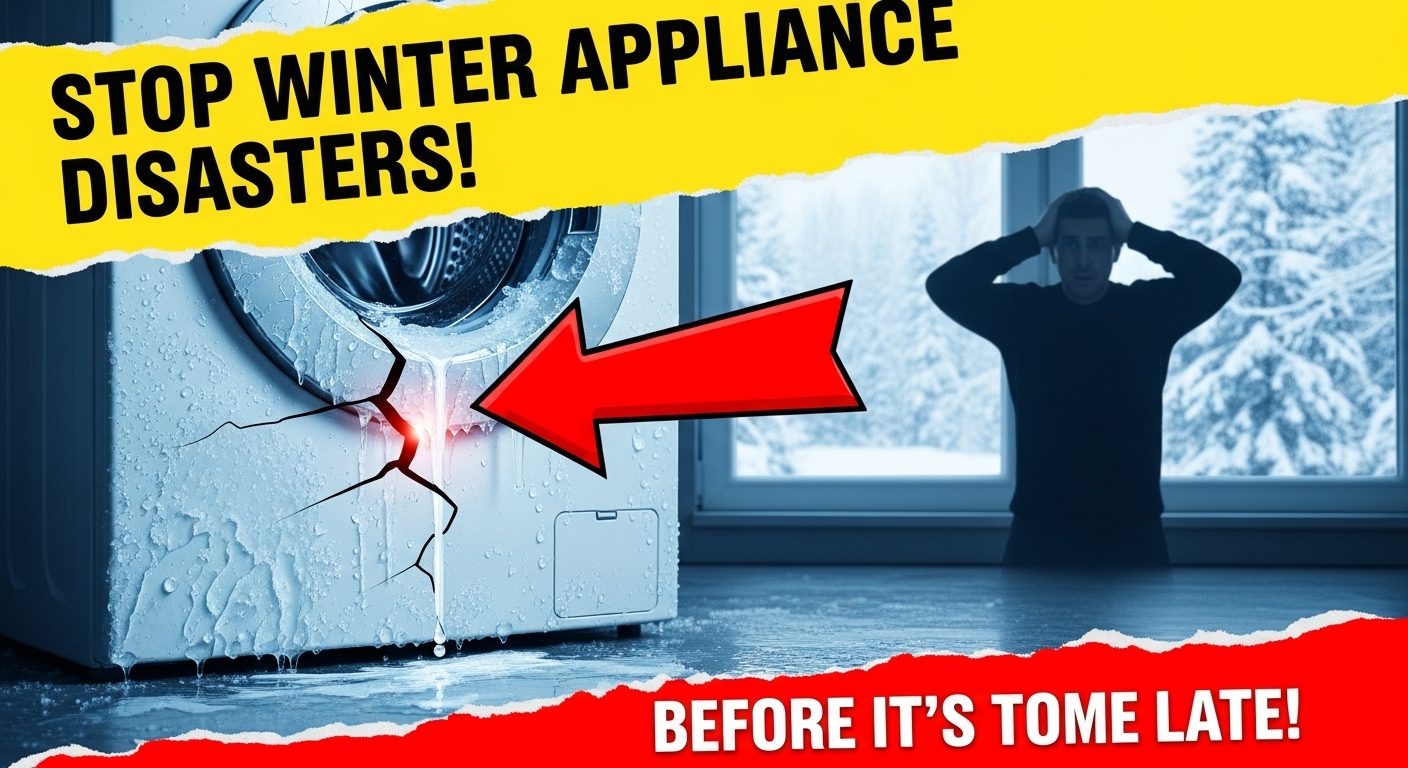
Winter Appliance Breakdowns: Cold Weather Damage Prevention
Worried about your appliances giving out when the Fraser Valley winter hits hard? Don’t stress – we’re diving into the most common cold weather appliance problems and sharing proven prevention strategies that’ll keep your home running smoothly all season long. Winter in Abbotsford can be brutal on your home’s hardest-working appliances. Between the temperature swings, increased usage, and moisture issues that come with our Pacific Northwest climate, your fridge, washer, dryer, and other essential appliances are working overtime just to keep up. The good news is that most winter appliance disasters are totally preventable with the right prep work and a little seasonal TLC. Think of winter appliance prep like getting your car winter-ready – you wouldn’t skip snow tires and expect to cruise through a blizzard, right? Your appliances need that same kind of thoughtful preparation to handle everything from power outages to frozen pipes and everything in between.
Key Outtakes:
- Temperature fluctuations can cause serious damage to refrigerators and freezers in unheated spaces like garages
- Washing machines and dishwashers are at high risk for frozen pipe damage during cold snaps
- Increased holiday cooking puts extra strain on ovens, stoves, and range hoods that need pre-winter maintenance
- Dryer vents become clogged more easily in winter, creating fire hazards and efficiency problems
- Simple preventive measures can save hundreds or thousands in emergency repair costs
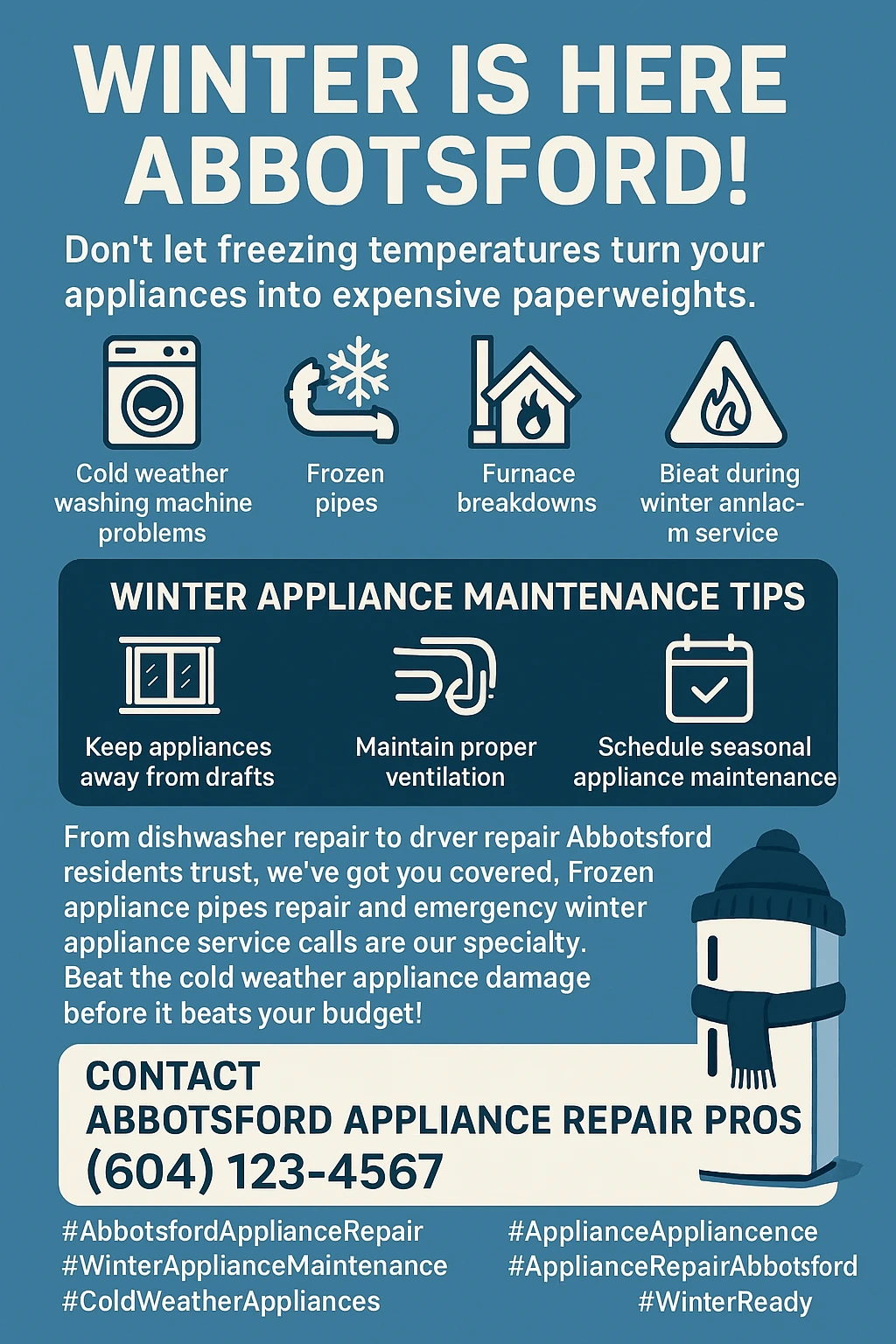
Understanding Winter’s Impact on Home Appliances
Fraser Valley winters might not bring the deep freeze of the prairies, but they pack their own unique punch when it comes to appliance stress. Our region’s signature combo of mild days followed by sudden cold snaps creates the perfect storm for appliance failures. When temperatures drop rapidly, metal components contract, seals get brittle, and any moisture lurking in your systems can turn into ice-cold trouble. The biggest culprit? Temperature fluctuations that mess with your appliances’ internal systems. Your refrigerator’s compressor has to work overtime when ambient temperatures drop, while your washing machine’s water lines become vulnerable to freezing in those unheated utility rooms that are so common in older Abbotsford homes. Meanwhile, increased heating demands mean your electrical systems are already maxed out, putting additional strain on every appliance in your house. What makes things worse is that most of us are cranking up appliance usage right when they’re most vulnerable. Holiday cooking marathons, extra laundry loads from wet winter gear, and running dishwashers constantly to keep up with entertaining – it’s like asking your car to tow a trailer right after skipping its tune-up.
Critical Appliance Vulnerabilities in Cold Weather
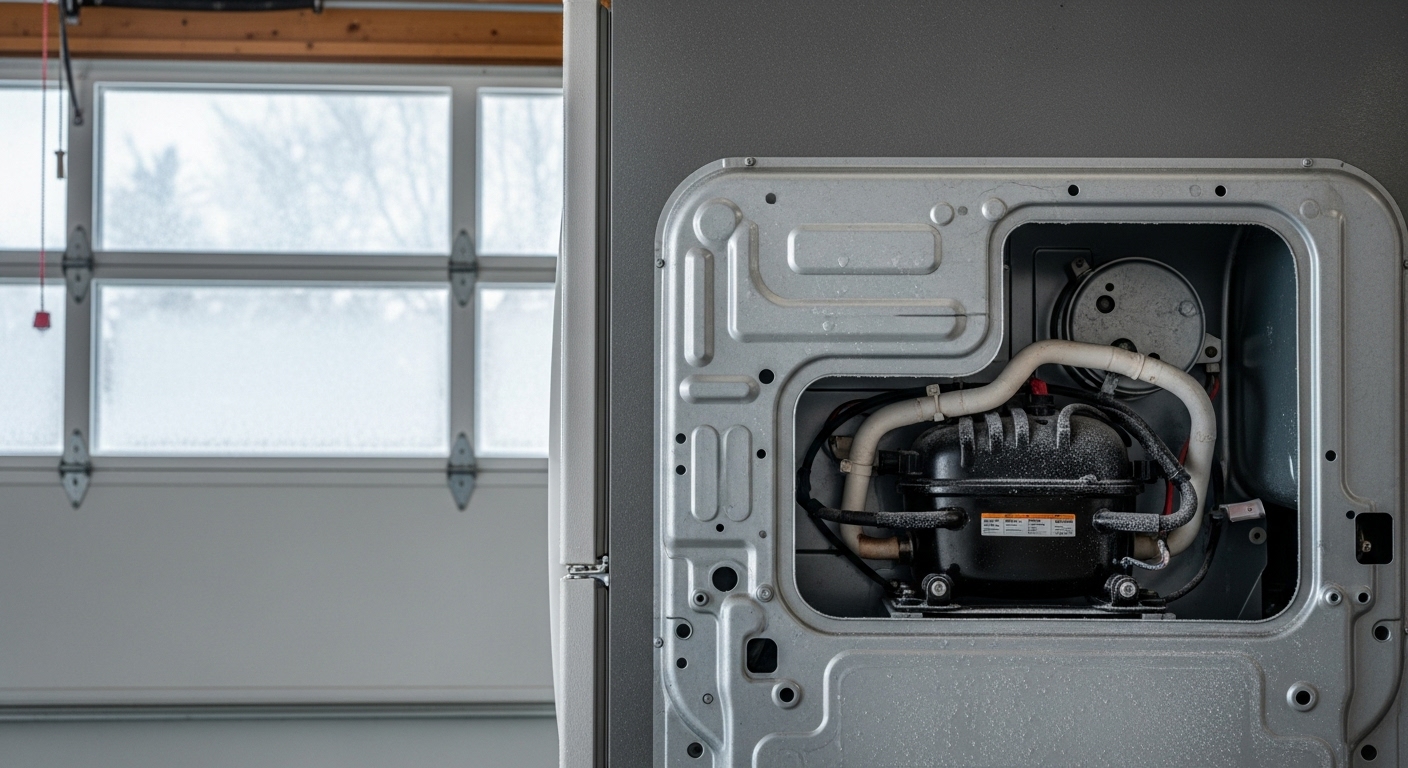 Let’s get real about which appliances are most likely to bail on you when the temperature drops. Understanding these weak spots helps you focus your prevention efforts where they’ll make the biggest difference. Refrigerators and freezers top the vulnerability list, especially if you’ve got one of those garage setups that’s so popular in neighborhoods like Clearbrook and Matsqui. When ambient temperatures drop below 60°F, most refrigerators start struggling to maintain proper internal temperatures. The compressor oil gets thick, door seals contract and lose their grip, and temperature sensors can start giving false readings that throw off the whole cooling cycle. Washing machines face their own winter nightmare scenario – frozen water supply lines. Those supply lines running through crawl spaces or along exterior walls are basically ticking time bombs once temperatures hit freezing. And it’s not just about burst pipes (though that’s definitely the worst-case scenario). Even temporary freezing can damage internal components like pumps and valves. Your dryer isn’t off the hook either – winter moisture and lint create the perfect recipe for blockages that reduce efficiency and create fire hazards.
Kitchen Appliance Winter Stress
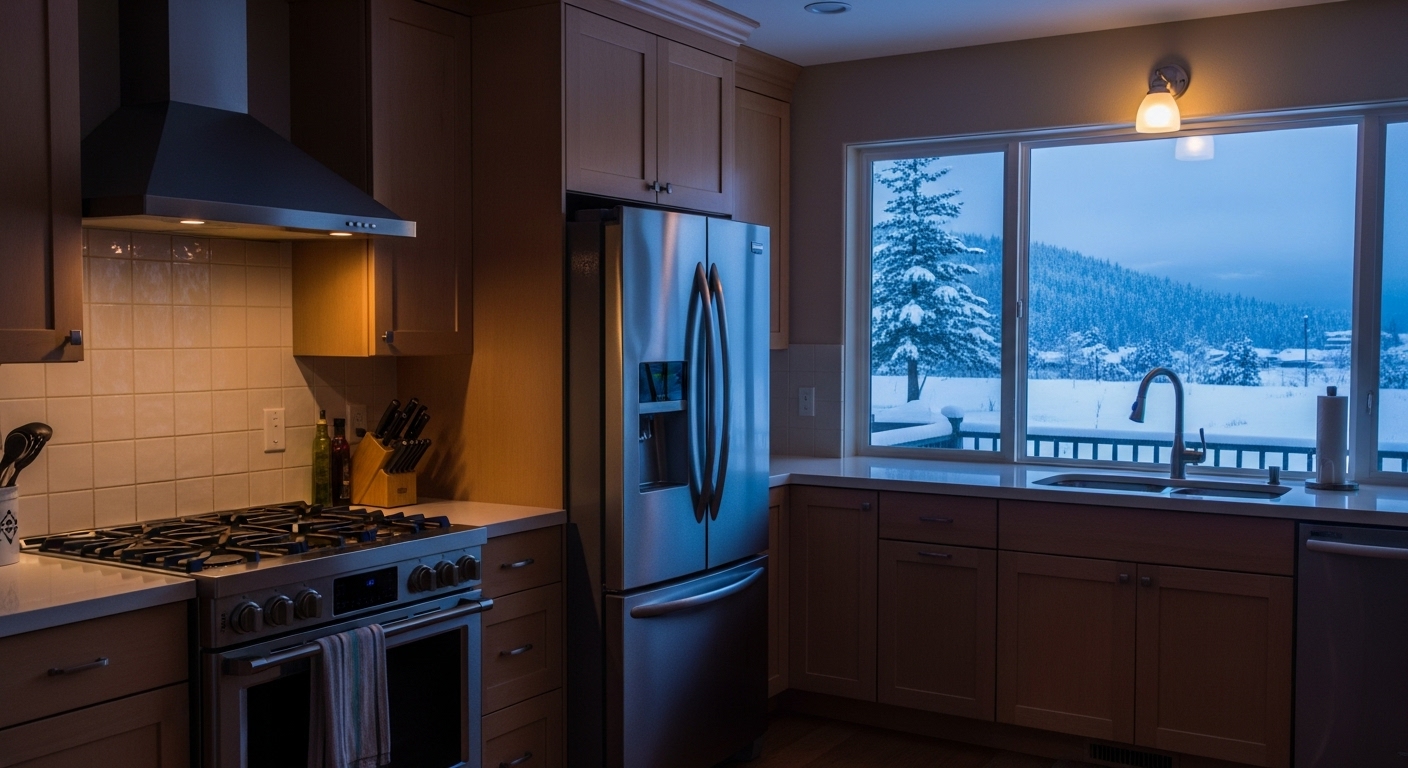
Your kitchen becomes ground zero for winter appliance stress. Dishwashers struggle with incoming water that’s significantly colder than summer temps, which means longer cycle times and less effective cleaning. Your oven and range get pushed to their limits during holiday cooking sessions, and if you haven’t cleaned those vents and checked the gas connections lately, you’re setting yourself up for some seriously inconvenient breakdowns right when you need these appliances most. Range hoods work overtime during winter cooking marathons but often get neglected in maintenance routines. Grease buildup combined with cold outdoor air creates condensation issues that can damage motors and electrical components.
Essential Preventive Maintenance Steps
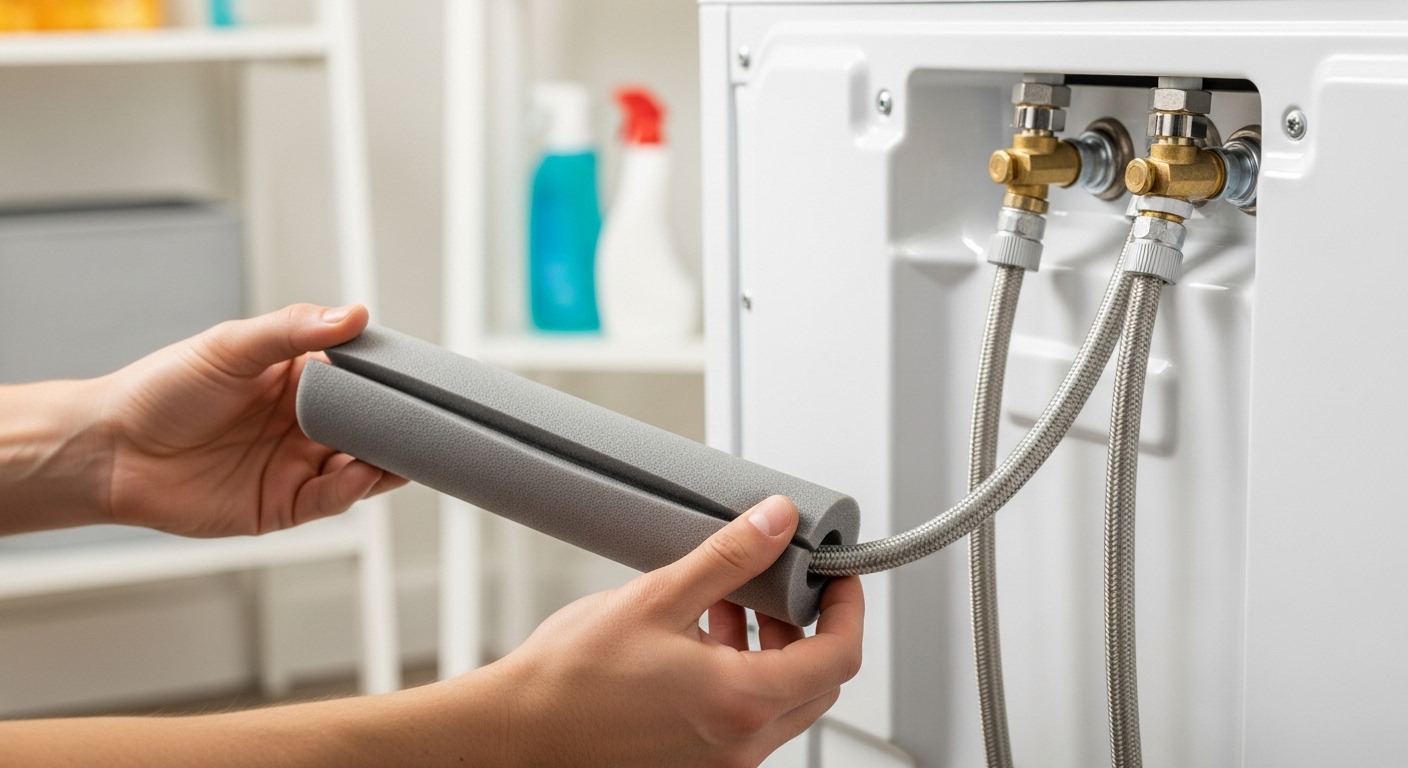
Now that we’ve covered the scary stuff, let’s talk solutions. Winter appliance prep doesn’t require a engineering degree – just some strategic attention to the details that matter most when temperatures drop. Start with your refrigerator and freezer maintenance at least a month before winter really kicks in. Clean those condenser coils thoroughly – they’re usually located on the back or underneath, and they collect an amazing amount of dust and pet hair. Dirty coils make your compressor work harder, which is the last thing you want when it’s already fighting cold ambient temperatures. Check door seals by doing the dollar bill test – close a dollar bill in the door and try to pull it out. If it slides out easily, your seals need attention. For appliances in unheated spaces, insulation becomes your best friend. Wrap water supply lines with foam pipe insulation, and consider adding a small space heater to utility rooms during extreme cold snaps. Just make sure it’s a safe, properly ventilated model designed for that purpose. Temperature monitoring is crucial too – pick up some wireless thermometers so you can keep an eye on conditions in those vulnerable spaces without having to trudge out to the garage every morning.
Protecting Water-Connected Appliances
Your washing machine and dishwasher need special attention since they’re completely dependent on water supply lines that can freeze. Start by locating all the shut-off valves for these appliances and make sure everyone in your household knows where they are and how to use them. In a freezing emergency, quick action can mean the difference between a minor inconvenience and a major disaster. Consider upgrading to braided stainless steel supply lines if you’re still using rubber hoses – they’re more freeze-resistant and less likely to burst if temperatures do drop below freezing. For washing machines in unheated spaces, you might want to invest in a freeze protection device that automatically shuts off water flow when temperatures drop too low.
Seasonal Usage Adjustments
[IMAGE PLACEHOLDER FOR IMAGE3] Winter isn’t just about protecting your appliances from cold – it’s also about adjusting how you use them to account for seasonal changes. Smart usage patterns can prevent problems and extend appliance life, especially during those heavy-use holiday periods. Your dryer becomes especially important during winter when outdoor drying isn’t practical, but it also faces unique challenges. Clean the lint filter after every single load – winter moisture makes lint clumpier and more likely to cause blockages. Check your exterior vent regularly for ice buildup or snow blocking, which can cause dangerous backdrafts. If you’re in an area like Sumas Prairie where winter winds are fierce, consider a professional vent inspection to ensure proper airflow. Kitchen appliances need different strategies during winter cooking season. Space out your oven usage when possible to prevent overheating, and never use your oven as a space heater – it’s inefficient and potentially dangerous. When running multiple appliances simultaneously (hello, holiday meal prep), pay attention to your electrical load. If lights dim when the dishwasher starts, you might be pushing your electrical system beyond its comfort zone.
Energy Efficiency During Peak Usage
Winter appliance usage patterns can send your energy bills through the roof if you’re not strategic. Run dishwashers and washing machines during off-peak hours when possible, and always use full loads to maximize efficiency. Your refrigerator works more efficiently when it’s reasonably full but not packed tight – aim for about 75% capacity. Consider adjusting temperature settings slightly during winter months. Your refrigerator can often run a degree or two warmer when ambient temperatures are cool, and your water heater might not need to work as hard if incoming water temperatures are more moderate.
Emergency Preparedness and Quick Response
Even with perfect prevention, winter can still throw curveballs that catch you off guard. Having a solid emergency response plan means the difference between a minor hiccup and a major catastrophe. Power outages are probably the most common winter appliance emergency. Keep your refrigerator and freezer doors closed during outages – a well-insulated refrigerator can maintain safe temperatures for up to 4 hours, while a full freezer can stay frozen for 24-48 hours. Invest in a battery-powered thermometer so you can monitor internal temperatures without opening doors and losing cold air. For frozen pipe emergencies, speed is everything. If you suspect frozen water lines to your washing machine or dishwasher, turn off the water supply immediately and call for professional help. Never try to thaw frozen pipes with open flames or high heat – gentle warming with a hair dryer is safer and more effective. Keep the emergency contact numbers for utility companies and trusted appliance repair services somewhere easily accessible.
Creating an Emergency Kit
Put together a basic appliance emergency kit that includes flashlights, basic tools, emergency contact numbers, and appliance model numbers. Keep a list of your appliances’ warranty information and know which repairs are covered. Having this information organized ahead of time saves precious minutes during an actual emergency.
Frequently Asked Questions
What temperature is too cold for appliances in unheated spaces?
Most appliances start having problems when temperatures drop below 50°F, with serious issues beginning around 32°F. Refrigerators and freezers are especially vulnerable below 60°F because their compressors struggle to work efficiently in cold ambient temperatures. If your garage or utility room regularly drops below these temperatures, you’ll need to add insulation or heating.
How do I know if my appliance has freeze damage?
Common signs include unusual noises, water leaks, error codes, or appliances that won’t start after a cold snap. For washing machines and dishwashers, check for water around the base or underneath – this often indicates burst hoses or cracked internal components. Don’t attempt to operate an appliance if you suspect freeze damage until it’s been professionally inspected.
Can I prevent frozen pipes without adding heat to my utility room?
Yes, proper insulation is often more effective than adding heat. Wrap all exposed water lines with foam pipe insulation and seal air leaks around windows, doors, and where pipes enter walls. Allow cabinet doors to stay open so warm air can circulate around pipes, and consider leaving faucets at a slight drip during extreme cold snaps to keep water moving.
Wrapping Up
Winter appliance protection really comes down to being proactive rather than reactive – a little preparation now prevents major headaches later. From insulating water lines in Clayburn to checking door seals in Mill Lake, these simple steps work whether you’re in a newer home or dealing with an older property that needs extra attention. Remember that most winter appliance failures happen gradually, so staying alert to changes in performance gives you time to address issues before they become emergencies. When winter appliance problems do strike, don’t tackle complex repairs yourself – that’s when you need the expertise of Abbotsford Appliance Repair Pros. Our team understands the unique challenges that Fraser Valley winters present to home appliances, and we’re equipped to handle everything from frozen pipe damage to compressor failures caused by temperature fluctuations. Contact us for professional winter appliance preparation services or emergency repairs that get your home back to running smoothly.