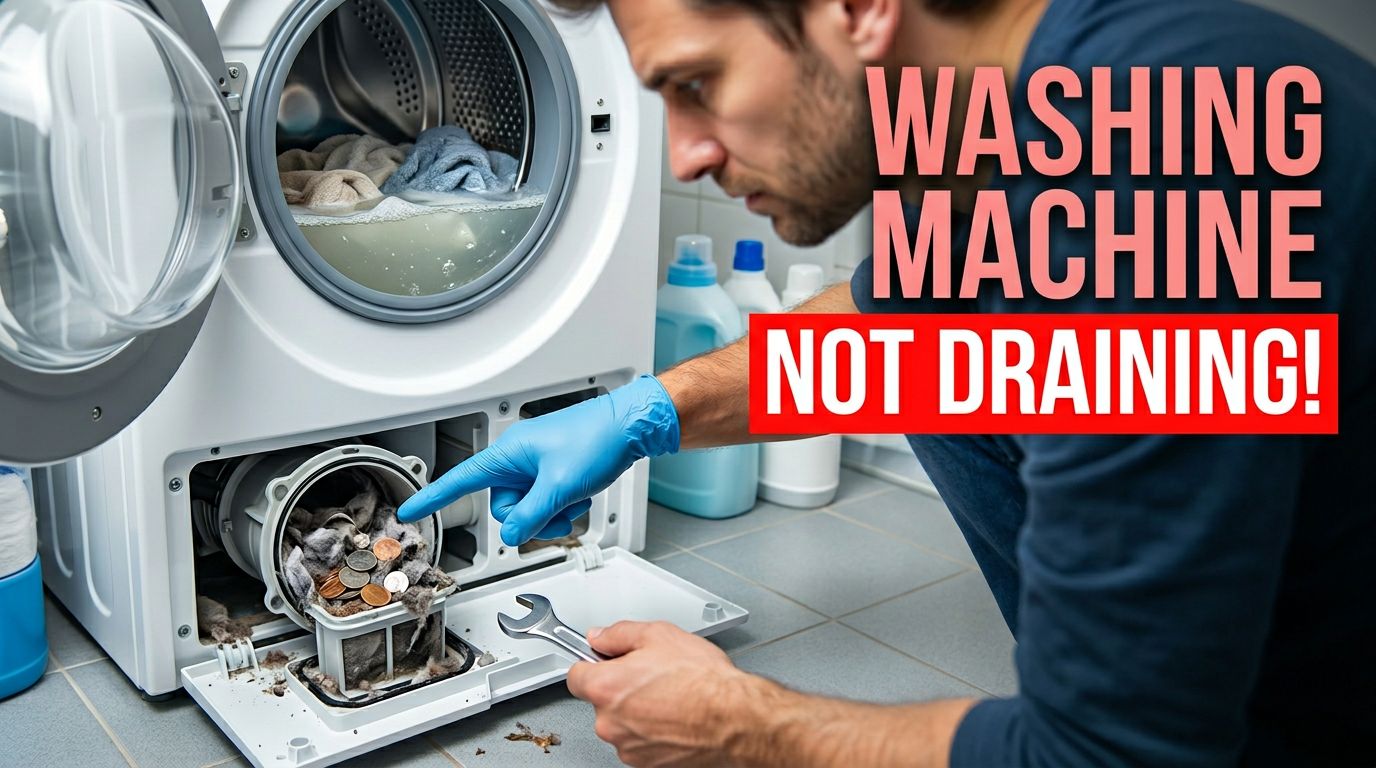
You load the washing machine, walk away, and come back to a tub still full of murky water and sopping wet clothes piled inside nobody wants that surprise on laundry day. This guide walks you through the most common reasons a washing machine won’t drain and what you can check yourself before picking up the phone. Here in Abbotsford, we deal with a pretty wide range of housing stock older homes with plumbing that hasn’t been touched in decades sitting right alongside newer builds with modern appliances. At Abbotsford Appliance Repair Pros, we get calls about washing machine drain problems regularly, and the honest truth is that a good chunk of them turn out to be something the homeowner could have caught themselves with a quick inspection. That’s not us talking ourselves out of a job it’s just the reality, and we’d rather you know it. The other truth? Some drainage problems really do need a professional. A failed drain pump, internal wiring faults, or a deeper plumbing clog aren’t weekend DIY projects for most people. Knowing the difference saves you time, frustration, and sometimes real money.
Key takeaways
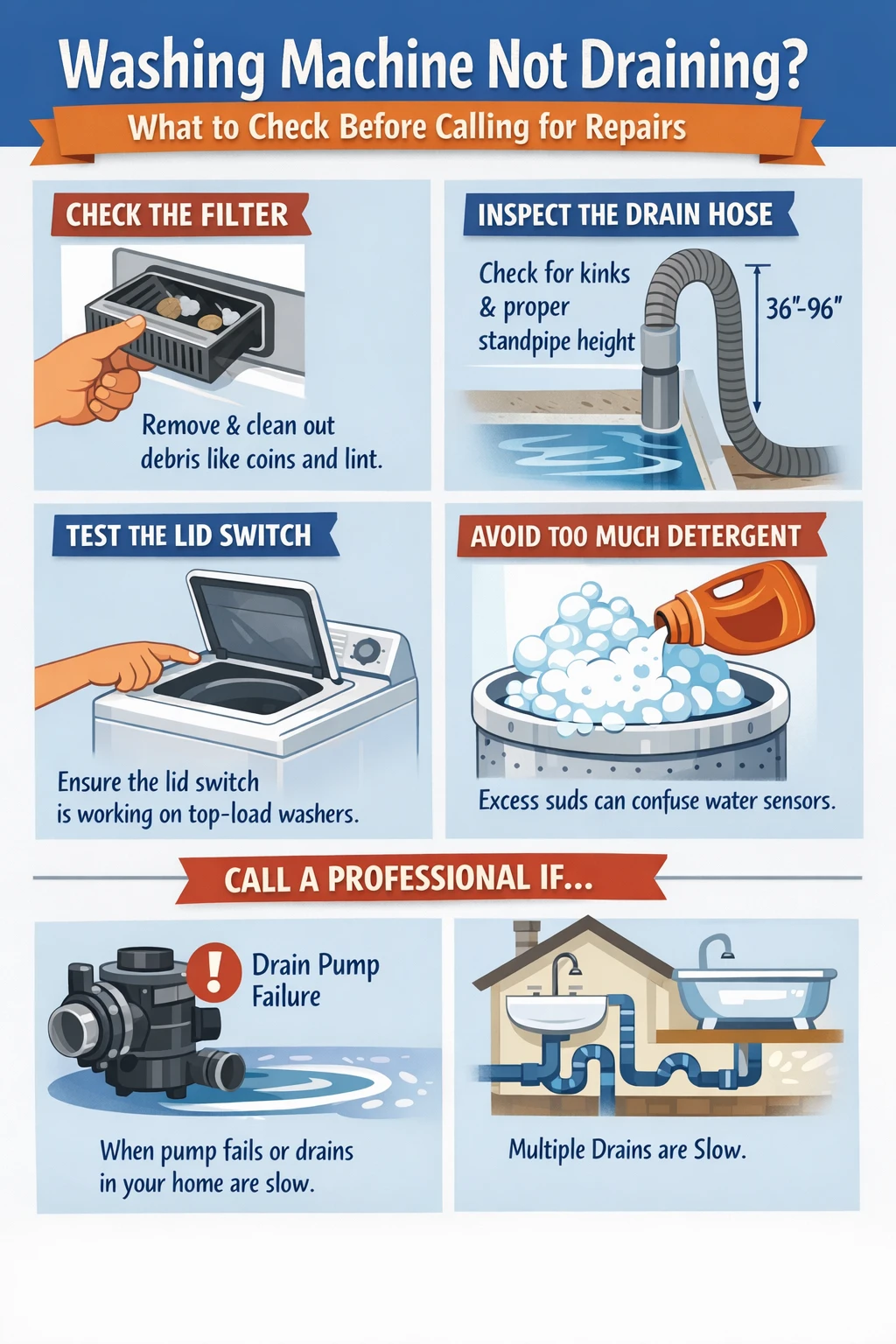
- The most common cause of a washing machine not draining is a clogged filter or blocked drain hose, both of which you can check without any special tools.
- The drain hose standpipe height matters more than most people realize it should sit between 36 and 96 inches from the floor, and too low can cause water to siphon back into the drum.
- A faulty lid switch on a top-load washer will prevent the machine from advancing to the drain or spin cycle entirely.
- Too much detergent creates excess suds that confuse the machine’s sensors and can leave standing water behind a surprisingly common and easy fix.
- Repairing a washing machine typically runs between $100 and $400, which is often worth it if the machine is under 10 years old.
- If the problem exists across multiple appliances or your sinks are slow too, the issue may be in your home’s main drain line, not the washer itself.
What’s actually stopping your washer from draining
When your washing machine won’t drain water, it almost always comes down to one of four things: a clogged filter, a blocked or kinked drain hose, a mechanical failure inside the machine, or a drain installation problem. Start simple. Most of the time, it’s the filter or the hose and you can check both in under 30 minutes. The washing machine works by using a drain pump to push water out of the tub and through the drain hose, which connects to your home’s waste plumbing. If anything interrupts that path a sock caught in the pump, a hose kinked behind the machine, a filter packed with lint the water has nowhere to go. The machine may stop mid-cycle, or it may complete the cycle but leave your clothes dripping wet. In our experience, front-load washers and top-load washers behave a bit differently when something goes wrong. Front loaders tend to show the problem more clearly standing water is obvious, and the filter is usually accessible through a small panel at the front bottom. Top loaders can be trickier because the drain path is less accessible, and the lid switch adds another variable.
Check the filter first
This is where most drainage calls start, and it’s the right place to begin. The pump filter is designed to catch small items before they reach the drain pump coins, buttons, hair, lint, the occasional forgotten receipt. Over time it gets packed with debris, and water can’t pass through properly. 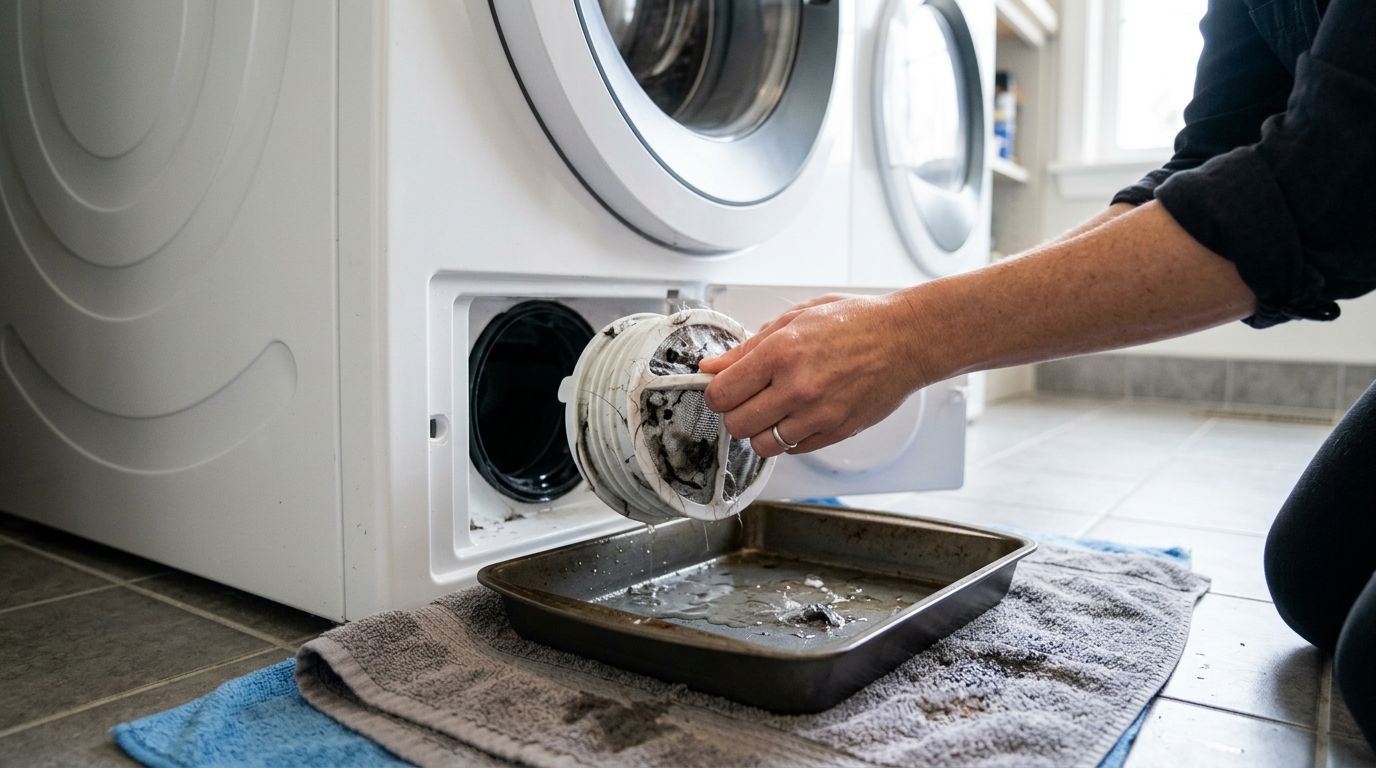 On most front-load washers, the filter sits behind a small panel at the bottom front of the machine. You’ll usually need a flat screwdriver to pop the panel off. Before you open the filter itself, put down some towels and slide a shallow tray or baking dish under the opening. There will be water. Sometimes a lot of it. Open the filter slowly and let it drain into your container before pulling the filter all the way out. Once it’s out, rinse it under running water and use an old toothbrush to clear any gunk stuck in the mesh. While you’re at it, shine a flashlight into the filter housing and fish out anything that got past small items like hairpins or coins can sit just inside and cause intermittent problems. Replace the filter, plug the machine back in, and run a drain cycle to see if that solved it. Top-load washers are a different story. Many newer models either don’t have an accessible filter or the filter is in a location that’s difficult to reach without disassembly. Check your owner’s manual first. If the manual says there’s no user-serviceable filter, skip this step and move on to the drain hose.
Inspect the drain hose
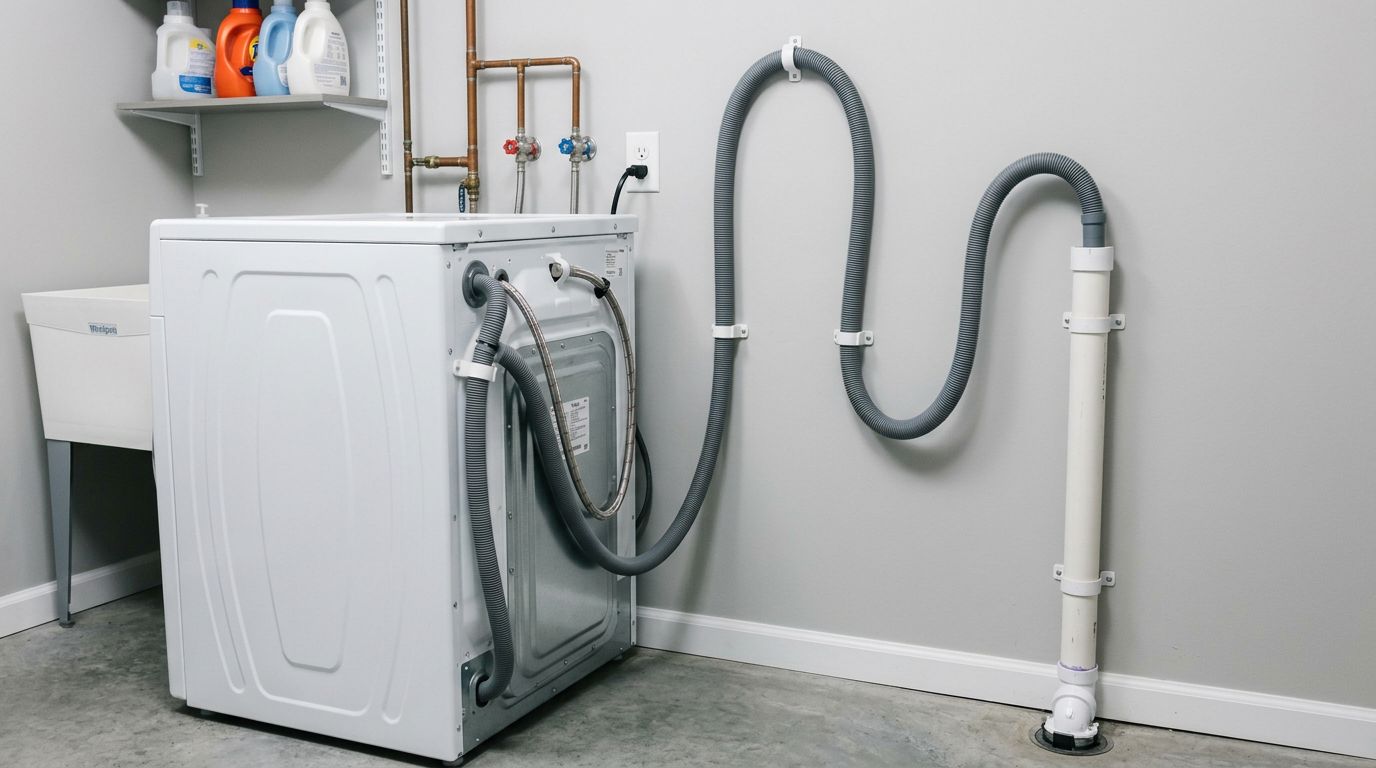 The drain hose runs from the back of your machine to the standpipe or utility sink in your laundry area. Pull the washer away from the wall carefully enough to see the hose, but not so far that you’re straining it. Look for obvious kinks or pinches. A hose that’s been squashed against a wall for years can develop a crease that restricts flow significantly, and straightening it out takes about ten seconds. If the hose looks fine on the outside, the problem might be inside it. Disconnect it from the wall connection (have a bucket ready water will come out), and check the inside for blockages. Clumps of fabric fiber, small clothing items like socks, and accumulated soap residue are all common culprits. You can often clear a partial blockage by taking the hose outside and running a garden hose through it. Now, here’s something that catches a lot of people off guard: the height of the standpipe matters. The drain hose needs to loop up to a minimum height of about 35 to 39 inches before it enters the drain. If the standpipe is too short or the hose drops into the drain pipe too far more than about four inches water will siphon back into the drum during the cycle. The machine may appear to drain, then refill on its own, leaving you with wet clothes and no obvious explanation. We see this fairly often in older homes around Matsqui Village, where laundry setups sometimes haven’t been updated in years. The fix is straightforward: use a clip to secure the drain hose at the proper height, or install a taller standpipe. It’s one of those problems that stumps people for a long time because everything looks fine at a glance. The U.S. Department of Energy’s appliance guidance and most washer manufacturer manuals specify the correct drain height range for this exact reason.
The lid switch and load balance issues
If you have a top-loading washer, the lid switch is worth checking before you go any further. This small plastic switch sits under the lid and tells the machine that the lid is closed so it’s safe to drain and spin. If the switch is damaged or stuck, the machine won’t advance past the wash cycle it just sits there, full of water, doing nothing. Testing it is simple. Open the lid while the machine is running and press the switch down with your finger or a pencil. You should hear an audible click. No click usually means the switch has failed and needs replacing. A working switch can also be dislodged from its mounting over time, so check whether it’s sitting properly in its housing before assuming it’s broken. Load balance is another thing worth ruling out early. A single heavy item a wet bath mat, one large blanket can throw the drum off balance and cause the machine to cut the spin cycle short. The clothes end up soaking wet and there may even be some standing water left behind. Redistribute the load, add a few lighter items to balance it out, and run a drain-and-spin cycle. Sounds too simple, but it works. One more thing on the subject of loads: using too much detergent. Excess suds can actually fool the machine’s water sensors into thinking there’s more water in the drum than there really is, causing it to pause or skip the drain cycle. If you’ve been generous with the soap, try cutting back and see if the problem clears up on its own.
When it’s the drain pump or deeper plumbing
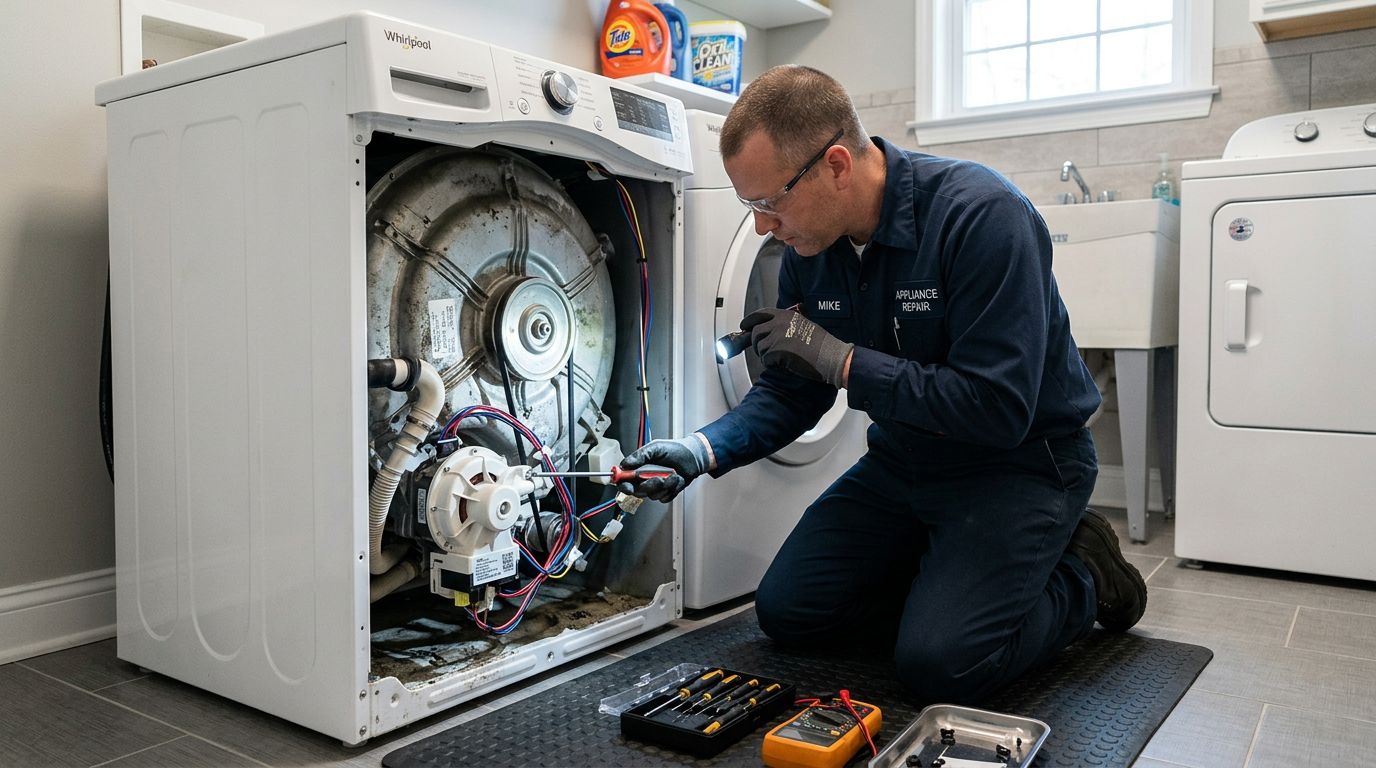 If you’ve worked through the filter, the hose, and the lid switch and your washing machine still isn’t draining, the next likely culprits are the drain pump itself or a problem further along in your home’s plumbing. A failing drain pump often gives you warning signs: unusual humming or grinding sounds during the drain cycle, or the pump running continuously without actually moving water. Sometimes the pump impeller the spinning component that moves water gets jammed by a small object that made it past the filter. On front-load washers, you can sometimes access the pump by removing the front or back panel; your owner’s manual will show you the layout. If the pump is jammed, clearing the obstruction may fix it. If the pump has burned out or the motor has failed, it needs to be replaced. Drive belts are another possibility on older machines. The belt connects the motor to the pump, and if it’s cracked, worn, or has snapped entirely, the pump won’t run. Removing the access panel and inspecting the belt visually is straightforward broken belts are obvious. Replacing one is doable for a handy homeowner, but it’s the kind of repair where watching a model-specific video first is genuinely worth your time. If the pump and belt are fine, look at your home plumbing. If your kitchen sink or bathroom drains are also moving slowly, you may have a clog in a shared drain line rather than a washer problem at all. A plumber’s snake can clear many of these, but if the issue is in the main line or involves blocked roof vents (yes, clogged plumbing vents can cause drainage problems), that’s a job for a plumber. For washer-specific repairs, Whirlpool’s support documentation and similar manufacturer resources provide model-specific diagrams that are genuinely useful for identifying pump locations and component names before you take anything apart.
When to reset and when to call
Sometimes a washing machine stops draining because of a simple electronic glitch rather than a physical blockage. Unplugging the machine for 60 seconds and plugging it back in resets the control board and clears minor errors. Some machines, particularly newer front-loaders, have a specific reset sequence involving opening and closing the door multiple times check your manual for model-specific instructions. This won’t fix a clogged filter or a bad pump, but it’s a legitimate first step and costs nothing. If you’ve tried the reset, cleared the filter, checked the hose, and inspected the lid switch and the washer still isn’t draining, it’s time to call someone. Likewise if you’re seeing error codes on the display, smelling burning, noticing water leaking from underneath the machine, or just uncomfortable opening up the panels. There’s no shame in stopping there some of these repairs require specific tools and some mechanical confidence to do safely. Homes in areas like Clearbrook tend to have a mix of machine ages, and an older washer that’s been problematic for a while may actually be near the end of its useful life. Most washing machines last 10 to 13 years. If yours is on the older end of that range and facing a significant repair, it’s worth having an honest conversation about whether repair or replacement makes more financial sense. A technician can usually give you that assessment pretty quickly once they’ve diagnosed the problem. You can also find helpful general maintenance guidance through resources like Health Canada’s home safety resources for keeping your laundry area safe while you’re doing any hands-on inspection.
Frequently asked questions
These are the questions we hear most often when people call in about washer drain problems. Knowing the answers ahead of time might save you a service call or at least help you describe the problem more clearly when you do reach out.
Why is my washing machine not draining but it’s spinning?
The drum can spin even when drainage is incomplete, which is why clothes sometimes come out wet even when no standing water is visible. This usually points to a partial blockage the filter may be partly clogged, or the drain hose may be kinked enough to restrict flow without stopping it entirely. Incorrect detergent levels can also cause this, as excess suds slow drainage without fully blocking it. Check the filter first and reduce detergent if you’ve been using more than the recommended amount.
How do I get the water out before I can fix anything?
The easiest method is to use the drain hose itself. Unplug the machine, pull it from the wall, and disconnect the drain hose from the standpipe. Lower the end of the hose into a bucket placed on the floor gravity will do the work. Have several buckets ready if the drum is full, and raise the hose above drum level when you need to swap buckets so water stops flowing. For front-loaders with an accessible filter and no separate drain hose outlet, use the filter drain tube if the machine has one, or open the filter slowly over a shallow tray.
Can a washing machine drain problem fix itself?
Not really, no. A glitch that responds to a reset might seem like it fixed itself, but if there’s a physical blockage or a failing component, it will come back. We’ve seen homeowners report that the problem went away after they ran a smaller load or a different cycle, only to have the same issue return the following week. It’s worth finding the actual cause rather than waiting it out.
How often should I clean my washer’s drain filter?
Most manufacturers recommend cleaning it every one to three months, or more often if you wash pet bedding, rugs, or anything that sheds a lot of fiber. If you’re not sure how often yours needs attention, cleaning it once a month is a reasonable habit that takes about five minutes and prevents most of the clogging problems we see. Set a reminder on your phone it’s the kind of maintenance task that’s easy to forget until it becomes a problem.
What does it mean when the washer hums but doesn’t drain?
A humming sound during the drain cycle usually means the pump motor is running but something is blocking the impeller the spinning part that actually moves water. This is often a small object caught in the pump, like a coin, a hair clip, or a small piece of clothing. It can also mean the pump motor is running but failing, which produces a similar sound. Access the pump according to your machine’s manual and inspect for obstructions before assuming the pump needs replacement.
Wrapping up
Most washing machine drain problems come down to a few common causes: a clogged filter, a kinked or improperly installed drain hose, a bad lid switch, or an overloaded or unbalanced drum. Working through those checks in order will solve the problem for a lot of homeowners without any professional help needed. Where things get more complicated failed pump motors, drive belts, wiring faults, or home plumbing issues that’s when it makes sense to call in someone who works on these machines regularly. If you’d rather not dig into it yourself, or you’ve worked through these steps and still can’t figure out what’s going on, Abbotsford Appliance Repair Pros handles washer repair across Abbotsford and the surrounding area, along with dryer repair, fridge repair, dishwasher repair, and other home appliance issues. Give us a call and we’ll help you figure out what’s actually going on and what it’ll take to get your machine running properly again.