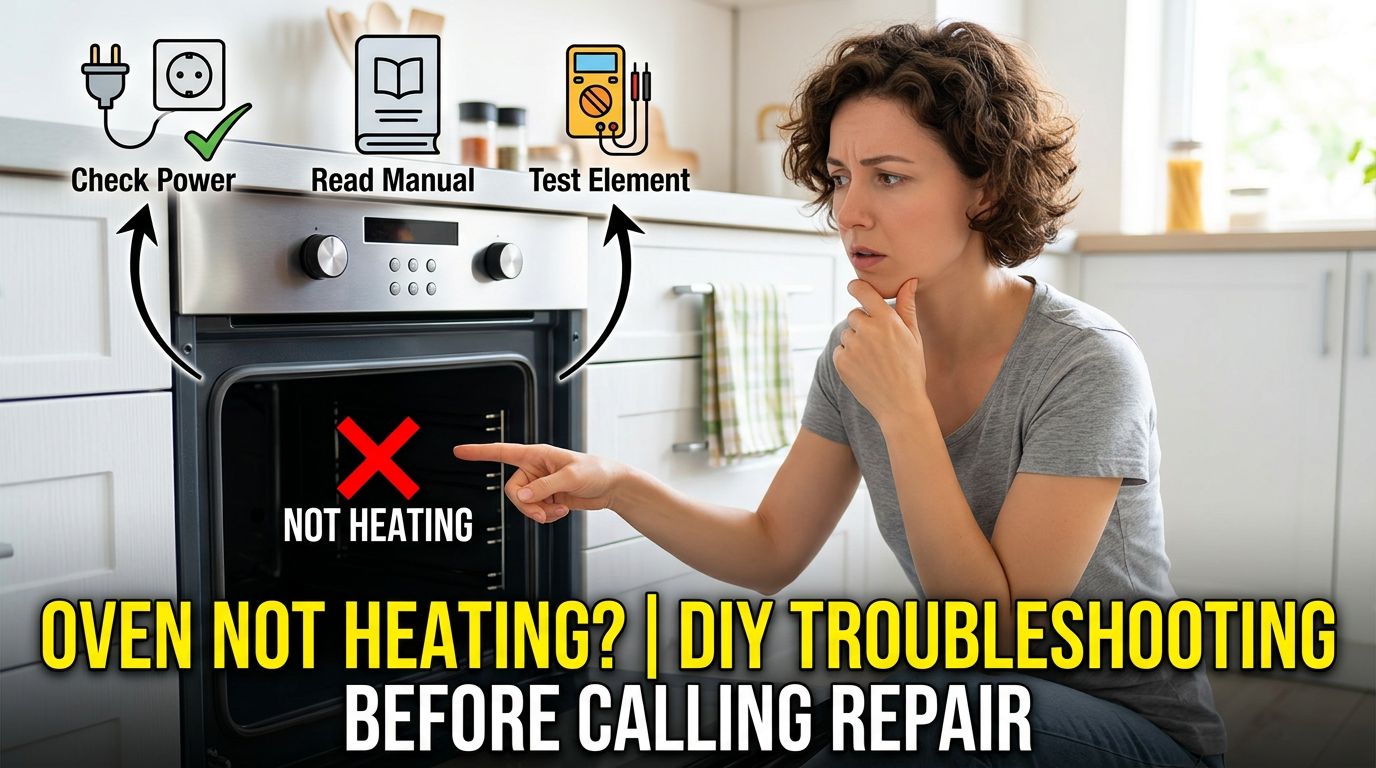
Your oven was preheating fine last week, and now it’s taking forever to reach temperature or it’s not getting there at all. This guide walks you through the most common reasons an oven stops heating properly and the steps you can take right now, before picking up the phone.
A cold oven is more than an inconvenience. Dinner’s on the line, and you’re standing there wondering if this is a quick fix or the beginning of something expensive. The good news is that many heating problems come down to a handful of common causes, and several of them are things you can check or address yourself with basic tools and a bit of patience.
At Abbotsford Appliance Repair Pros, we field a lot of calls from homeowners across Abbotsford who assume the worst the moment their oven acts up. More often than not, the issue turns out to be something straightforward a tripped breaker, a burned-out bake element, or a temperature sensor that’s drifted out of calibration. That said, some problems do require a professional, and knowing the difference can save you both time and money.
[IMAGE PLACEHOLDER FOR IMAGE1]
Key takeaways
- Most oven heating problems come down to a failed heating element, a faulty temperature sensor, or an electrical issue all of which can be diagnosed before calling for repair.
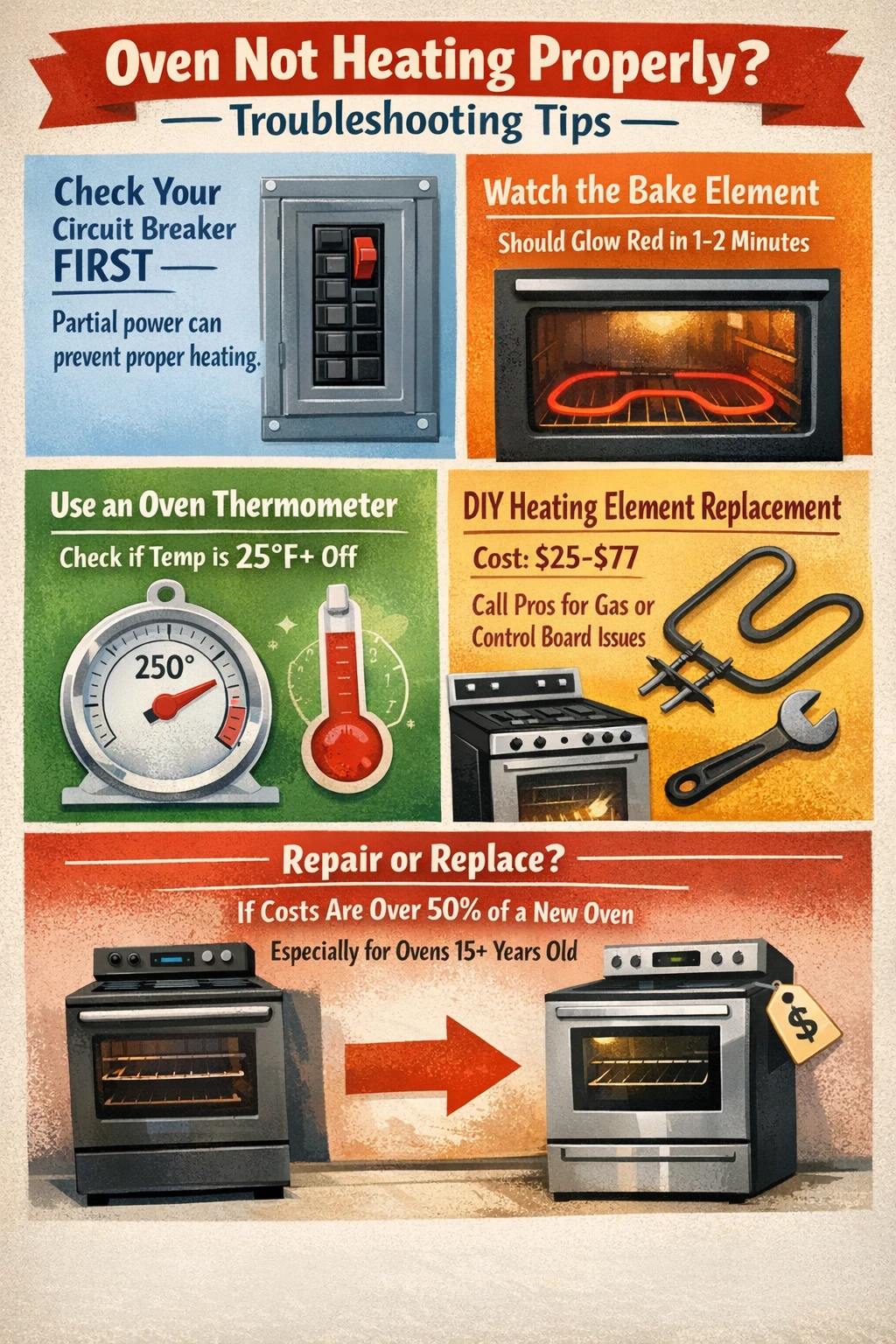
- A working bake element should glow red within a minute or two of turning the oven on; if it doesn’t, that’s your first clue.
- Replacing a standard residential heating element typically costs between $25 and $77 for the part alone, and between $150 and $400 if you hire a professional for parts and labor combined.
- If repair costs exceed half the price of a comparable new oven, replacement is usually the smarter financial move especially for ovens over 15 years old.
- Gas oven problems involving ignition or temperature should be handled by a qualified technician; never attempt gas-related repairs without proper training.
- Always disconnect power before inspecting or replacing any internal oven component.
Why your oven isn’t heating the way it should
When an oven stops heating properly, it’s almost always one of a few culprits: the bake element, the broil element, the temperature sensor, or the control board. For gas ovens, the igniter is usually the first thing to suspect. The good news is that each of these can be checked methodically, starting with the simplest possibilities and working toward the more complex ones.
Uneven cooking, extended preheat times, food that’s burned on top but raw in the middle, or an oven that simply won’t reach its set temperature all of these point toward a heating issue rather than a problem with the food itself. We see this fairly often, and the symptoms usually give you a solid clue about where to look first.
One thing worth mentioning: Abbotsford’s mix of older ranchers and newer developments means we run into a wide range of oven ages and models. Older homes, particularly around West Abbotsford, often have appliances that have never had a proper service. A heating issue in a 20-year-old oven might just be a worn element but it could also be part of a broader pattern of decline worth paying attention to.
Start here: the quick checks before anything else
Before you pull the oven out from the wall or order any parts, run through a few basic checks. These take five minutes and sometimes solve the problem completely.
First, check your circuit breaker. Electric ovens run on a 240-volt circuit, and it’s not uncommon for one leg of that circuit to trip while the other stays on. This creates a strange situation where the oven powers up and the display works, but the heating elements don’t get full power. Go to your electrical panel and look for a breaker that’s tripped to the middle position. Reset it fully off, then back on. If it trips again when the oven heats up, you’ve got a wiring issue that needs a professional.
Second, check the oven’s clock and settings. Some ovens have a “Sabbath mode” or a delay-start feature that can accidentally get activated, preventing normal heating. If your oven’s display looks different than usual, consult your manual. It sounds basic, but this trips up more people than you’d expect.
Third, if you have a gas oven, make sure the gas supply valve behind the unit is fully open. If you’ve recently had work done in your kitchen or someone moved the appliance, the valve may have been partially closed.
Checking the heating elements on an electric oven
For electric ovens, the heating elements are the most common point of failure. There are two: the bake element at the bottom and the broil element at the top. They’re relatively easy to inspect visually, and a failed element is usually one of the least expensive oven repairs you’ll make.
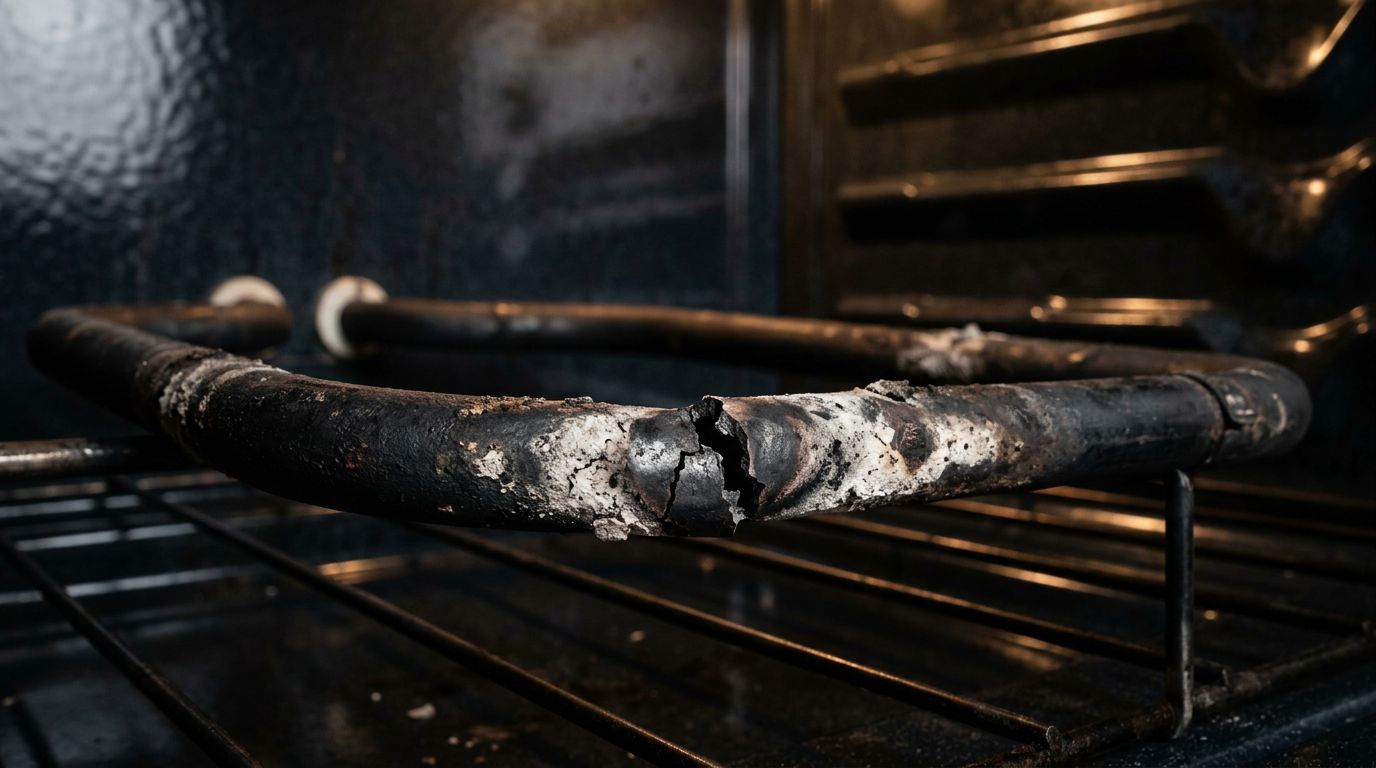
Turn the oven on to a bake setting and watch the bottom element through the oven window. Within a minute or two, it should start glowing red. If it doesn’t glow at all, or if it only glows in patches, the element has likely failed. Visible damage makes it even more obvious look for cracks, burns, blisters, or sections where the element is clearly broken. A healthy element looks uniform and glows evenly.
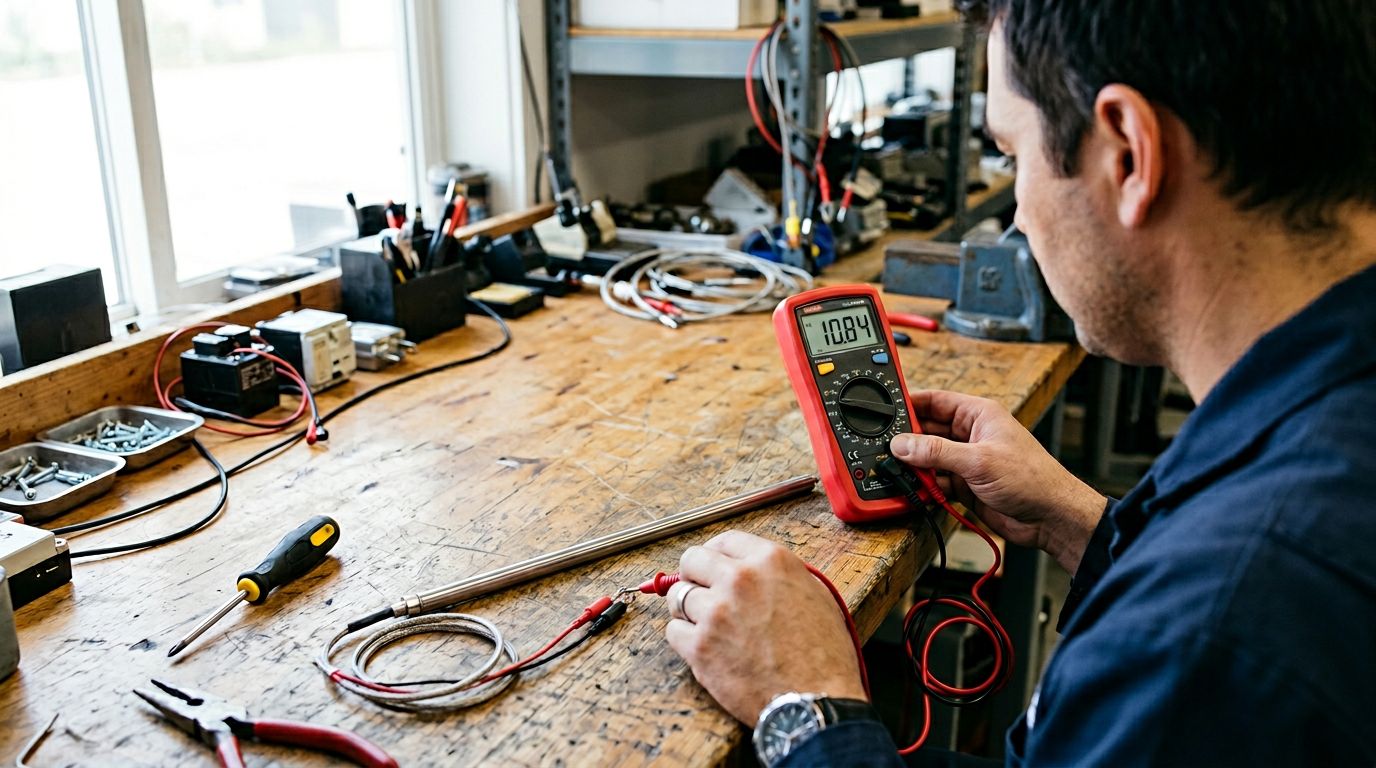
If the element looks intact but you’re still not getting heat, you can test it with a multimeter. With the oven unplugged and the element cooled completely, disconnect the wires at the back of the element and touch your multimeter probes to the terminals. You’re looking for continuity. No continuity means the element is broken internally, even if it looks fine. Standard residential elements for brands like Whirlpool, GE, Kenmore, and Hotpoint typically run between $25 and $77 for the part. Most homeowners with basic tool experience can handle this replacement themselves it’s a screwdriver job for most models.
A word of caution: ovens run at 240 volts and 30 amps. Always unplug the oven or turn off the breaker before touching anything inside. This isn’t a situation where “probably off” is good enough.
[IMAGE PLACEHOLDER FOR IMAGE2] 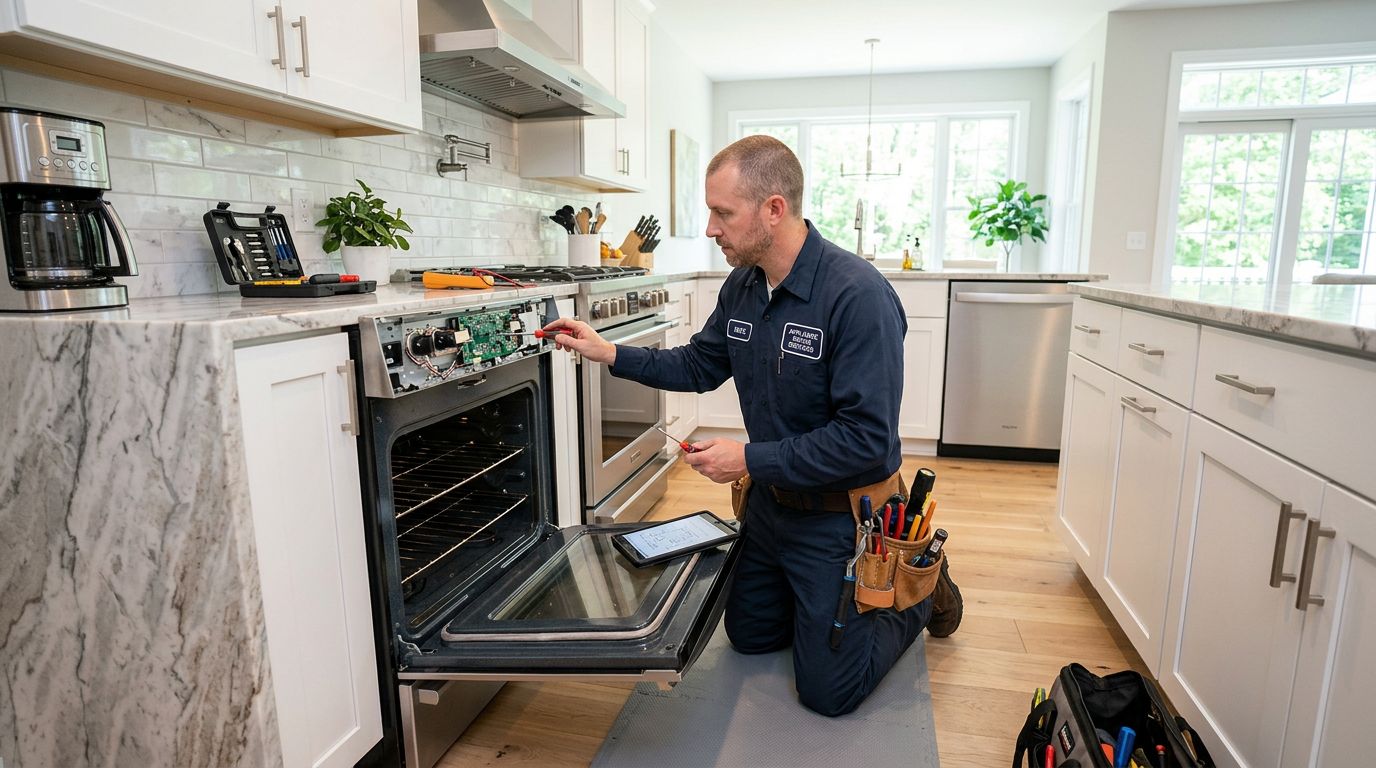
What to check on a gas oven
Gas ovens heat differently, and their failure modes are different too. The igniter is the part that fails most often, and it’s responsible for both lighting the burner and allowing gas to flow. When an igniter gets weak, it may glow but not get hot enough to open the gas valve so you’ll wait for preheating that never quite arrives, or takes two to three times longer than it should.
To check the igniter, turn the oven on and watch through the bottom vent or remove the oven floor panel to see the igniter directly. It should glow bright orange within 30 to 90 seconds and then ignite the burner. If it glows faint orange and just sits there, or if it takes more than 90 seconds to light, the igniter is likely weak and nearing the end of its life. Replacement is usually a straightforward job, but it does involve working near gas components.
If you smell gas at any point during this process, stop immediately. Don’t try to light the oven, don’t flip switches, and ventilate the space. This is not a DIY situation. A suspected gas leak needs immediate attention from a qualified technician or your gas utility company. You can find guidance on gas safety from the National Fire Protection Association, which covers what to do if you suspect a gas appliance problem.
The temperature sensor: often overlooked, easy to check
If your oven heats up but the temperature is off say, it runs consistently hotter or cooler than the setting, or food takes noticeably longer to cook than recipes suggest the temperature sensor is worth investigating. This is a thin probe, usually mounted at the top rear of the oven cavity, and it tells the control board what temperature the oven has actually reached.
A sensor that’s gone bad can cause your oven to undershoot or overshoot its target temperature consistently. You can do a rough test by placing an oven thermometer inside and running the oven at a set temperature for 20 minutes after it signals it’s preheated. If your thermometer reads 25°F or more off from the setting, either the sensor or the thermostat is the problem. An oven thermometer costs just a few dollars and gives you real data rather than guessing.
Testing the sensor with a multimeter is also possible. At room temperature, most oven temperature sensors read around 1080 to 1100 ohms of resistance. Check your oven’s service manual or look up your model number online to confirm the expected value. If the reading is far outside the expected range, the sensor needs replacing. This is usually a low-cost part and a fairly simple swap.
We get a fair number of calls from homeowners in Clearbrook who’ve replaced their heating element, only to find the oven still wasn’t hitting the right temperature. Often, a sensor that was borderline before goes the rest of the way out shortly after. Replacing both at once saves a second service call.
When it’s the control board (and how to tell)
The control board is the brain of the oven. It receives input from the sensors and sends signals to the elements or igniter. When it fails, the symptoms can be hard to pin down erratic temperatures, elements that don’t turn on even though the sensor and wiring are fine, error codes on the display, or a completely unresponsive oven.
Control board failures are less common than element or sensor failures, but they do happen, especially in older ovens with electronic controls. If you’ve checked the element, the sensor, and the wiring connections and everything looks fine, the control board is the next suspect. Diagnosing it properly usually requires a technician with the right tools replacing it blind is expensive and not always necessary.
Honestly, a control board repair or replacement on a basic oven can run $200 to $400 or more for parts alone. At that point, you’re doing some real math. If the oven is under 10 years old and otherwise in good shape, it’s usually worth fixing. If it’s pushing 15 years or older and this isn’t its first problem, a new oven starts to make more financial sense. The rough rule of thumb used by most appliance professionals: if the repair costs more than half what a replacement oven would cost, replacement is usually the better long-term decision.
Frequently asked questions
These are the questions we hear most often from homeowners dealing with oven heating problems. Some of the answers might surprise you.
Can I still use my oven if the broil element is out but the bake element works?
In most cases, yes you can bake normally with just the bake element functioning. The broil element handles high-heat top cooking and also assists during preheating in some ovens. If your oven takes longer to preheat but otherwise heats evenly, a failed broil element is a likely cause. It’s worth getting it replaced, but it’s not an emergency.
My oven beeps and says it’s preheated, but it’s not actually hot enough. What’s happening?
This is almost always a temperature sensor issue, or the oven’s calibration has drifted. The oven’s control board is trusting a sensor that’s giving it a false reading, so it signals “ready” before the temperature is actually there. Use an oven thermometer to confirm how far off it is. If it’s consistently 25°F or more below the set temperature, a sensor replacement or thermostat calibration is the likely fix.
How do I know if it’s worth repairing or if I should just buy a new oven?
Start with the age of your oven and the estimated repair cost. Ovens typically last 10 to 15 years. If yours is less than 10 years old and the issue is isolated to a single component an element, a sensor, or an igniter repair almost always makes sense. If your oven is older than 15 years and you’re facing a repair that would cost more than half the price of a comparable new unit, replacement is usually the smarter move. A new standard freestanding oven runs roughly $600 to $1,300 before installation, so you can do the comparison fairly quickly.
Is oven troubleshooting something I should do myself, or should I call a technician?
Visual checks, basic multimeter testing, and simple part replacements like a bake element are well within reach for most homeowners who are comfortable with basic tools and are careful about disconnecting power first. Anything involving gas components, wiring beyond the element terminals, or the control board is better left to a professional. If you’re ever unsure of what you’re looking at, it’s not worth the risk a misdiagnosis can mean more damage or a safety hazard.
Does replacing a heating element improve how efficiently my oven runs?
Yes. A degraded or partially failed element forces the oven to work harder and longer to maintain temperature, which wastes energy and adds time to every cook. A new element restores proper temperature cycling, which means faster preheating and more consistent results. The U.S. Department of Energy’s appliance guidance notes that properly maintained appliances use significantly less energy than those in poor repair.
[IMAGE PLACEHOLDER FOR IMAGE3]
Wrapping up
An oven not heating properly is rarely a reason to panic but it is a reason to act. Start with the easy checks: the breaker, the element, and the temperature sensor. Most problems fall into one of these categories, and many are fixable without a service call. If the oven is older, or if multiple things are going wrong at once, take a hard look at the repair-versus-replace math before committing to an expensive fix. At Abbotsford Appliance Repair Pros, we handle oven and stove repair regularly across Abbotsford and the surrounding area from a straightforward element swap to a proper diagnosis when the problem isn’t obvious. If you’d rather not work through it yourself, or you’ve done the checks and still can’t pin it down, give us a call and we’ll help you figure out exactly what’s going on and what it’ll take to sort it out.

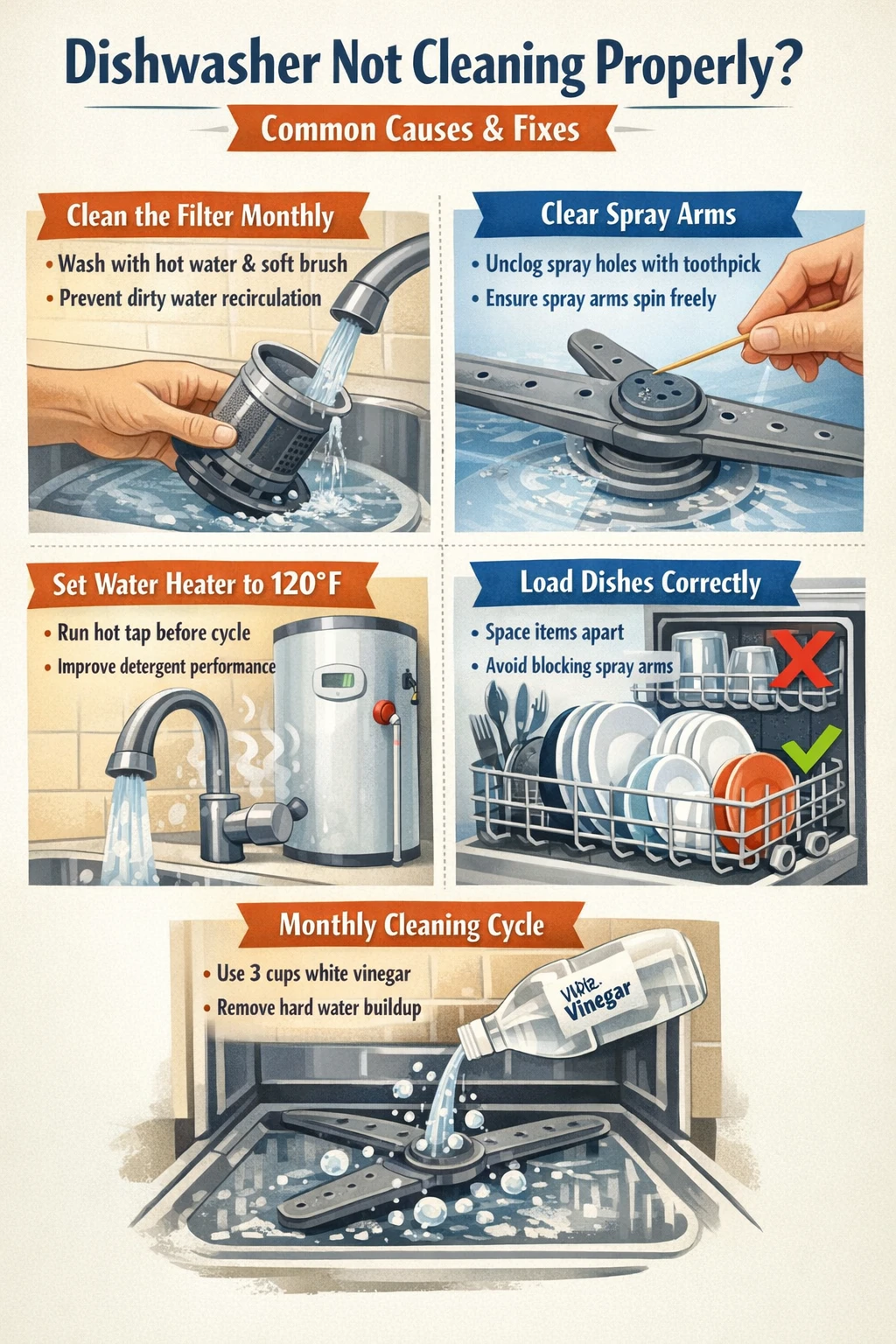
 Clean it once a month if you run the machine regularly. If there’s standing water an inch deep or more in the bottom of the tub after a cycle, a clogged filter or drain issue is the likely reason.
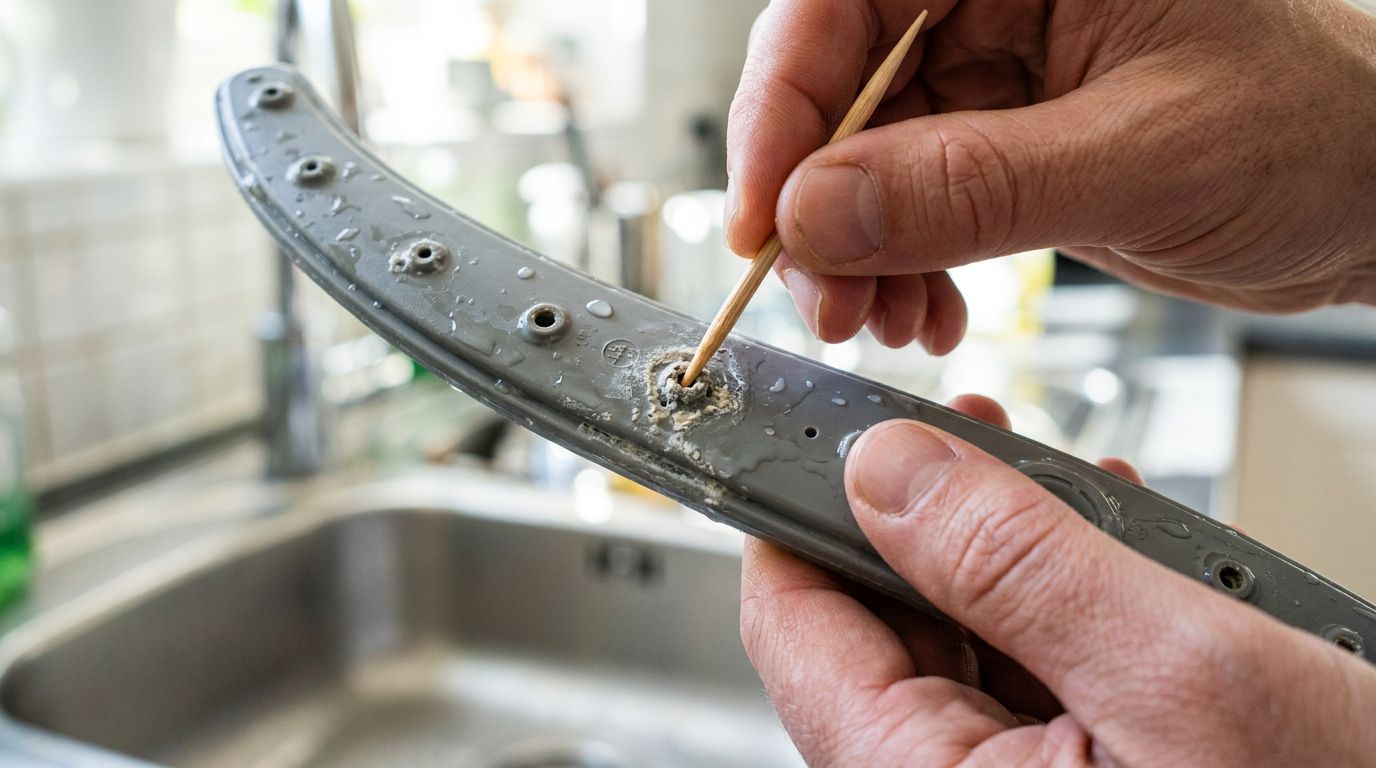 One thing worth checking: after starting a cycle, open the door after about 30 seconds and see whether the arm actually moved. A spray arm that looks fine but won’t rotate during operation usually means there’s a bigger issue with the wash motor or the diverter that’s when it makes sense to call someone in.
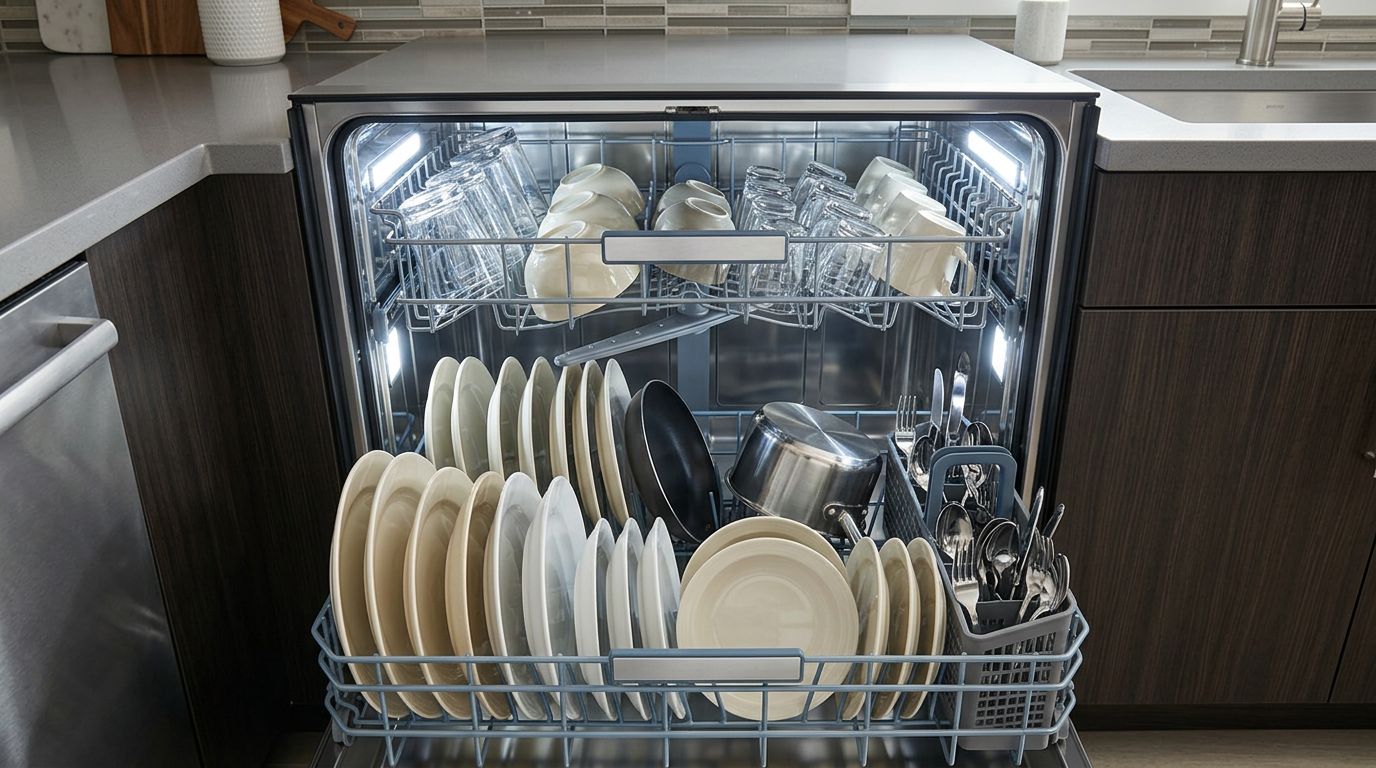 Tall items on the bottom rack are a frequent culprit. A cutting board or a large pot placed flat on the bottom rack can physically block the lower spray arm from rotating. Same goes for the upper rack: if it’s set too low and a bowl is in the way, the upper spray arm hits it and stops. The upper rack height is usually adjustable check your manual for how to do it on your model.Put cups, glasses, and smaller bowls on the top rack, angled so water drains off. Pots, pans, and plates go on the bottom where spray pressure is stronger.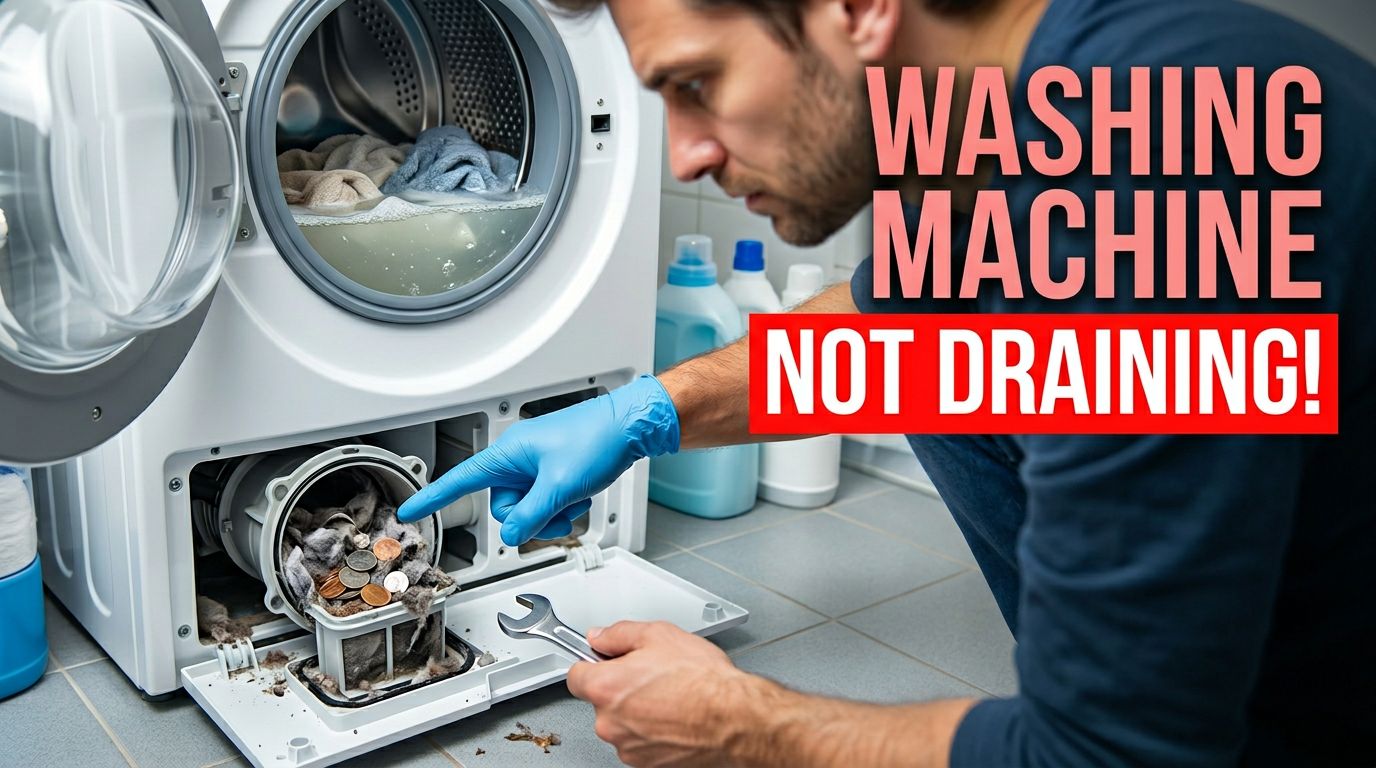
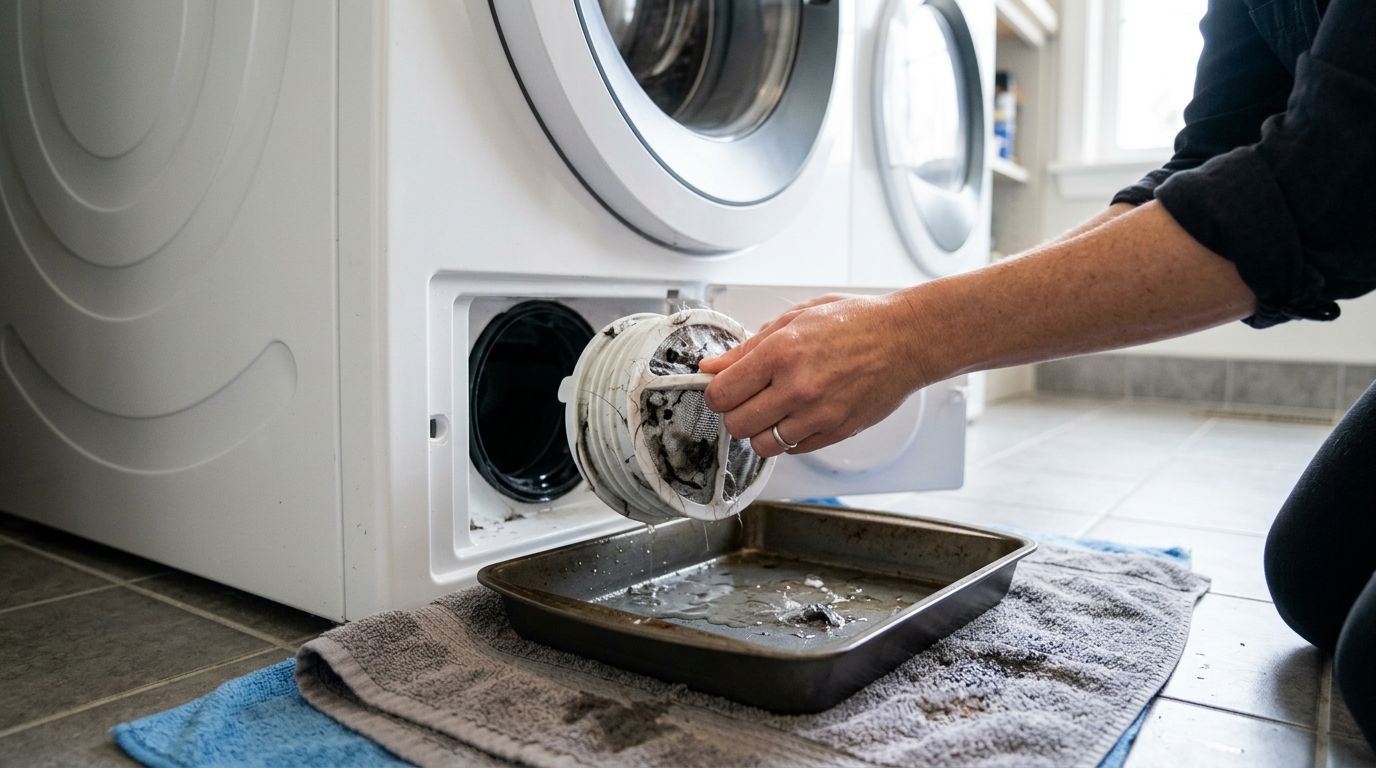 On most front-load washers, the filter sits behind a small panel at the bottom front of the machine. You’ll usually need a flat screwdriver to pop the panel off. Before you open the filter itself, put down some towels and slide a shallow tray or baking dish under the opening. There will be water. Sometimes a lot of it. Open the filter slowly and let it drain into your container before pulling the filter all the way out. Once it’s out, rinse it under running water and use an old toothbrush to clear any gunk stuck in the mesh. While you’re at it, shine a flashlight into the filter housing and fish out anything that got past small items like hairpins or coins can sit just inside and cause intermittent problems. Replace the filter, plug the machine back in, and run a drain cycle to see if that solved it. Top-load washers are a different story. Many newer models either don’t have an accessible filter or the filter is in a location that’s difficult to reach without disassembly. Check your owner’s manual first. If the manual says there’s no user-serviceable filter, skip this step and move on to the drain hose.
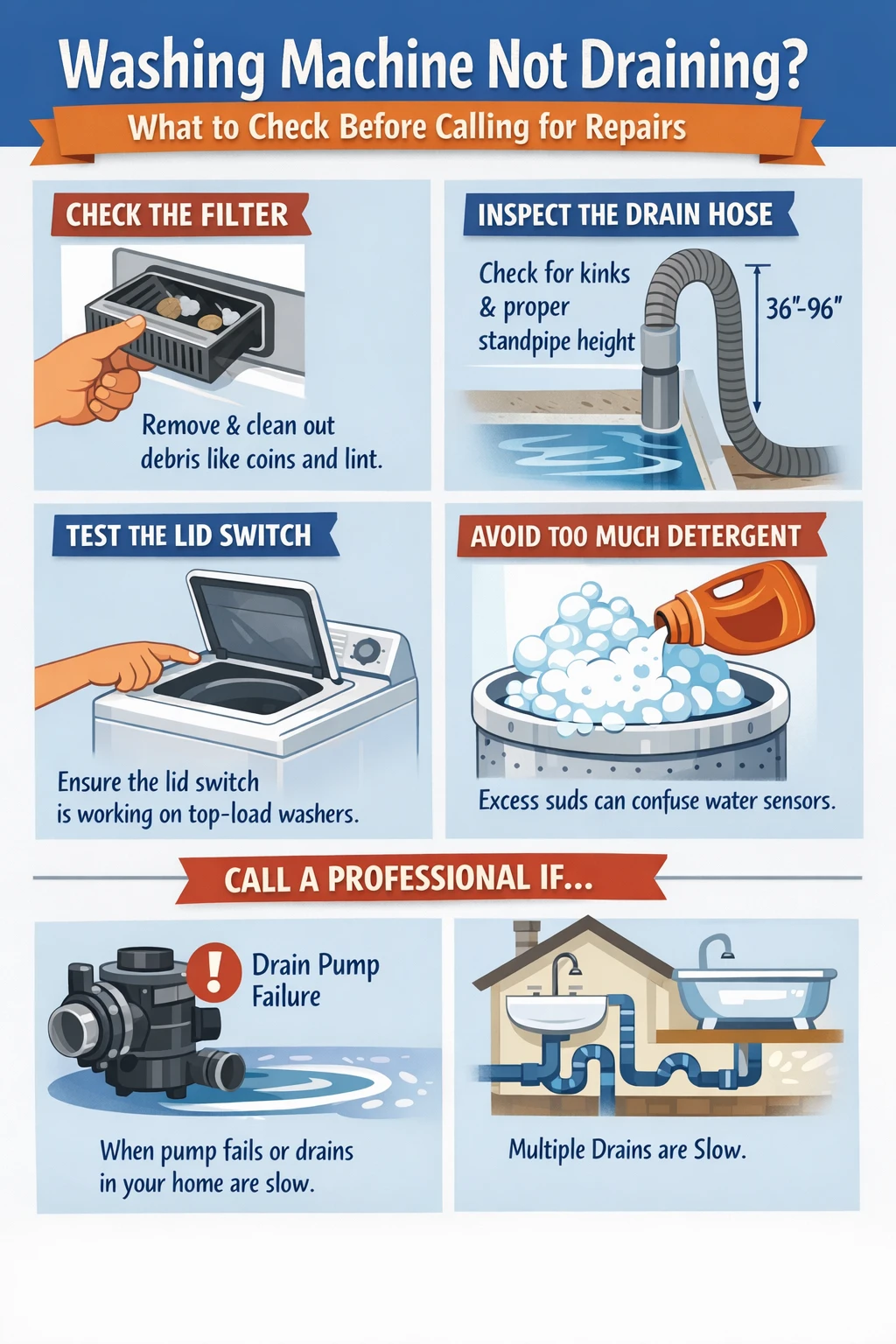
 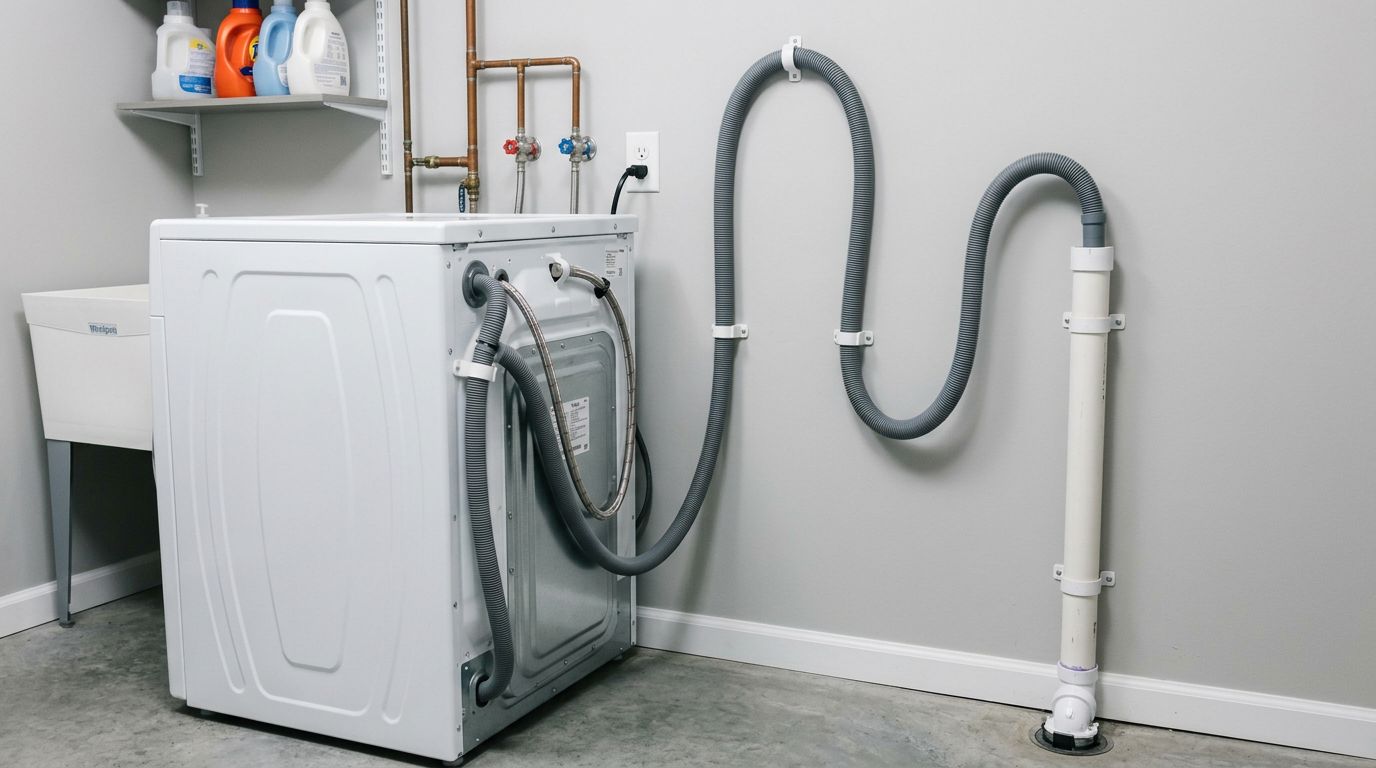 The drain hose runs from the back of your machine to the standpipe or utility sink in your laundry area. Pull the washer away from the wall carefully enough to see the hose, but not so far that you’re straining it. Look for obvious kinks or pinches. A hose that’s been squashed against a wall for years can develop a crease that restricts flow significantly, and straightening it out takes about ten seconds. If the hose looks fine on the outside, the problem might be inside it. Disconnect it from the wall connection (have a bucket ready water will come out), and check the inside for blockages. Clumps of fabric fiber, small clothing items like socks, and accumulated soap residue are all common culprits. You can often clear a partial blockage by taking the hose outside and running a garden hose through it. Now, here’s something that catches a lot of people off guard: the height of the standpipe matters. The drain hose needs to loop up to a minimum height of about 35 to 39 inches before it enters the drain. If the standpipe is too short or the hose drops into the drain pipe too far more than about four inches water will siphon back into the drum during the cycle. The machine may appear to drain, then refill on its own, leaving you with wet clothes and no obvious explanation. We see this fairly often in older homes around Matsqui Village, where laundry setups sometimes haven’t been updated in years. The fix is straightforward: use a clip to secure the drain hose at the proper height, or install a taller standpipe. It’s one of those problems that stumps people for a long time because everything looks fine at a glance. The
 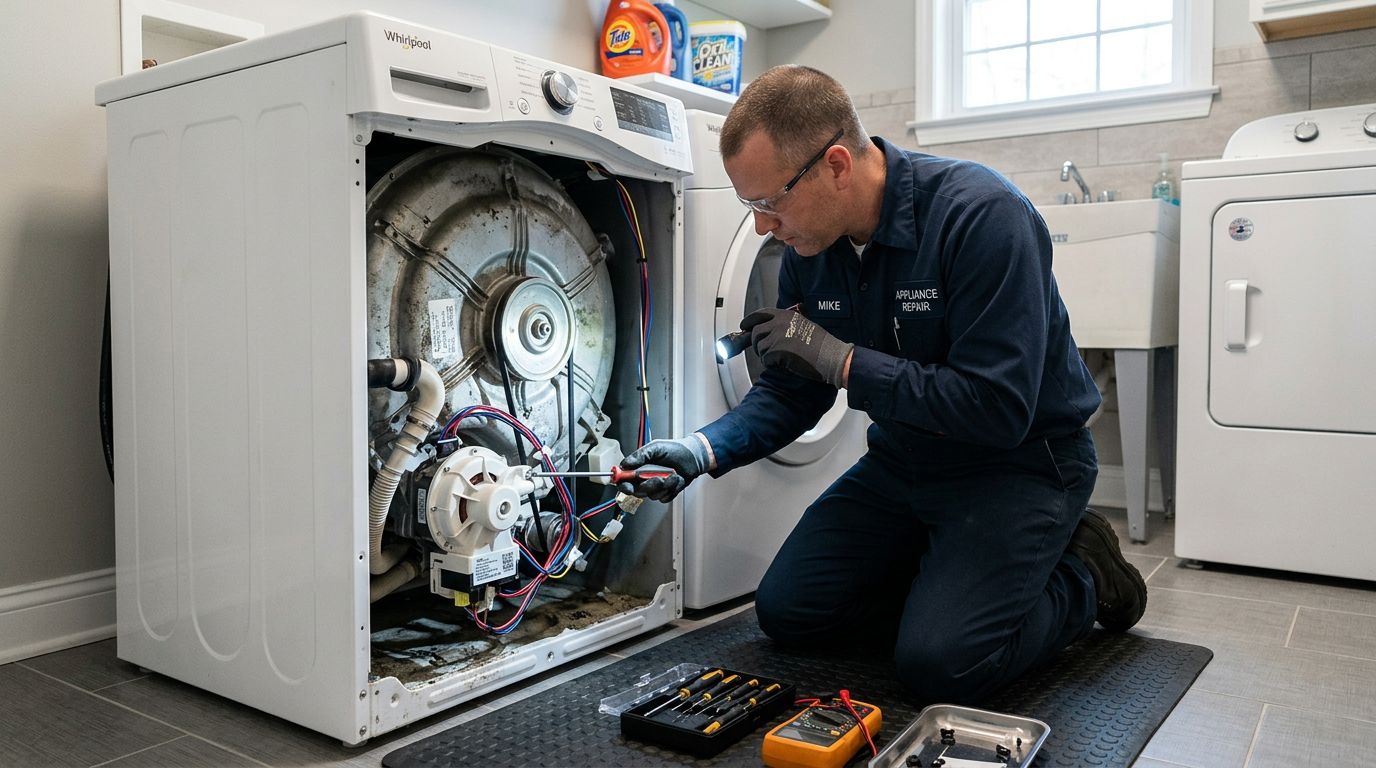 If you’ve worked through the filter, the hose, and the lid switch and your washing machine still isn’t draining, the next likely culprits are the drain pump itself or a problem further along in your home’s plumbing. A failing drain pump often gives you warning signs: unusual humming or grinding sounds during the drain cycle, or the pump running continuously without actually moving water. Sometimes the pump impeller the spinning component that moves water gets jammed by a small object that made it past the filter. On front-load washers, you can sometimes access the pump by removing the front or back panel; your owner’s manual will show you the layout. If the pump is jammed, clearing the obstruction may fix it. If the pump has burned out or the motor has failed, it needs to be replaced. Drive belts are another possibility on older machines. The belt connects the motor to the pump, and if it’s cracked, worn, or has snapped entirely, the pump won’t run. Removing the access panel and inspecting the belt visually is straightforward broken belts are obvious. Replacing one is doable for a handy homeowner, but it’s the kind of repair where watching a model-specific video first is genuinely worth your time. If the pump and belt are fine, look at your home plumbing. If your kitchen sink or bathroom drains are also moving slowly, you may have a clog in a shared drain line rather than a washer problem at all. A plumber’s snake can clear many of these, but if the issue is in the main line or involves blocked roof vents (yes, clogged plumbing vents can cause drainage problems), that’s a job for a plumber. For washer-specific repairs,