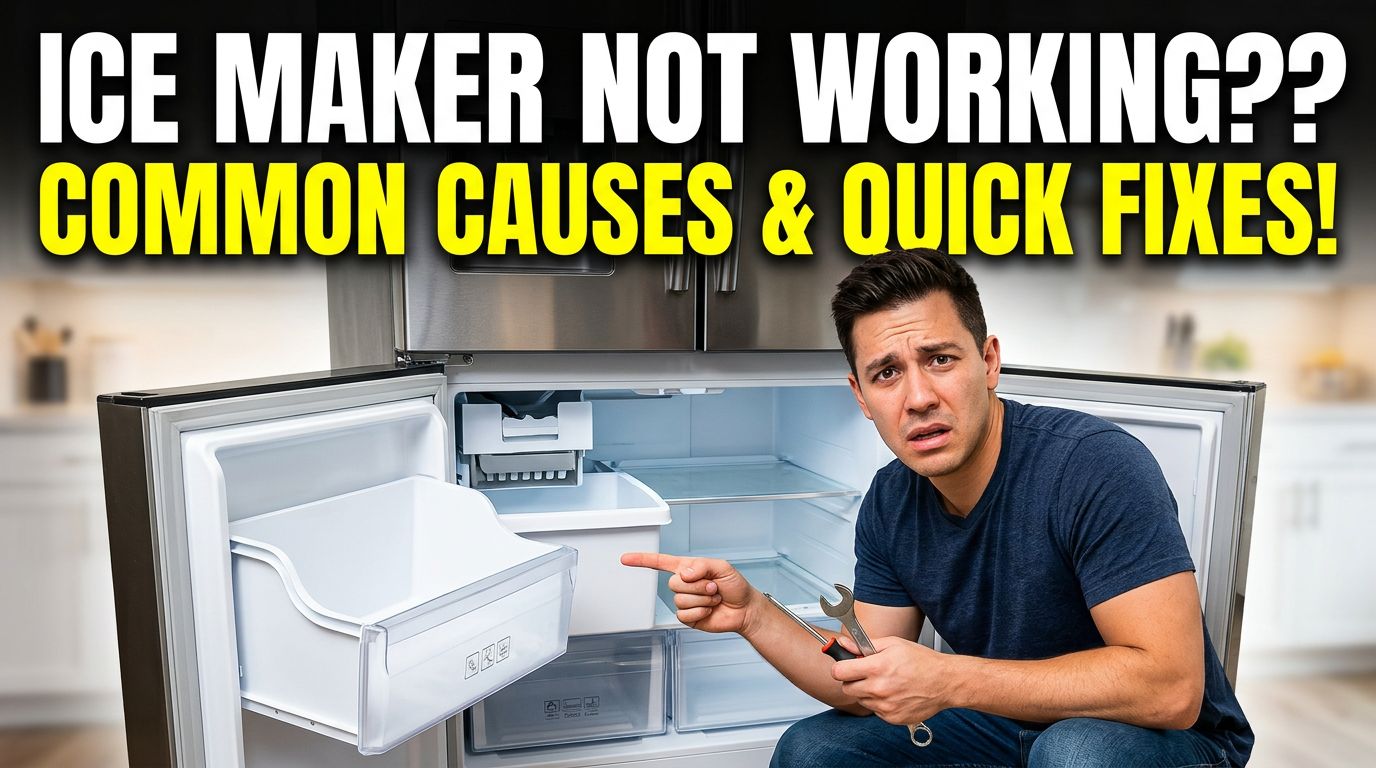
Your refrigerator ice maker stopped working, and now you’re stuck chipping ice out of a tray like it’s 1987. This guide walks you through the most common causes and the fixes you can actually do yourself, plus how to know when it’s time to call in some help.
Nobody wants to open the freezer and find an empty ice bin, especially in the middle of a warm Abbotsford summer when the last thing you feel like doing is troubleshooting an appliance. The good news? Most ice maker problems come down to a short list of causes, and a lot of them are surprisingly easy to fix without any special tools.
At Abbotsford Appliance Repair Pros, we field calls about fridge ice maker repair all the time. In our experience, the majority of ice maker issues get resolved with a few simple checks, and understanding what to look for first can save you a lot of time and frustration.
Key takeaways
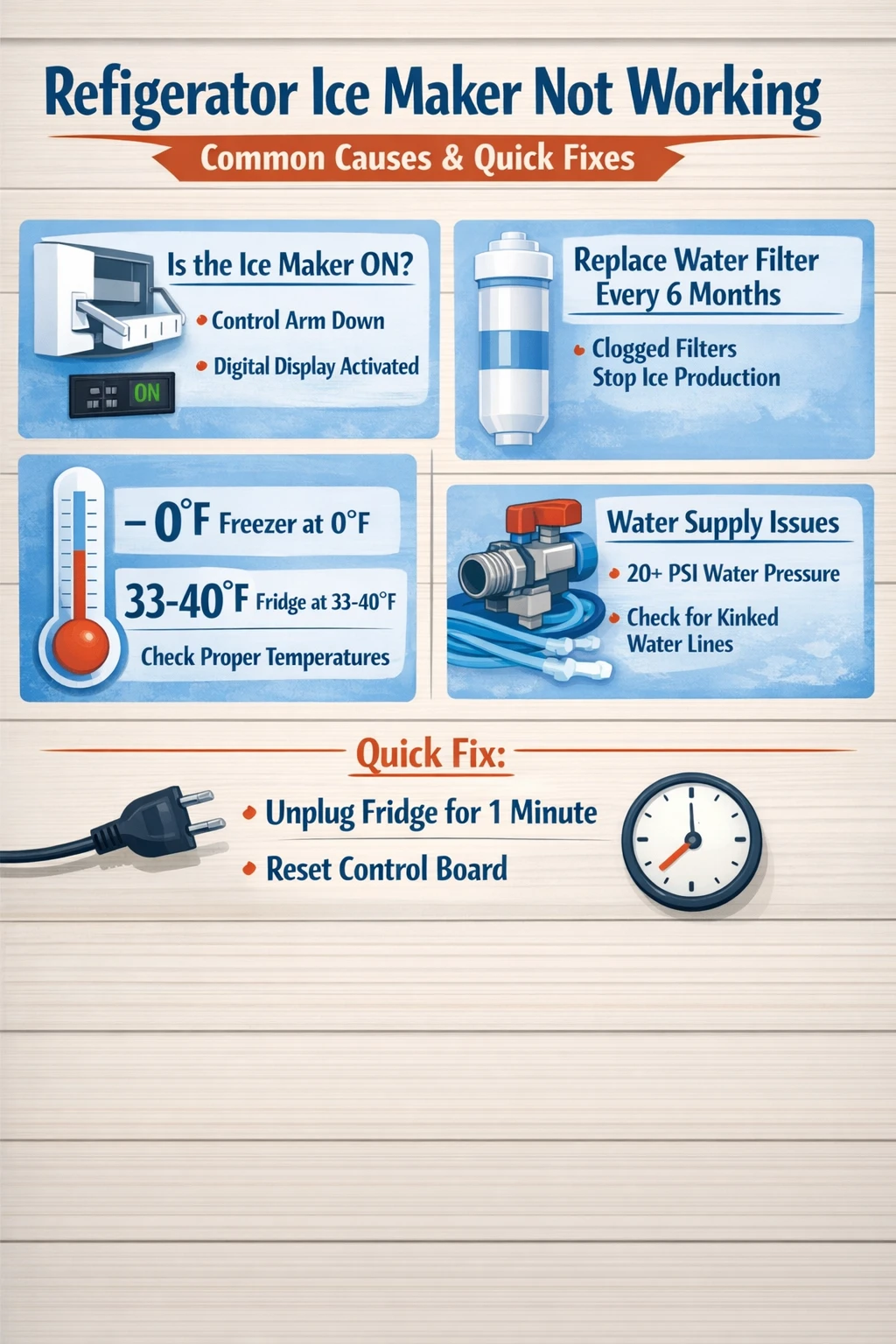
- The most common reasons a refrigerator ice maker stops working are a turned-off control arm, a clogged water filter, incorrect freezer temperature, or a frozen or kinked water line.
- Water filters should be replaced every six months; a clogged filter alone can reduce or completely stop ice production.
- Your freezer should be set to 0 degrees Fahrenheit (-18 degrees Celsius) for the ice maker to function properly, and your fridge compartment should be between 33 and 40 degrees Fahrenheit.
- The water inlet valve needs at least 20 psi of water pressure to open and close correctly; anything less and water won’t reach the ice tray.
- A simple power cycle, unplugging the fridge for one minute, can resolve minor ice maker glitches without any disassembly.
- If the ice maker was just installed, it can take up to 24 hours before the first batch of ice is ready, and the first two or three cycles may produce empty or discolored cubes.
Why your refrigerator ice maker is not working
When your ice maker stops producing ice, the problem usually traces back to one of four things: it’s been switched off, it’s not getting water, the temperature is off, or something mechanical has jammed or frozen. That’s the short answer. Most cases of an ice maker not producing ice can be resolved at home without calling anyone.
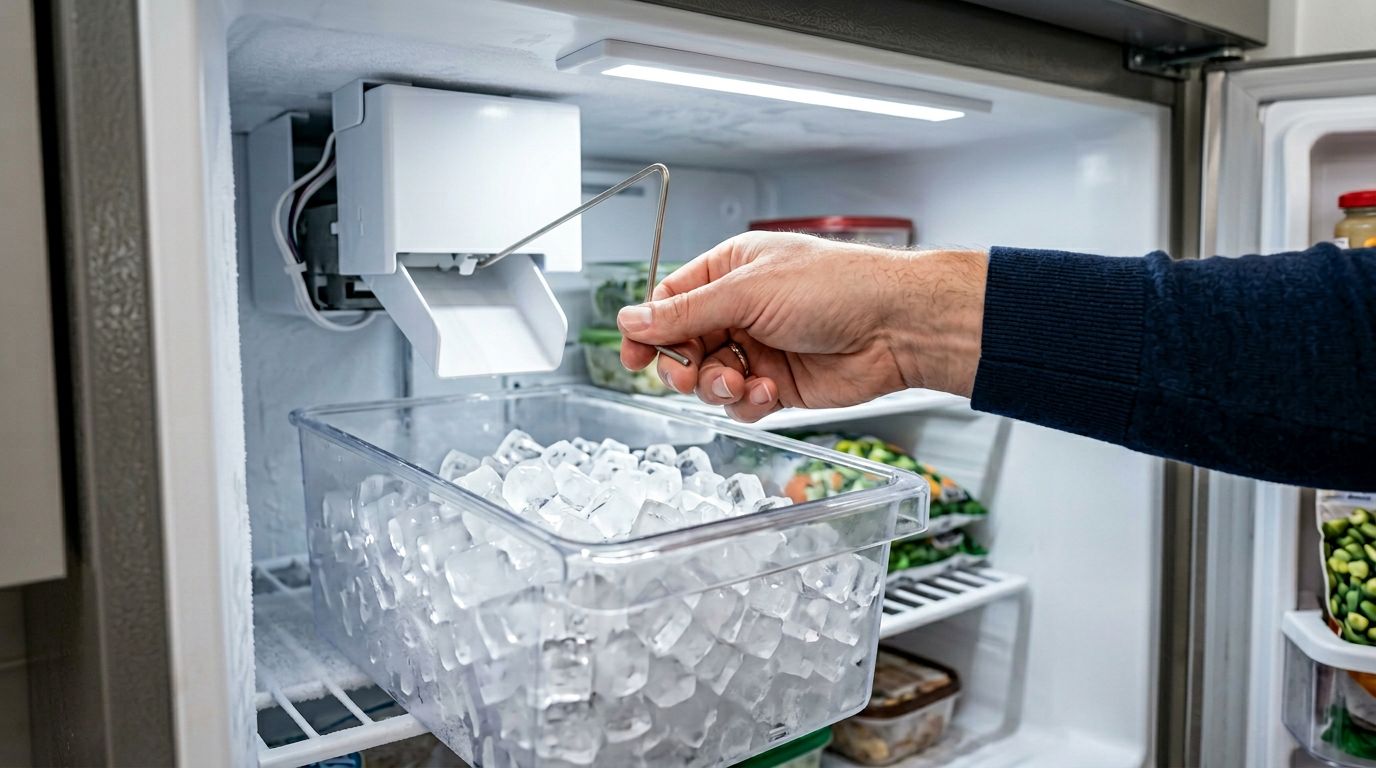
Start with the obvious before you do anything else. Check whether the ice maker is actually turned on. It sounds almost too simple, but this is one of the more common calls we get. On older models, the control arm, that rigid metal or plastic bar that rests above the ice bin, can accidentally get bumped into the off position. If the arm is raised, push it back down gently and see if the machine starts its cycle. On newer fridges with digital displays, check that the ice maker hasn’t been toggled off at the panel.
If it’s on and still nothing is happening, the next step is a power cycle. Unplug the refrigerator for one full minute, then plug it back in. Wait a couple of hours before judging whether it worked. This clears minor glitches in the control board and sometimes that’s all it takes.
Water supply problems: the most overlooked cause
Once you’ve confirmed the ice maker is switched on, water supply is the next place to look. A refrigerator ice maker not working often has nothing to do with the ice maker itself. The problem starts further back in the line.
Pull your fridge away from the wall carefully and take a look at the water line running into the back of the unit. A kinked or pinched line will cut water flow significantly. Fridges get pushed back hard against walls all the time, and that thin plastic or copper tubing gets bent in the process. Straighten any kinks you find and give the fridge a few inches of clearance. Use 1/4-inch O.D. soft copper or PEX tubing if the line needs replacing, and leave a small service loop so the fridge can be moved in the future without pulling the line taut.
Beyond the water line, check the inlet valve. Most refrigerators use an electromagnetic solenoid valve at the rear that opens briefly to let water into the ice maker. If the household water pressure feeding that valve is below 20 psi, the valve won’t open fully and water won’t reach the ice tray. A plumber or appliance technician can check this with pressure testing equipment. If pressure is fine but the valve still isn’t working, the valve itself may need replacing. It’s a relatively inexpensive part, but installation does involve working with water connections, so some homeowners prefer to hand that one off.
Water filter issues and why they matter more than people think
Your refrigerator’s water filter sits between the main water supply and the ice maker. Over time it traps mineral deposits, sediment, and contaminants, which is exactly what it’s supposed to do. The problem is that a clogged filter eventually restricts water flow to the point where the ice maker either produces very small cubes or stops making ice altogether.
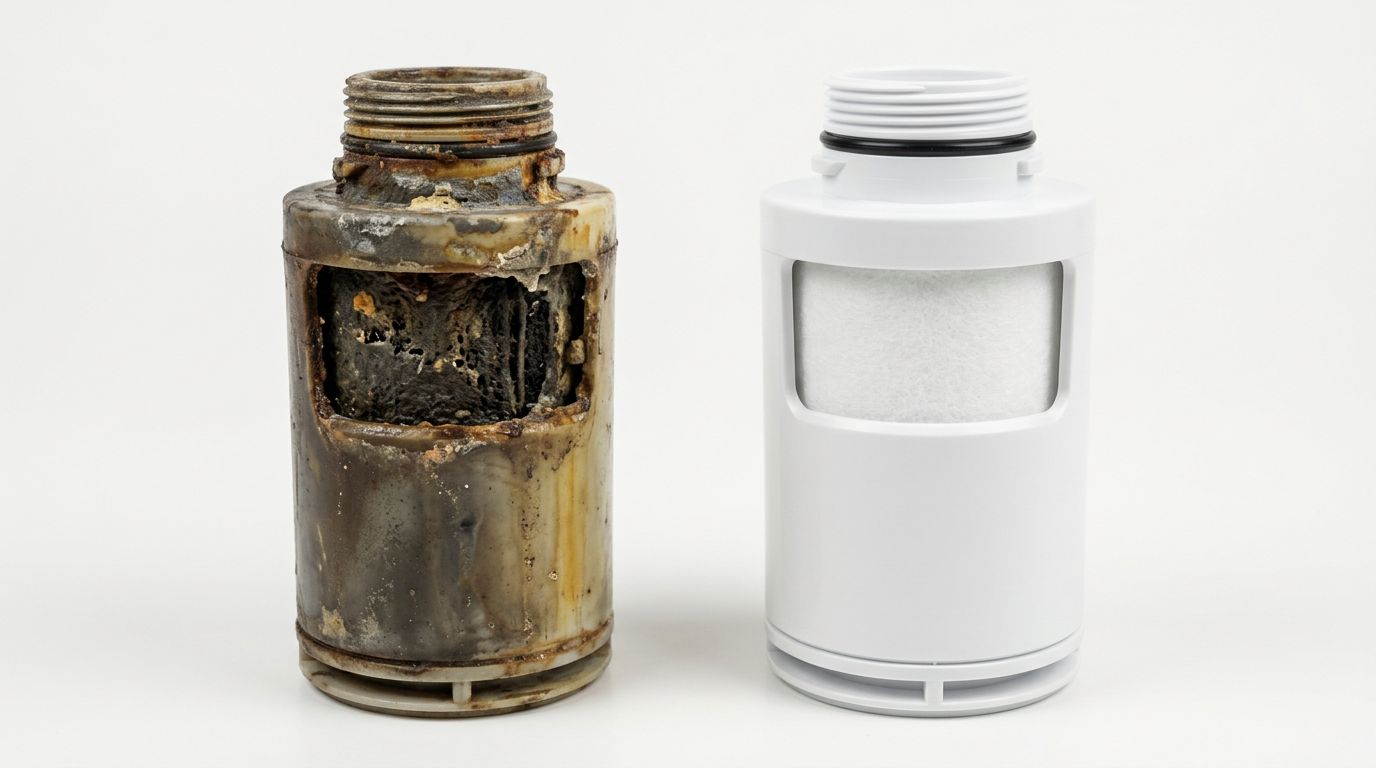
The standard recommendation from manufacturers including GE, Maytag, and KitchenAid is to replace the filter every six months. In practice, some households need to change it more frequently. If you’re in an area of Abbotsford with older infrastructure or if there’s been recent construction nearby, sediment in the local water supply can clog a filter faster than usual. Watch for signs beyond just reduced ice production: water dispensing slowly, ice with an odd taste, or visible black specks in the water.
One thing worth checking if you’ve just replaced the filter: make sure it’s seated correctly. An improperly installed filter can cause as much trouble as a clogged one. Remove it, try dispensing water without the filter in place, and if water flows freely, the filter wasn’t locked in properly. Reseat it until it clicks into position and check again.
Curious about what’s actually in your tap water? The Health Canada drinking water guidelines give a solid overview of what municipal water treatment covers and what a household filter is designed to catch.
Temperature settings and how they affect ice production
Temperature is one of those factors that seems obvious after the fact but gets missed constantly during troubleshooting. If the freezer is too warm, water won’t freeze in time to complete the cycle. If it’s too cold, different problems show up.
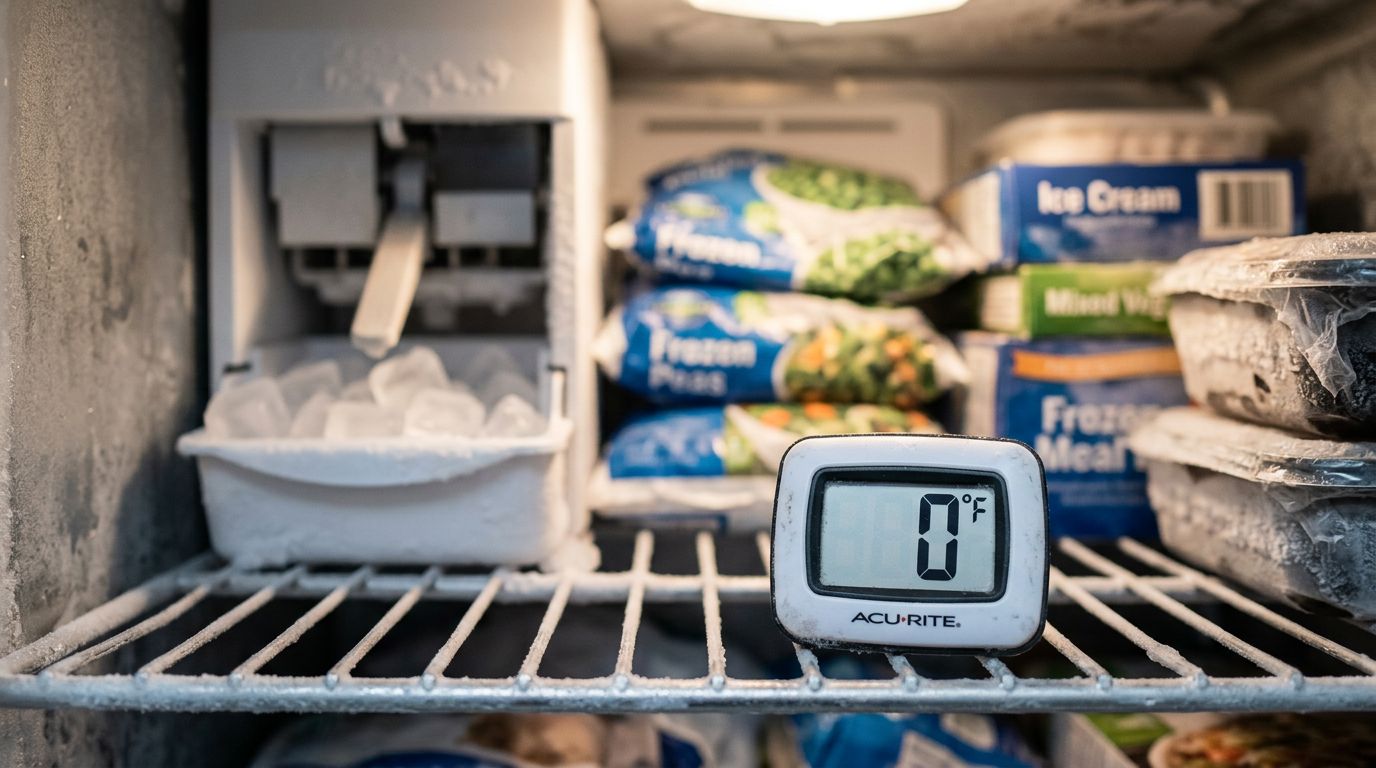
The target freezer temperature is 0 degrees Fahrenheit, which is -18 degrees Celsius. Your fridge compartment should sit between 33 and 40 degrees Fahrenheit, or 0 to 4 degrees Celsius. The ice maker itself won’t even begin a cycle until it reaches 16 degrees Fahrenheit, so if the freezer is warmer than it should be, you may be seeing delayed or absent ice production as a result.
Freezer temperatures that drop below -10 degrees Fahrenheit create a different issue. Cubes freeze too fast on the outside, which tricks the thermostat into ejecting them before the center has fully solidified. You end up with hollow or unusually small cubes. If you’re seeing that, bump the freezer temperature up slightly toward 0 degrees and see if production improves.
A low food load in the freezer can also affect temperature consistency. A mostly empty freezer has less thermal mass, which means temperatures fluctuate more. Filling it three-quarters full or adding a few water jugs if it’s sparse helps stabilize things.
The water inlet tube: a frozen line you might not see
Sometimes the freezer temperature is correct, but the small water inlet tube feeding the ice maker has frozen over anyway. This is one of those problems that’s harder to spot because the tube sits at the rear of the ice maker, out of sight. You might suspect it when the ice maker runs through its cycle but no water fills the tray.
To fix a frozen water line, unplug the fridge and remove the ice maker, usually two screws and a couple of plugs at the back wall of the freezer. With the machine out, you can direct warm air from a hair dryer at the inlet tube. Keep the dryer moving, use medium heat, and don’t let it contact any water. Once thawed, reinstall everything and check that the freezer temperature is properly set before plugging back in.
If the line keeps freezing despite correct temperature settings, there may be a slow drip from the inlet valve itself that refreezes overnight. That points to the inlet valve needing replacement. It’s worth getting a professional opinion at that stage rather than continuing to defrost the line on a recurring basis.
When ice is forming but not dispensing
A different scenario is when the ice maker is making ice just fine, but nothing comes out when you press the dispenser lever. The bin looks full through the door, but no ice moves. This points toward the dispenser mechanism rather than the ice production side of things.
Large ice clumps are often to blame. If the bin hasn’t been emptied in a while, cubes fuse together into chunks that the auger, the screw-like mechanism inside the bin, can’t break up. Small clumps can be broken up by hand. Larger, more solidified masses usually require removing the bin entirely and letting it defrost at room temperature. Once you start using the ice more regularly, clumping becomes less of an issue.
Ice lodged in the dispenser chute is another culprit. Look up into the chute carefully. If cubes are stuck, resist the urge to chip at them with anything sharp. Set a towel and a dish under the chute and let the blockage melt on its own. This is one of those fixes that’s cheap but requires patience, and trying to force the ice out can crack the chute housing.
We get calls from homeowners in Clearbrook and throughout Abbotsford about this specific issue more than you might expect. Fridges that aren’t used heavily, or households that entertain infrequently, tend to let ice sit long enough to clump and cause dispenser problems.
Signs it’s time to call a professional
Honestly, most of the issues above are manageable for a handy homeowner with a bit of patience. But there’s a clear line where it makes more sense to call someone in.
Persistent leaking around the ice maker or under the fridge is one of those situations. A leaking ice maker can point to a misaligned fill cup, a faulty water valve dripping between cycles, or an unleveled fridge that prevents meltwater from reaching the drain. Minor leaks become water damage fairly quickly, especially in older homes where flooring and subfloor materials aren’t as forgiving. If you’re noticing water pooling regularly, get it looked at sooner rather than later.
Motor and sensor problems are another category worth handing off. If the auger motor in the bin has frozen over, defrosting it yourself can damage the motor from the thermal stress of thawing. If the ice level sensor is giving a false reading and the bin is overflowing, that requires diagnosing whether the sensor, the control arm, or the control board is at fault. That kind of diagnosis takes more than a visual inspection.
For homeowners in Bradner and surrounding areas, we often see fridge ice maker repair needs come up alongside other appliance issues, so it’s worth having someone check the full unit while they’re there.
If you’re thinking about costs, Energy Star’s refrigerator guidance can help you compare the age and efficiency of your current unit against newer models, which sometimes informs whether a repair is worth pursuing or whether replacement makes more financial sense.
Frequently asked questions
These are the questions we hear most often when people are trying to figure out why their ice maker stopped working. The answers below cover the situations we see come up regularly.
How long does it take for a new ice maker to start producing ice?
After a refrigerator is installed and has had several hours to cool down, the ice maker should produce its first batch within 24 hours. The first two or three cycles may produce empty trays or discolored cubes because air in the new plumbing lines needs to be purged. This is normal. Once water is flowing cleanly through the system, production settles into a regular cycle. If no ice appears after 24 hours, check that the ice maker is switched on and that the water supply line is connected and open.
Why are my ice cubes small or hollow?
Small or hollow cubes usually mean the ice maker isn’t getting enough water, or the temperature in the freezer is outside the ideal range. Start by checking whether the water filter is overdue for a replacement, then look for any kinks in the water supply line. Also verify that the freezer is set to 0 degrees Fahrenheit. Temperatures below -10 degrees Fahrenheit can cause the outside of a cube to freeze too quickly, triggering early ejection before the center solidifies, which is exactly what a hollow cube looks like.
Why does my ice taste or smell strange?
Off-tasting ice almost always comes from one of two sources: an old water filter that’s no longer doing its job, or ice that’s absorbed odors from food stored nearby. Replace the filter if it’s been more than six months. Dump the existing ice and let the next few batches cycle through. Make sure any strongly scented foods in the freezer are tightly wrapped in freezer-appropriate packaging. If the taste persists after a fresh filter and a clean bin, it may point to a deeper issue with the water supply worth checking with a professional.
My ice maker is making ice but not dumping it into the bin. What’s happening?
If the ice mold is filling and freezing but the cubes aren’t dropping, the ejector mechanism may be stuck. There can be a chunk of ice blocking the mold itself, or the rake that pushes cubes out has jammed. First, check for any ice blocking the mold and carefully clear it. If nothing is visibly jammed, try resetting the ice maker by unplugging the fridge for one minute. If the problem continues, the motor or gear assembly responsible for ejection may need inspection.
Is it worth repairing an ice maker, or should I replace the fridge?
For most ice maker problems, repair is the sensible path. Parts for common issues like a water inlet valve, control arm, or filter housing are generally affordable, and a qualified technician can diagnose and fix most problems in a single visit. Where the math changes is when a fridge is older, inefficient, or has other problems alongside the ice maker. In those cases, it can be worth comparing the repair cost against the energy savings and reliability of a newer unit.
Wrapping up
Most cases of a refrigerator ice maker not working come down to one of a handful of problems: the machine got switched off, the water supply is restricted or frozen, the filter is overdue for a change, or the temperature settings need adjusting. Start with the simple checks first, work through them methodically, and you’ll solve the problem most of the time without any professional involvement. When you do run into something more involved, like a faulty inlet valve, a frozen auger motor, or a persistent leak, that’s where having someone take a proper look saves you from making a small problem bigger.
If you’d rather not work through the diagnosis yourself, or if you’ve already gone through the basics and things still aren’t right, Abbotsford Appliance Repair Pros handles fridge repair in Abbotsford and the surrounding area. Give us a call and we’ll help you figure out exactly what’s going on and the most practical way to fix it.