
You run the dishwasher, wait through the whole cycle, open the door and the dishes still look like they skipped the whole thing. This guide walks you through the most common reasons a dishwasher stops cleaning properly and exactly what to do about each one.Nobody wants to hand-wash a full load of dinner dishes at 9pm. The whole point of the machine is to handle that for you. At Abbotsford Appliance Repair Pros, we hear from homeowners across Abbotsford regularly about poor dishwasher performance, and the good news is that most of the time, the fix is simpler than people expect. A bit of maintenance, maybe a tweak to how the machine is loaded or what detergent you’re using, and you’re back in business.One thing worth knowing about this area: Abbotsford’s water tends to run harder than a lot of people realize. That mineral load builds up inside dishwashers over time and is one of the more common reasons we see machines that were working fine start leaving dishes spotty, filmy, or outright dirty.
Key takeaways
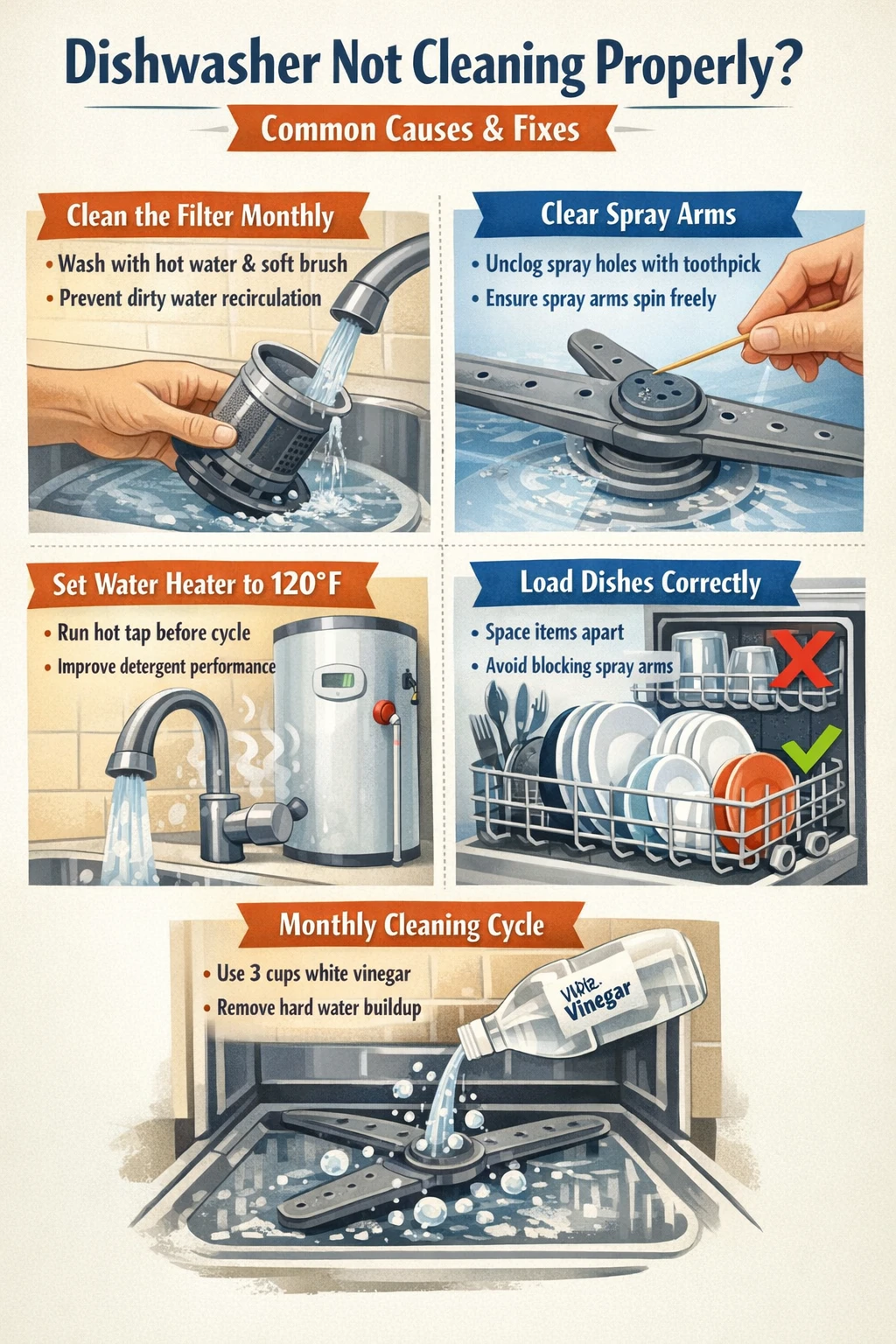
- A clogged filter is the single most common cause of a dishwasher not cleaning dishes clean it at least once a month with a soft brush under running water.
- Spray arm holes can be cleared with a toothpick; if the arms won’t spin freely, no amount of detergent will help.
- Water entering the dishwasher should be around 120°F for detergent to dissolve and activate properly.
- Running a cycle with 3 cups of white vinegar in an empty machine can clear light mineral buildup without any special products.
- Improper loading overlapping dishes, nested spoons, tall items blocking the spray arms causes more cleaning failures than most people suspect.
- If you’re hearing a hammering sound during a cycle, that often points to a failing inlet valve, which needs professional attention.
Why your dishwasher isn’t cleaning dishes
The most common causes of a dishwasher not cleaning dishes are a dirty filter, blocked or clogged spray arms, water that isn’t hot enough, and loading problems that prevent water from reaching everything in the machine. Most of these are fixable at home without any tools. A few like a failing wash motor or a broken inlet valve do call for a technician.Think of it this way: a dishwasher is basically a very controlled water-spraying system. If anything interrupts the water getting in, getting hot, or getting where it needs to go, you end up with dishes that went through a warm rinse at best. Every cause on this list traces back to that same basic problem.In our experience, the filter is the first thing to check. It’s the most neglected part of the machine, and when it’s clogged, dirty water just recirculates. Dishes come out looking worse than they went in.
The dirty filter problem
Most dishwashers made after 2010 or so have a manual filter rather than a self-cleaning one. The older self-cleaning type ground food particles down automatically (and wasn’t quiet about it). The newer design is quieter but requires you to actually take it out and clean it periodically. A lot of people don’t know this.The filter sits at the bottom of the tub, usually right under the lower spray arm. You typically twist it counter-clockwise to unlock it, then lift it out. The first time you do this after neglecting it for a while well, fair warning, it can be pretty unpleasant. Rinse it under hot running water, use a soft brush to work out the gunk, and for stubborn calcium deposits, let it soak in warm soapy water for a few minutes before scrubbing. Don’t use anything abrasive or you’ll damage the mesh. 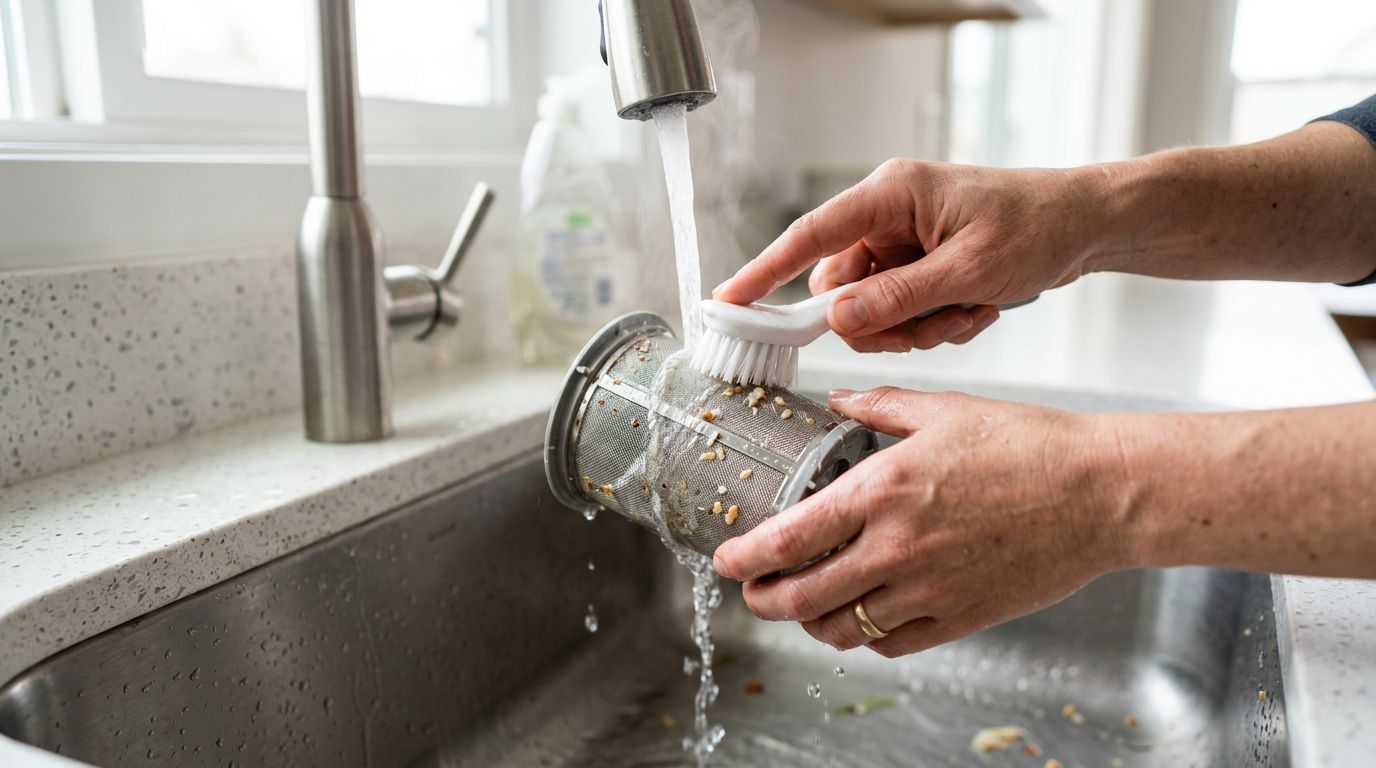 Clean it once a month if you run the machine regularly. If there’s standing water an inch deep or more in the bottom of the tub after a cycle, a clogged filter or drain issue is the likely reason.
Spray arm problems and how to fix them
The spray arms are the rotating parts that actually fling water onto your dishes. Each arm has small holes (jets) along it, and if those holes get clogged with food debris or mineral scale, the water pressure drops and cleaning suffers. This is one of those dishwasher spray arm problems that looks complicated but usually isn’t.Start by manually spinning each arm. It should rotate freely with almost no resistance. If something stops it a tall pot, a baking sheet angled the wrong way, a glass that’s shifted that arm isn’t doing its job for that whole cycle. Reload and try again.If the arms spin fine but dishes are still coming out dirty, remove the arms and hold them up to a light. Clogged holes will be obvious. Use a toothpick or a thin piece of wire to clear each one, rinse the arm thoroughly, and reinstall. 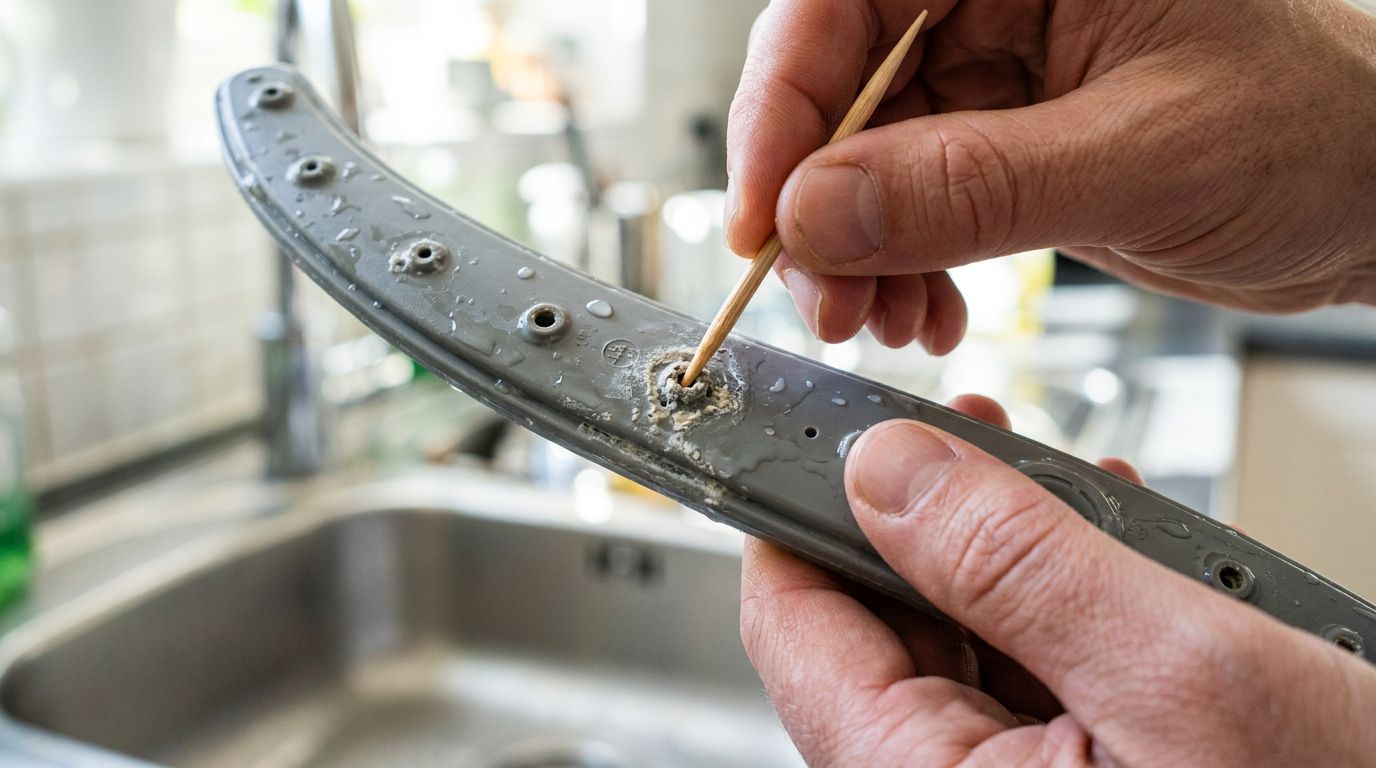 One thing worth checking: after starting a cycle, open the door after about 30 seconds and see whether the arm actually moved. A spray arm that looks fine but won’t rotate during operation usually means there’s a bigger issue with the wash motor or the diverter that’s when it makes sense to call someone in.
Water temperature and detergent issues
Hot water matters more than most people think. Dishwasher detergent especially the enzyme-based formulas in modern pods and tablets needs water around 120°F to activate and break down grease and food properly. If the water coming in is too cool, the detergent won’t dissolve right, and you end up with residue on everything.Check your water heater setting. It should be at 120°F. Any higher than that and you’re creating a scalding risk at the tap; any lower and your dishwasher is fighting uphill every cycle. If the water heater is far from the kitchen, run the hot tap at the sink for 30 to 60 seconds before starting the machine. That gets hot water into the line so the dishwasher isn’t filling with lukewarm water right from the start.On the detergent side, a few things trip people up. Using regular dish soap is a bad idea it creates suds that can foam out of the machine and onto your floor. Too much detergent causes residue buildup; too little and things don’t get clean. Pods and tablets generally outperform powder and gel for reducing film on glasses and dishes. One thing that surprises a lot of people: modern dishwasher detergents actually work better when dishes have some food residue on them, because the enzymes need something to cling to. Scrape big chunks off, but don’t pre-rinse everything spotless before loading.Rinse aid is also worth using if your dispenser has a spot for it. It helps water sheet off dishes instead of beading up, which reduces spots and improves drying. If you notice white film or spots on glasses after cycles, low rinse aid or hard water mineral buildup is almost always the reason. A simple fix is to run an empty cycle with a cup of white vinegar placed upright on the top rack it disperses through the wash and helps break down deposits. For more serious hard water buildup, the US Department of Energy has guidance on water heater settings and water quality that’s worth a look.
Loading mistakes that hurt cleaning
Honestly, this is one of those causes that feels too simple to be real, but it accounts for a surprising number of poor dishwasher performance complaints. How you load the machine changes how water moves through it.The basic rule: every item needs a clear path to the spray. Overlapping plates block each other. Bowls facing up collect water instead of letting it drain. Spoons and forks nested together especially in the cutlery basket end up with their handles and heads pressed against each other, and the water never gets to the contact points. Mix up cutlery types in the basket so things don’t stack. 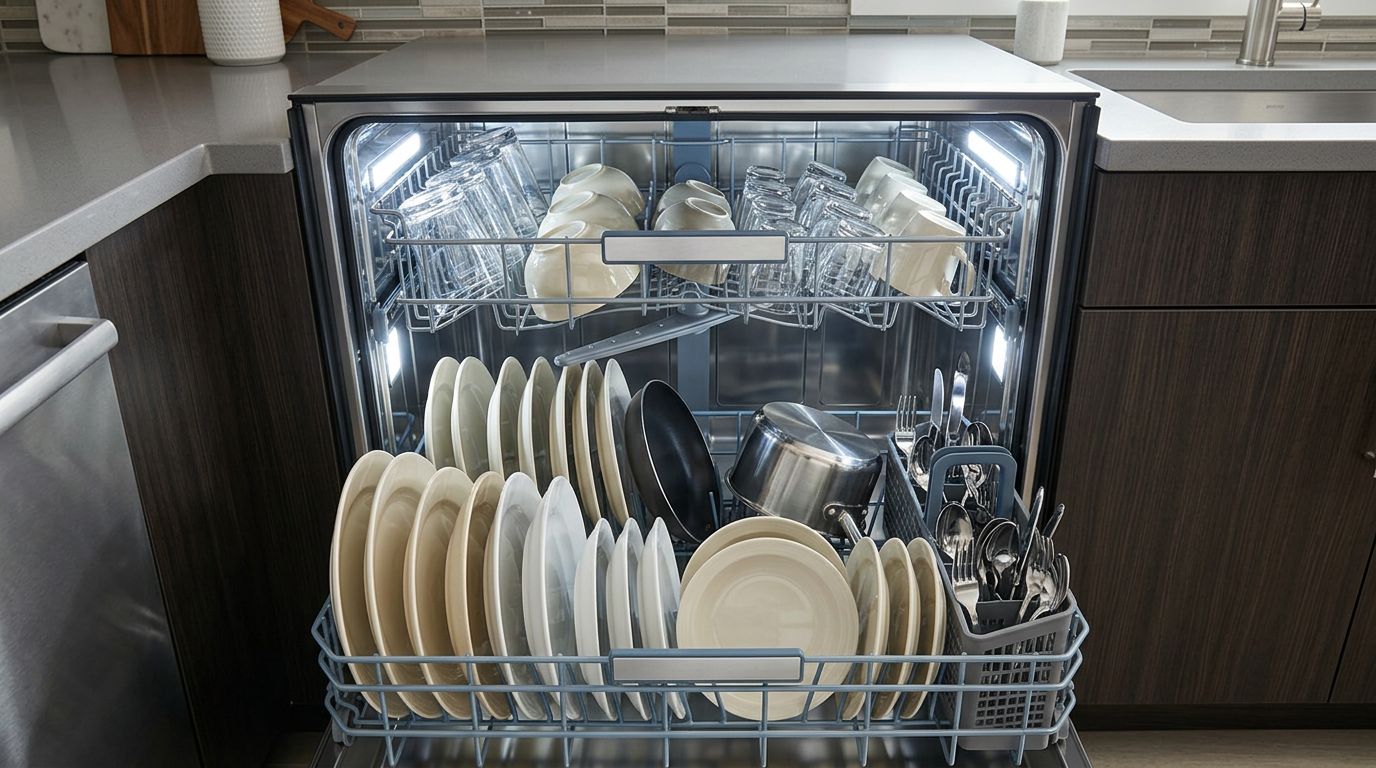 Tall items on the bottom rack are a frequent culprit. A cutting board or a large pot placed flat on the bottom rack can physically block the lower spray arm from rotating. Same goes for the upper rack: if it’s set too low and a bowl is in the way, the upper spray arm hits it and stops. The upper rack height is usually adjustable check your manual for how to do it on your model.Put cups, glasses, and smaller bowls on the top rack, angled so water drains off. Pots, pans, and plates go on the bottom where spray pressure is stronger. Bosch’s loading guidance is a good reference for getting the spacing right if you want a visual walkthrough.We get calls about this fairly often from homeowners around Clearbrook and West Abbotsford older homes in those areas sometimes have smaller dishwashers, and people end up trying to fit more than the machine can handle in one load.
When it’s something more serious
Most dishwasher cleaning problems are solved by the steps above. But sometimes the issue is a mechanical one that cleaning and reloading won’t fix.If the machine fills with water and sounds normal but dishes come out completely untouched wet but not clean the wash motor or the circulation pump may be failing. The water is getting in, but it’s not being pushed through the spray arms with enough pressure to do anything. That’s a repair job, not a maintenance one.A broken or jammed detergent dispenser is another possibility. If the dispenser door doesn’t open at the right point in the cycle, the detergent either releases too early (gets washed away before the main cycle) or not at all. Check the dispenser by running a cycle and opening the machine mid-wash to see if it’s opened. A jammed spring or cracked gasket around the dispenser door can often be fixed with a bit of cleaning and petroleum jelly on the gasket seal; if the door mechanism itself is broken, the part usually needs replacing.A failing inlet valve is worth mentioning too. It controls water flow into the machine. If you hear a hammering or banging sound during the fill cycle, that’s often a sign the valve is struggling. Lower-than-normal water volume in the tub after filling points the same direction. This one usually needs a technician it’s not a complicated repair, but it involves the water supply line and should be done right.In older homes around Matsqui Village, we sometimes see issues tied to aging supply lines and pressure fluctuations affecting appliances including dishwashers. If your water pressure seems off at the tap, that can carry into how the dishwasher performs.
Frequently asked questions
These questions come up again and again when people are troubleshooting dishes still dirty after dishwasher cycles. If you’ve been through the basics above and things still aren’t right, this section may point you in the right direction.
How often should I clean my dishwasher filter?
Once a month is a good target if you run the machine regularly. The filter catches food particles, grease, and debris from every cycle. When it gets clogged, dirty water circulates back onto your dishes instead of draining away. If you notice a gritty film on dishes or a bad smell coming from the machine, that’s usually a sign the filter needs attention sooner. The process takes about five minutes twist it out, rinse it under hot water with a soft brush, soak it briefly if there’s calcium buildup, and reinstall.
Why are my glasses coming out cloudy or spotted?
Cloudy glasses are almost always a hard water problem. Minerals in the water mainly calcium and magnesium deposit on glass surfaces during the wash and dry cycles. The fix involves a few things working together: keep your rinse aid dispenser filled (it helps water run off instead of sitting and evaporating on the surface), run a monthly vinegar cleaning cycle to clear interior mineral buildup, and consider a dishwasher-specific water softener additive if your water is particularly hard. Switching to a quality tablet or pod detergent rather than powder can also reduce filming noticeably.
Should I pre-rinse dishes before loading them?
Scrape off large food chunks, but don’t rinse everything clean before loading. This surprises people, but modern enzyme-based detergents actually need a small amount of food residue to work properly the enzymes bind to it and break it down. Putting in completely clean dishes can sometimes result in spotting because the detergent has nothing to work with. That said, leaving rice or dense food particles on dishes can clog the filter and spray arm holes faster, so use some judgment about the size and type of debris you’re leaving on.
What noises from a dishwasher should I be worried about?
A low hum and water movement during a cycle is normal. A hammering or banging sound during the fill phase often points to the inlet valve. Grinding during the wash phase may indicate something caught in the pump. If the spray arms are hitting dishes because of a loading issue, you’ll hear a rhythmic tapping or clunking. Any grinding, buzzing from the motor, or a cycle that xxx stops partway through consistently are signs to get a technician involved rather than continuing to run the machine. Repeated cycles with a mechanical problem can cause more damage than the original issue.
When does it make sense to repair vs. replace a dishwasher?
A general rule of thumb: if the repair cost is more than half the price of a comparable new machine and the dishwasher is already over eight years old, replacement often makes more sense. For a younger machine, most repairs including motor issues, inlet valves, and dispenser replacements are worth doing. A lot of homeowners assume a dishwasher that’s cleaning poorly is finished when it actually just needs a new $10 gasket or a good filter cleaning. Get a diagnosis before deciding.
Wrapping up
A dishwasher not cleaning dishes is frustrating, but the cause is usually something straightforward: a clogged filter that needs monthly attention, spray arm holes blocked by debris, water that isn’t hot enough to activate detergent, or a loading pattern that blocks water flow. Work through those in order and you’ll solve the problem most of the time without spending anything.If you’ve gone through everything here and the machine still isn’t performing, or if you’re dealing with mechanical symptoms like unusual noises, mid-cycle stops, or very low water volume in the tub, that’s when professional help makes sense. At Abbotsford Appliance Repair Pros, we handle dishwasher repair across Abbotsford and the surrounding area give us a call and we’ll figure out what’s going on and what it’ll take to fix it right.